3D Printed Clothing
Clothing, shoes and fashion accessories built layer by layer by additive manufacturing.
3D printing — additive manufacturing, or AM — is any of various processes used to make a three-dimensional object such as clothing, shoes, fashion accessories and jewelry. Instead of cutting a pattern from flat cloth and sewing the pieces together, an additive process builds the object up in layers from a digital file, so shape, texture and structure are created in a single production step. That is what makes the technology interesting to fashion: a garment can have rigid and flexible zones, lattice structures and surface relief that no loom or knitting machine can produce.
This page gathers the fashion side of the technology: what 3D printed clothing is, the studios and publications that track it, and the resources to explore for clothing, shoes and accessories. It also draws the line that matters most when researching the subject — 3D printing a garment is completely different from direct to garment printing, the digital inkjet method used to print designs onto finished shirts.
3D Printing & Fashion Resources
How 3D Printed Clothing Is Made
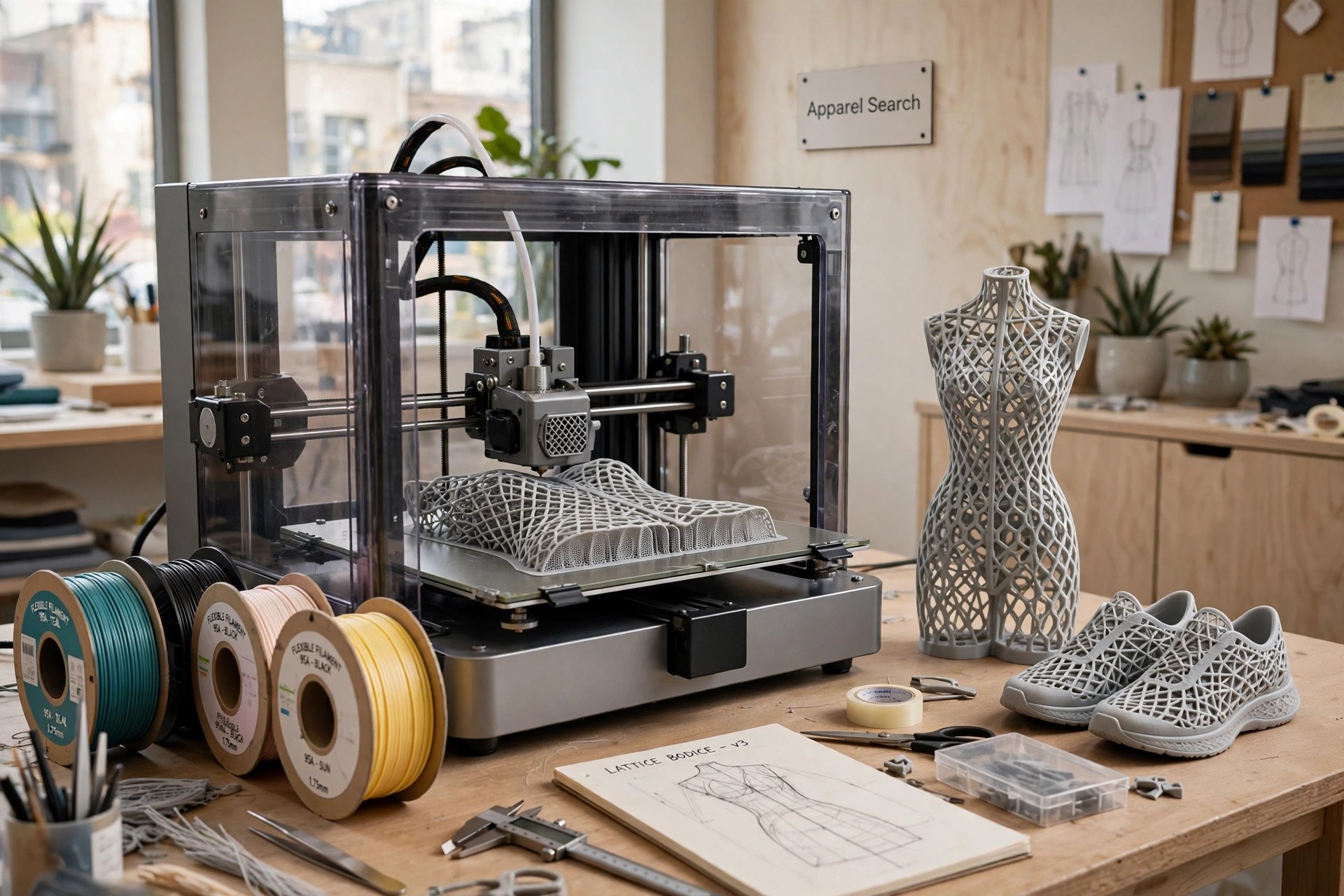
A 3D printed garment starts as a digital model. Designers work in CAD and generative design software to define not just the outline of a piece but its internal structure — where it must flex with the body, where it can be stiff, and how thick each zone should be. The printer then deposits or cures material layer by layer: flexible filament extruded through a heated nozzle, resin hardened by light, or powder fused into solid forms. Shoes, bags, jewelry and accessories suit the process especially well because their shapes are sculptural, while full garments tend to be articulated structures of printed links, scales or lattice panels that move because of their geometry rather than because the material stretches.
The honest limits matter as much as the possibilities. Printed materials do not yet drape, breathe or wash like woven cloth, print times are measured in hours per piece, and costs suit couture, runway, costume and product-development work far better than mass production. In practice the technology earns its place in fashion through prototypes, one-off statement pieces, footwear components, eyewear, jewelry and accessories — and as a design tool that lets a studio test a three-dimensional idea physically before committing to conventional manufacturing.
Studios and Publishers in 3D Fashion
Continuum is founded and operated by designer and technologist Mary Huang in Brooklyn, New York, with various collaborators. The name refers to the continuity of an idea from inspiration to design to manufacturing: part design label, part lab, Continuum has been a pioneer in ideas such as software-based fashion collections and 3D printing. Its work treats fashion as something that should express how we live our digital lives, with products that express the process and story of their creation — ready-to-wear pieces alongside concept products closer to art, all made in New York City.
For following the field, 3D Printing Industry is a global media company providing a dedicated resource for anyone interested in 3D printing, reporting on technology breakthroughs, the latest applications and the opinions of industry insiders across industrial and consumer sectors, with a fashion archive covering wearable work. The 3D Printing site likewise carries numerous articles about printing 3D fashion, searchable through its fashion coverage. Both are listed in the references below.
3D Printing Is Not Digital Garment Printing
The two technologies share a word and nothing else. Direct to garment printing — DTG, also called digital printing — sprays water-based ink onto a finished garment laid flat in a printer, producing a photographic design on cloth that already exists. 3D printing creates the object itself. A buyer researching printed shirts, team uniforms or promotional apparel wants a print shop or a DTG service; a designer researching 3D printed clothing wants additive manufacturing equipment, materials and studios. The links at the top of this page point both ways so each reader lands in the right section.
References & Further Reading
More Manufacturing Resources
Common Questions
What is 3D printed clothing?
Clothing, shoes or accessories made by additive manufacturing, in which a printer builds the object layer by layer from a digital file instead of cutting and sewing flat cloth. The structure of the piece, including flexible zones and lattice textures, is created during printing itself.
How is 3D printing different from direct to garment printing?
Direct to garment printing sprays ink onto a finished garment to add a design. 3D printing creates the garment or accessory itself from raw material. One decorates clothing that already exists; the other manufactures the object.
What fashion products suit 3D printing best?
Sculptural products suit it best: shoes and footwear components, jewelry, eyewear, bags and accessories, plus couture and runway pieces, prototypes and costume work. Printed materials do not yet drape or wash like woven cloth, which limits everyday garments.