Fashion Institute of Technology Majors
Apparel Search fashion summary — a short guide to fashion institute of technology majors.
A college major is the group of courses a college requires for a degree — the area a student specialises in, built from core courses everyone in the specialism must take plus elective courses around them. Choosing a major is one of the most important decisions in applying to the Fashion Institute of Technology, and FIT organises its majors across three schools.
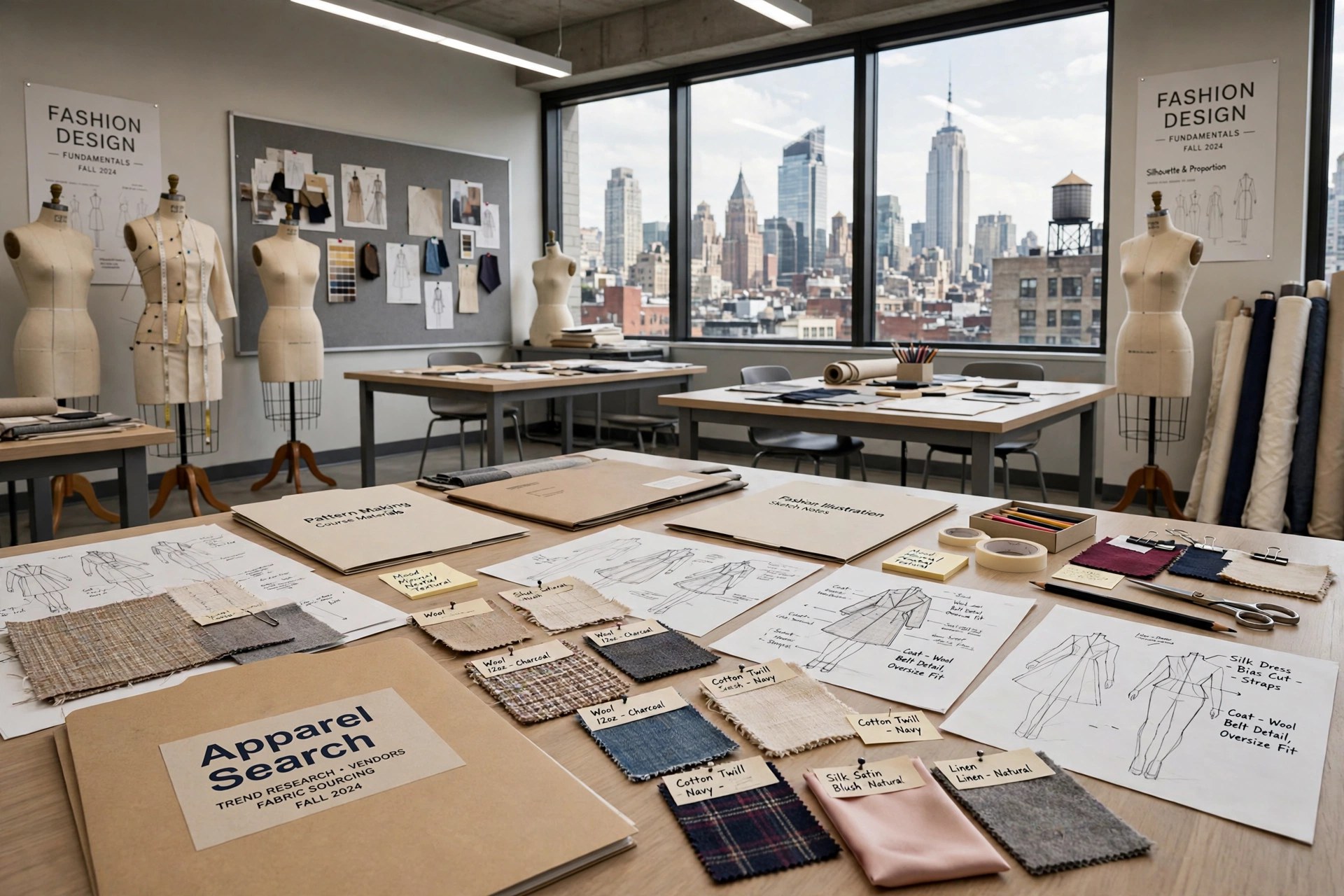
Fashion Institute of Technology Majors — Explore & Resources
Majors in Art, Design and Business
Students give two leading reasons for choosing FIT: the opportunity to start major-area classes immediately, rather than after a year of general study, and the college's location in the heart of New York City. In the School of Art and Design, majors have included Accessories Design, Advertising and Digital Design, Animation, Interactive Media and Game Design, Communication Design Foundation, Fabric Styling, Fashion Design, Fine Arts, Graphic Design, Illustration, Interior Design, Jewelry Design, Menswear, Packaging Design, Photography and Related Media, Textile/Surface Design, Toy Design and Visual Presentation and Exhibition Design, at AAS and BFA levels.
In the Jay and Patty Baker School of Business and Technology, the list runs to Advertising and Marketing Communications, Cosmetics and Fragrance Marketing, Direct and Interactive Marketing, Entrepreneurship, Fashion Business Management, Home Products Development, International Trade and Marketing for the Fashion Industries, Production Management for fashion and related industries, Technical Design, and Textile Development and Marketing, at AAS and BS levels. The School of Liberal Arts adds majors such as Art History and Museum Professions and Film and Media. Availability changes by year, so applicants must confirm current majors on FIT's own site.
Choosing Between Majors
The practical choice is between three different working lives. Art and design majors lead to studio practice: designing garments, accessories, textiles, images and spaces. Business and technology majors lead to the industry's commercial engine room: marketing, trade, production management and product development. Liberal arts majors lead toward the culture around fashion — its history, museums and media. FIT's structure makes the fork visible early because students enter major-area classes immediately.
That immediacy cuts both ways and is worth understanding before applying: it rewards students who already know their direction, which is why pre-college courses and high school fashion study feed so naturally into FIT applications. The Fashion Institute of Technology profile and the New York fashion schools directory linked from this page give the institutional context for readers comparing FIT's majors against other schools in the city.
Common Questions
What is a college major?
The academic discipline an undergraduate formally commits to: a prescribed set of core courses in the specialisation plus electives. Completing the courses prescribed in a major qualifies the student for an undergraduate degree.
What majors does FIT offer?
Across three schools: art and design majors such as Fashion Design, Accessories Design, Textile/Surface Design and Jewelry Design; business majors such as Fashion Business Management, International Trade and Marketing, and Cosmetics and Fragrance Marketing; and liberal arts majors such as Art History and Museum Professions and Film and Media. Current availability should be confirmed with FIT.
Why do students choose FIT?
Two reasons recur: students start major-area classes immediately, and the college sits in the heart of New York City, inside the industry's main American centre.