Fashion Merchandising
Apparel Search fashion summary — a short guide to fashion merchandising.
Merchandising and marketing are mixed up so often that a clear definition is genuinely hard to find — the two overlap, but they have different criteria and tasks. In the broadest sense, merchandising is any practice which contributes to the sale of products to a retail consumer. Fashion merchandising applies that whole span to clothing, shoes and accessories.
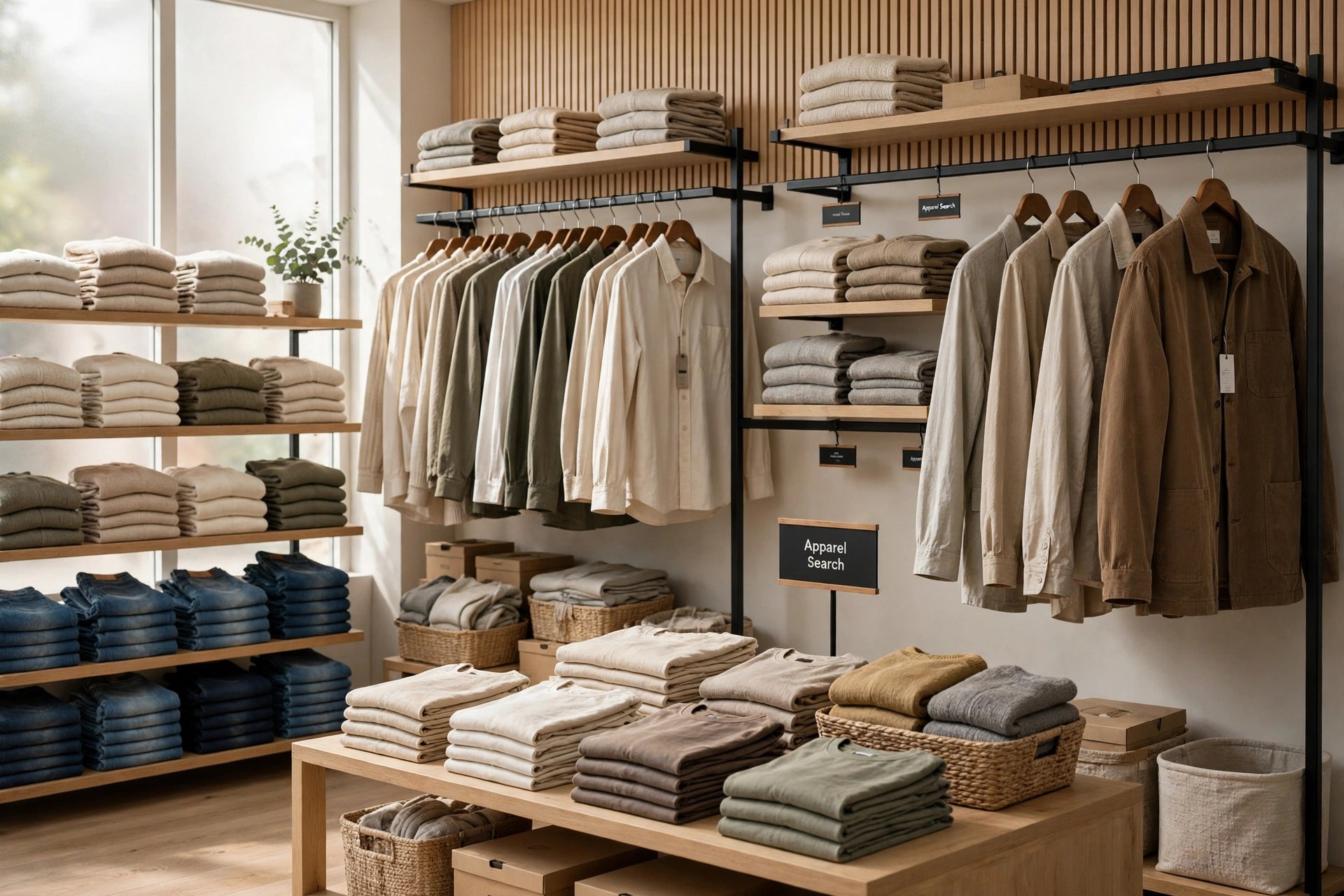
Fashion Merchandising — Explore & Resources
A Working Definition
Marketing, by the American Marketing Association's definition, is the activity, set of institutions and processes for creating, communicating, delivering and exchanging offerings that have value for customers, clients, partners and society at large. In plainer terms it is the action or business of promoting and selling products or services, including market research and advertising — a term developed from its root meaning of going to market with goods for sale.
Set against that, the relationship becomes clear: fashion marketing is a segment of fashion merchandising. Merchandising is anything that contributes to the sale of products to consumers; marketing is the activity of promoting and advertising those products, which is one — major — way of contributing to the sale. Every marketing campaign is merchandising activity, but merchandising also includes stocking, display, pricing and presentation, which are not marketing at all.
What Fashion Merchandising Covers
Fashion merchandising begins at the early stages of fashion design and carries through until a product is officially sold to consumers. It is the broad range of activities that contribute to the retailer's process of getting clothes, shoes and accessories from the designer's first idea to the end consumer's wardrobe — assortment decisions, buying, allocation, display and promotion included.
Fashion merchandisers are responsible for how a brand is presented to the public: they help with merchandising a collection, marketing, retail store displays, public relations campaigns and more. The terminology section linked from this page gives the formal merchandising definition, the fashion marketing summary treats the marketing segment on its own, and the fashion merchandising jobs summary covers the careers the discipline supports.
Merchandising Judgement: The Open-to-Buy
Nothing shows merchandising's blend of art and arithmetic better than the open-to-buy: the budget a retailer reserves for purchasing stock, released and spent as the season's evidence arrives. Buy too much of a style and the season ends in markdowns; buy too little and the best seller sells out in week two, leaving money unmade. Merchandisers manage that risk with planned flexibility — core stock committed early, a reserve held back for the trends the season itself reveals. It is fashion merchandising in miniature: prediction disciplined by money, corrected continuously by what consumers actually do. The same judgement, applied daily to individual styles and sizes, is what separates retailers who finish a season clean from those who finish it buried in marked-down stock.
Common Questions
What is fashion merchandising?
Any practice that contributes to the sale of fashion products to a retail consumer — the full range of activities that gets clothes, shoes and accessories from design to the end consumer, including stocking, display, pricing and promotion.
Is fashion marketing part of fashion merchandising?
Yes. Marketing — promoting and advertising products — is one major way of contributing to their sale, so fashion marketing sits inside the broader discipline of fashion merchandising.
What are fashion merchandisers responsible for?
How a brand is presented to the public: merchandising collections, marketing, retail store displays, public relations campaigns and the stock decisions behind them.