Fashion Retail Jobs
Apparel Search fashion summary — a short guide to fashion retail jobs.
Retail is the sale of goods to the public in relatively small quantities for use or consumption rather than for resale, and fashion retail applies it to stores and online retailers selling clothing, shoes and fashion accessories. The choice of jobs in fashion retail is not completely endless, but it is rather close: fashion retail employs more people, in more different roles, than any other part of the industry.
Fashion Retail Jobs — Explore & Resources
The Range of Retail Roles
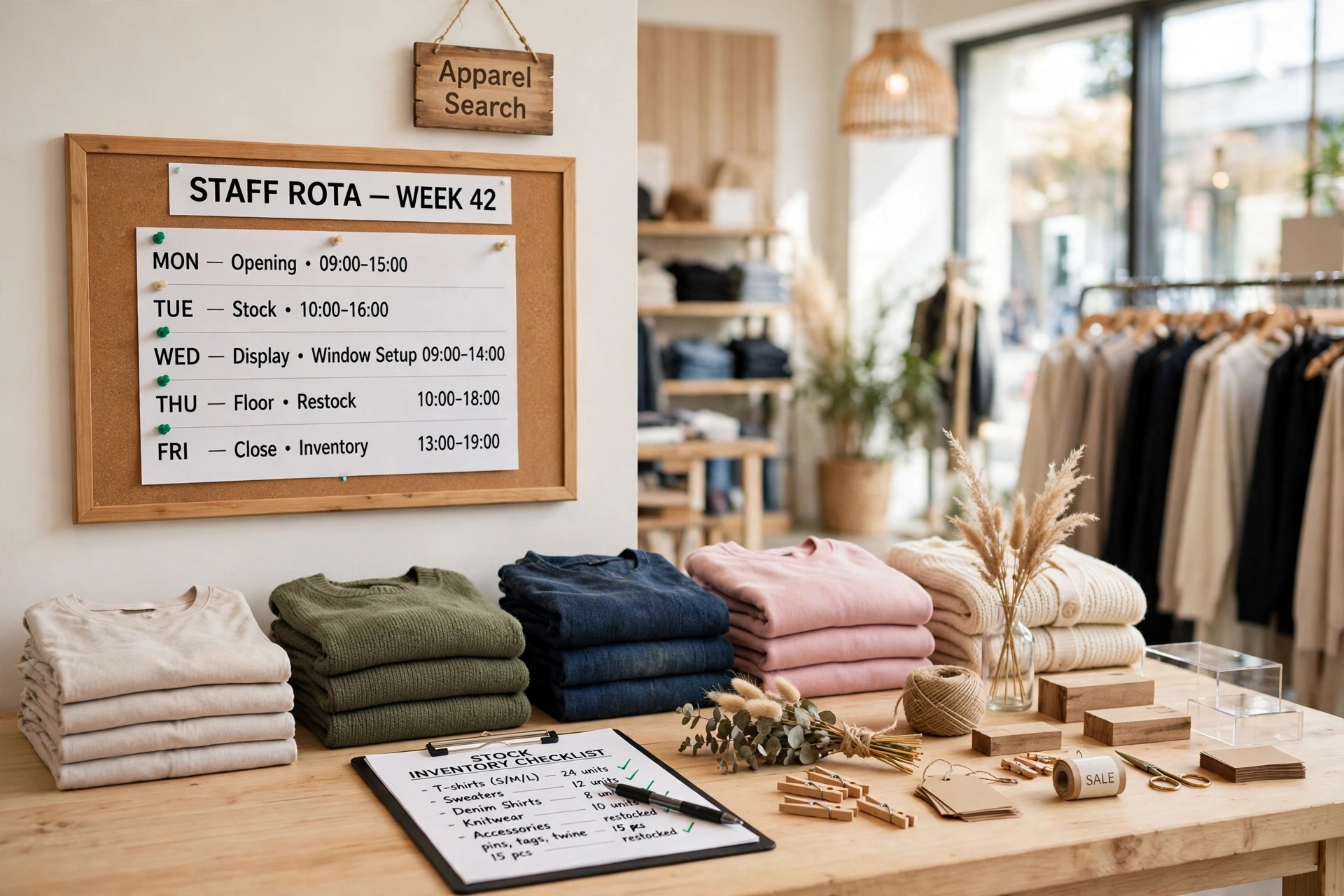
The shop floor is only the visible layer. Fashion stores have jobs for sales assistants, buyers, divisional managers, shelf-stocking associates, window display coordinators and inventory planners, among many others. Being a fashion buyer or merchandiser can be exciting, but the choice runs far wider than the glamorous titles — most retail careers are built in the operational roles that keep stock moving and stores presentable.
Behind the scenes, many large-scale clothing companies have work in warehouse distribution centres and on the transportation side of the business, so a fashion retail career can run from a first sales shift to supply-chain management without leaving the sector. The fashion retailers directory linked from this page shows the employers, and the Indeed and LinkedIn fashion retail job searches linked alongside are the standard places to find their current openings.
Retail Jobs in Context
Retail work is also the industry's commonest point of entry and its most transferable training: customer handling, stock knowledge and sales discipline learned on a fashion shop floor are recognised by every other part of the business. The fashion retail summary linked below covers the business those jobs serve — its formats, pricing and competition — and the fashion retail jobs NYC summary, also linked, covers the occupation in fashion's largest retail city.
For a candidate choosing where to aim, the two linked pages answer different questions: what retail is, and what retail work in New York demands. This page answers the prior question — what the jobs are — and its answer is encouraging: in a sector this large, there is a role for nearly every temperament the fashion industry attracts.
Retail Skills That Transfer
A fashion retail CV travels well because its skills are legible everywhere. Selling to a target teaches commercial discipline; visual merchandising teaches presentation; stock work teaches operations; and customer complaints, handled daily, teach the complaint-handling that every client-facing fashion job requires. Candidates leaving retail for wholesale, PR or buying should translate, not apologise: the buyer who has stood on a shop floor knows things about customers that no spreadsheet teaches, and employers in those fields know it.
Common Questions
What jobs are there in fashion retail?
Sales assistants, buyers, divisional managers, stocking associates, window display coordinators, inventory planners and merchandisers on the store side — plus warehouse distribution and transportation roles behind the scenes.
Where can I search for fashion retail jobs?
The Indeed and LinkedIn fashion retail job searches linked from this page are the standard starting points, with the fashion retailers directory showing the employers themselves.
Is fashion retail a good entry point into the industry?
Yes — it is the industry's largest employer and its commonest entry route, and shop-floor training in customers, stock and sales is recognised across the rest of the business.