Fashion Retail
Apparel Search fashion summary — a short guide to fashion retail.
Fashion is a popular trend, especially in styles of dress and behaviour; retail is the sale of goods to the public in relatively small quantities for use or consumption rather than for resale. Fashion retail joins the two: the business of buying clothes from manufacturers and selling them to customers, in individual units or small lots to large numbers of customers, in a sector that is extremely competitive.
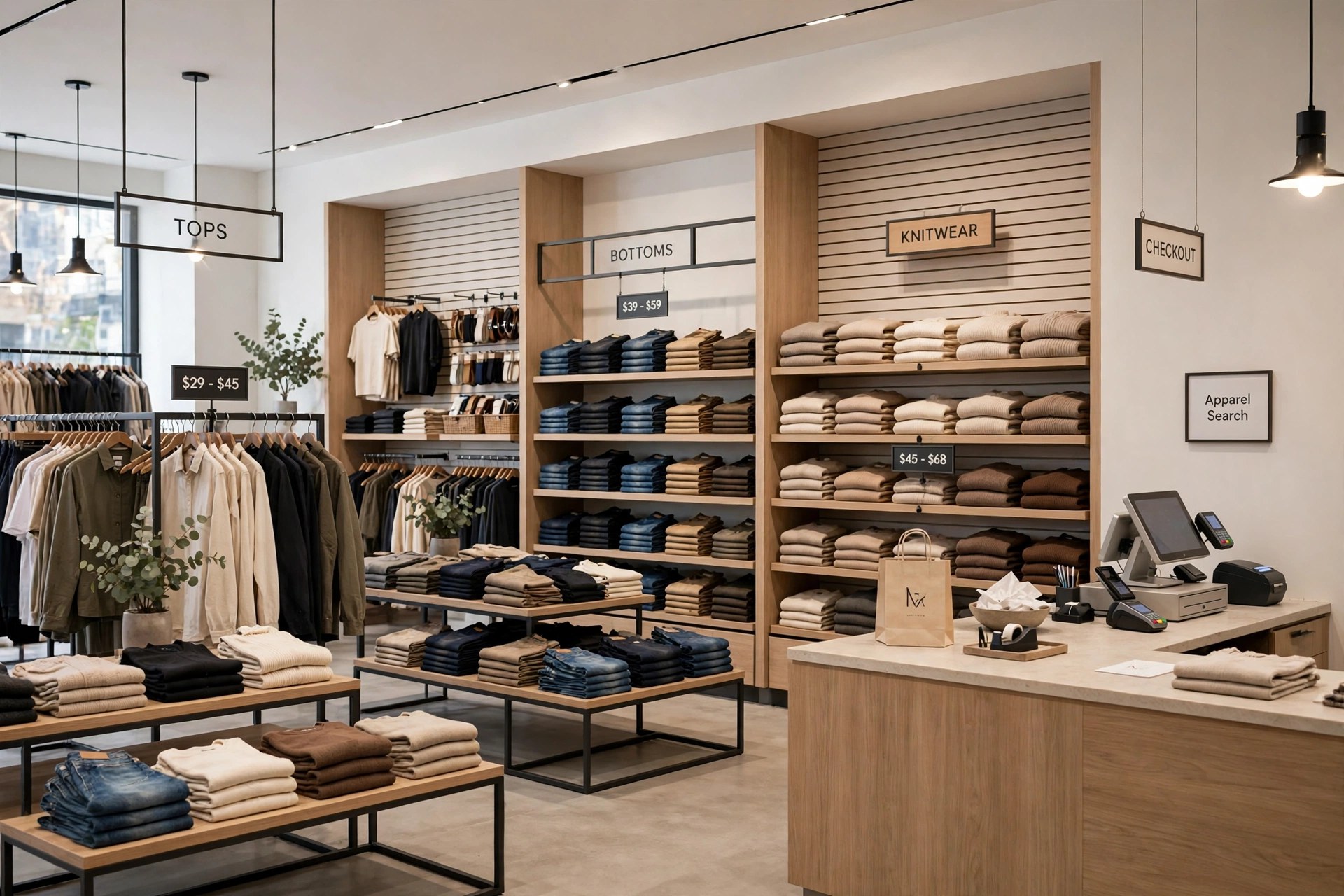
Fashion Retail — Explore & Resources
How Fashion Retail Works
In commerce, a retailer buys fashion products in large quantities from apparel manufacturers or importers, directly or through a wholesaler, distributor or jobber, and sells individual items or small quantities to the general public or end-user customers, online or in shops. Clothing retailers are categorised as boutiques, shops, department stores, discount stores and mass merchants, among other formats — each a different answer to the same question of how to reach the consumer.
Timing is the sector's defining pressure. Some clothing and footwear retailers make their initial purchases for resale three to six months before the customer can buy the clothes in store; because trends move so fast, others rotate inventory far more quickly. Fast fashion — designs moving from catwalk to store quickly to capture current trends, covered on the fast fashion page linked here — is the extreme form of that acceleration.
Competition, Price and Channels
Retailing's competition was once mainly convenience of location, selection and display of merchandise and the attractiveness of the store; the rise of online retailing changed the landscape fundamentally, and omnichannel retail — selling through integrated stores, web and mobile — is covered on the page linked from this page. Price is one of the primary factors driving consumer demand from one store to another: even luxury buyers may choose one retailer over another for the same garment at a better price.
Retailers therefore position themselves by fashion industry price points — budget, discount, moderate, contemporary and bridge among them, defined on the page linked here — with some carrying multiple ranges and others focusing on a single segment. The fashion retailers summary linked below covers the companies themselves, the fashion products page linked alongside covers what they sell, and the fashion retail jobs summary covers working in the sector — the business, the firms, the goods and the jobs, in that order.
The Store Is Not Dead, It Has Changed Jobs
Online retail was widely predicted to end the fashion store, and instead it reassigned it. Stores now serve as showrooms where customers inspect what they may later buy online, as collection points for online orders, as returns desks that keep e-commerce customers loyal, and as the brand theatre no website can replicate. Retailers who understood the reassignment — measuring a store by the total trade it influences, not only the sales rung on its own till — are the ones whose physical networks survived the transition intact.
Common Questions
What is fashion retail?
The sale of popular-trend clothing, footwear and accessories to the public in small quantities for use or consumption — the business of buying from manufacturers and selling to customers.
What is fast fashion?
A retail approach in which designs move from the catwalk to stores very quickly to capture current trends, instead of the traditional pattern of buying stock three to six months ahead of the selling season.
What are fashion retail price points?
The price levels retailers position themselves by — budget, discount, moderate, contemporary and bridge among them. Some retailers span several points; others focus on one segment.