Fashion Retailers
Apparel Search fashion summary — a short guide to fashion retailers.
Fashion retailers are the companies that practise fashion retail: they buy clothing, footwear and accessory products from wholesalers or directly from factories, and sell them to final consumers in relatively small quantities for use or consumption rather than for resale. Fashion retailing is a challenging business model — it can be very successful or fail miserably — and this page is about the firms that take that chance.
Fashion Retailers — Explore & Resources
The Retailer's Decisions
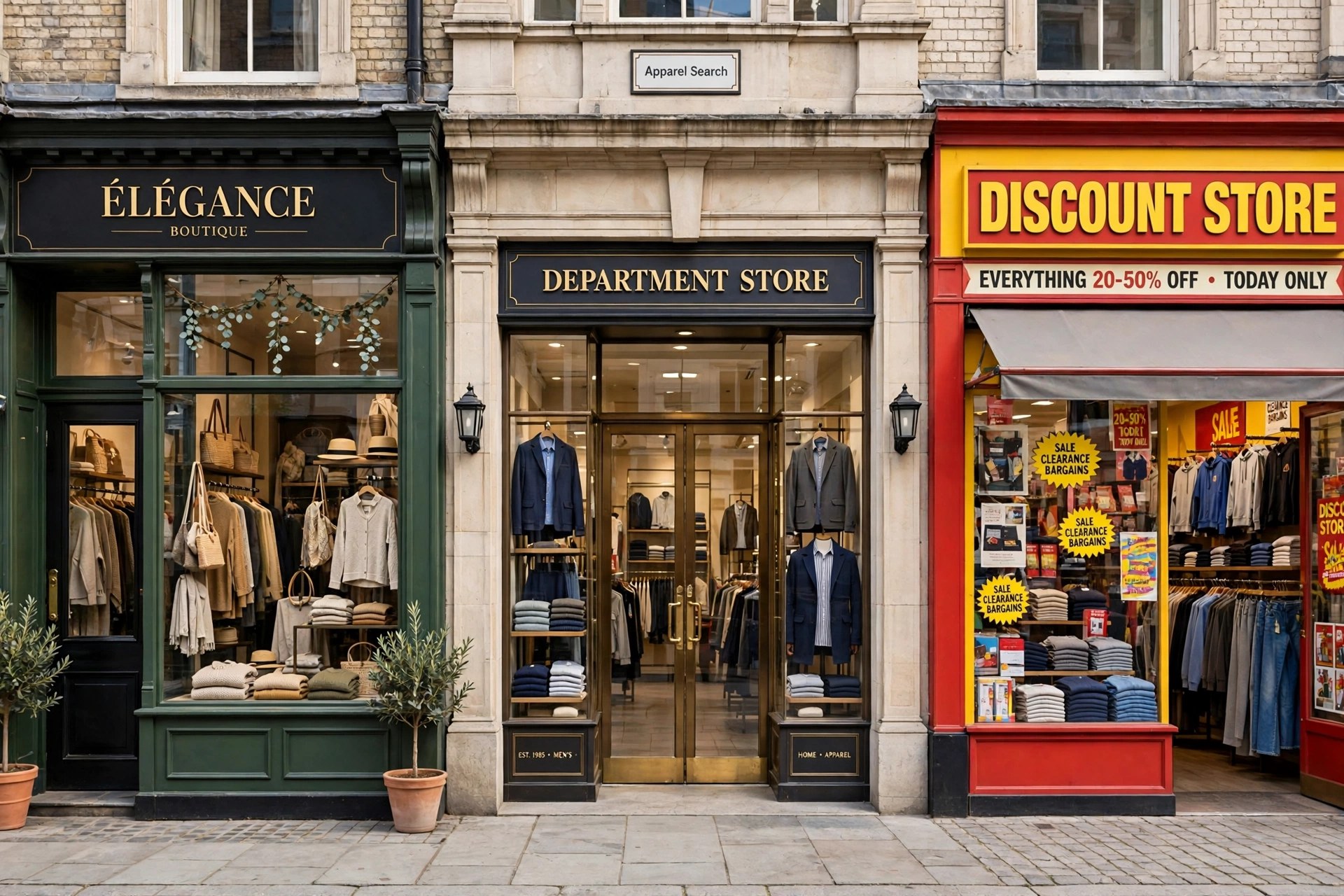
A retailer is any person or organisation that resells goods or services directly to consumers or end-users, and retail markets have existed since ancient times — in some places looking much as they always did, in others offering shopping malls, fashion boutiques, department stores and mass merchants, each providing a different shopping experience. Modern retailers make a series of strategic decisions: the type of store, the market to be served, the optimal product assortment, customer service, supporting services and overall market positioning.
Once the strategic plan is in place, retailers devise the retail mix — product, price, place, promotion, personnel and presentation. Location deserves its reputation: in real estate the saying is location, location, location, and it holds for fashion, because a clothing store's site is a primary factor in its success or failure, weighed against the cost of real estate, the size of the community, the location of competitors and local demographics.
Channels, Price and the Supply Chain
A major recent trend is the shift to multi-channel retailing: to counter the disruption caused by online retail, many bricks-and-mortar retailers entered the online space with catalogue sales and e-commerce websites. Omnichannel retailing — using a variety of channels in one customer's shopping experience, from retail and online stores to mobile and telephone sales — is covered on the page linked from this page. Location is important, but so are retail price points — budget, discount, moderate, contemporary and bridge, defined on the linked page — product assortment and store layout.
Behind the shop front, retailers satisfy demand identified through a supply chain, filling the small orders of large numbers of individual end-users rather than the large orders of wholesale, corporate or government clients. Fast fashion, covered on the linked page, is the retailers' speed strategy within that chain, and the consumers of fashion page linked alongside describes the people at the chain's end. The fashion retail summary linked below covers the business itself; this page's subject is the companies that run it.
Starting a Clothing Store: The Honest Version
The question this page opened with — would it be a good idea to start a clothing store? — has a disciplined answer. The model works when the strategic decisions align: a defined market, an assortment that market cannot get elsewhere locally, a location whose costs the expected sales can carry, and a retail mix executed consistently. It fails, usually, on one broken link rather than general incompetence. Prospective retailers should read the failures as carefully as the successes, because in this trade the same shop, street and stock can be either, depending on decisions made before the doors open.
Common Questions
What is a fashion retailer?
A company that buys clothing, footwear and accessories from wholesalers or factories and sells them directly to final consumers in small quantities — boutiques, department stores, discount stores and mass merchants are all fashion retailers.
What is the retail mix?
The set of decisions a retailer makes once strategy is set: product, price, place, promotion, personnel and presentation — plus the strategic choices of store type, market, assortment and positioning behind them.
How is this page different from the fashion retail summary?
The retail summary covers the business of retailing — how selling to consumers works. This page covers the retailers: the companies, their strategic decisions, locations and channels. The two link to each other.