Fashion Victim
Apparel Search fashion summary — a short guide to fashion victim.
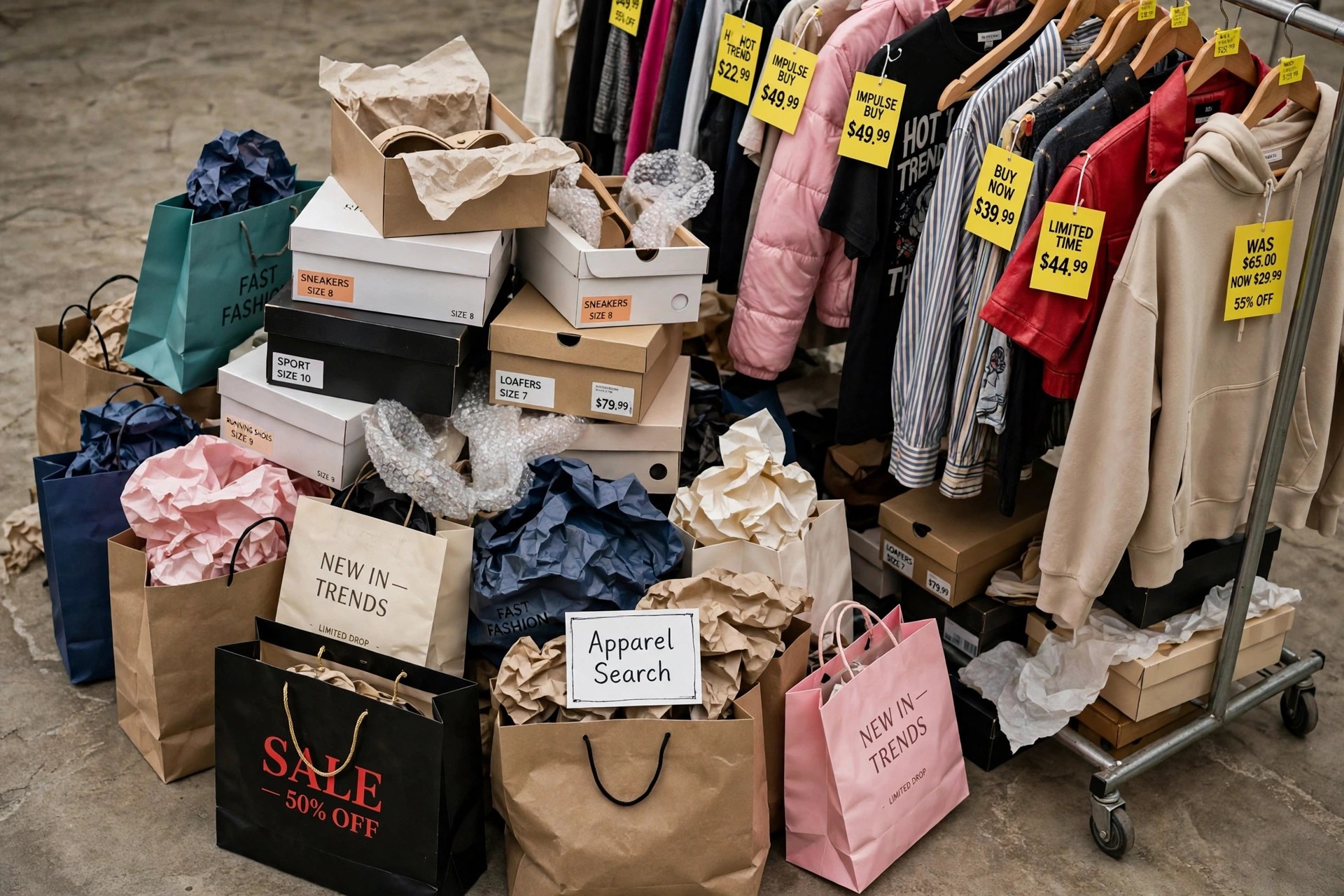
A fad is an intense but short-lived fashion trend, and fashion victims often fall prey to the fads. A fashion victim is a person who follows popular trends in dress and behaviour slavishly — a victim because they are vulnerable to faddishness and materialism, becoming so obsessed with a fad that they lose track of cost and of whether the clothing is actually trend-worthy. Some trends, simply, should not exist.
Fashion Victim — Explore & Resources

The Anatomy of a Fashion Victim
Due to an inability to recognise certain boundaries, fashion victims may aspire to the extreme end of what is available. They often seek expensive products simply because they are currently popular, and risk spending more money than they can afford in the quest to stay popular or trendy. A fashion victim may believe that the outward display of such items will draw admiration in proportion to their actual or apparent cost — materialism in its purest wardrobe form.
The mechanism underneath is the fad itself: a form of collective behaviour in which a group enthusiastically follows an impulse for a finite period. Fads achieve short-lived popularity but generally fade away — although fashion fads on occasion return at a future period. The fashionista and the fashion geek, linked from this page, pursue fashion with knowledge and enthusiasm; the victim is distinguished by the absence of judgement, not the presence of interest.
How Not to Become One
Do not become a victim of fashion. Wear clothing that is stylish for you and affordable. It is often fun and acceptable to ride the wave of a fashion trend — just be careful not to let it consume you, because all waves eventually crash. The tests are simple: would you want it if nobody saw it, can you afford it without strain, and will it work with what you already own after the fad has faded?
If you are already a fashion victim, the fashion police summary is the traditional first call. Be cautious of fashion revolutions as well — the fashion revolution summary linked here explains how they can be positive, but a revolution in taste can also produce unintended victims, swept into a new orthodoxy as slavishly as the old one.
Fashion Enthusiasm Without the Victimhood
The opposite of a fashion victim is not someone indifferent to fashion — it is the fashionista with judgement: enthusiastic, informed, and willing to let a trend pass. The difference shows in three habits. First, cost is counted per wearing rather than per purchase, so a lasting piece at a high price beats a fad at any price. Second, the mirror outranks the feed: a trend is adopted because it flatters this body and this life, not because it is photographed everywhere this month. Third, last season's clothes are not treated as evidence against their owner — a wardrobe is allowed to be a record of taste developing, not a feed that must never repeat. Enthusiasm kept under those three rules can spend a lifetime enjoying fashion, fads included, without once being its victim. The waves keep coming, and riding them stays fun precisely because the rider can also stand on the shore.
Common Questions
What is a fashion victim?
A person who follows popular trends in dress and behaviour slavishly, vulnerable to faddishness and materialism, losing track of cost and of whether a trend is actually worth following.
What is a fad?
An intense but short-lived fashion trend — collective behaviour a group follows enthusiastically for a finite period before it fades, though fads sometimes return later.
How do you avoid becoming a fashion victim?
Wear clothing that is stylish for you and affordable; enjoy trends without letting them consume you, and test purchases by taste and budget rather than by popularity.