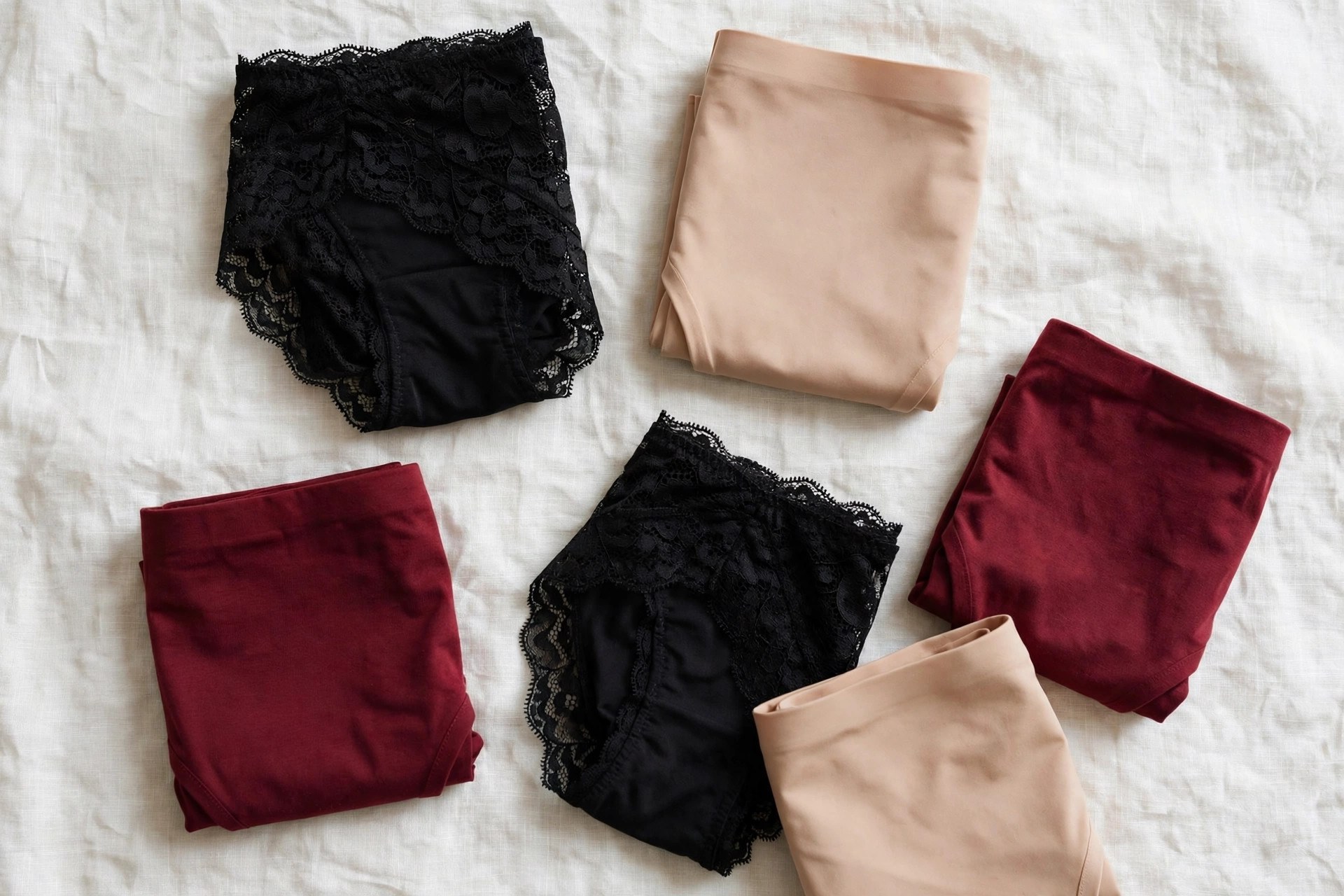
A tanga is a panty cut with narrow side straps, a triangular front, and a back that covers roughly half the buttocks — more than a thong, less than a brief. The back panel is cut in a shallow curve or T-like shape (tanga is Portuguese for a loincloth-style garment, the same word used for Brazilian swim bottoms), making the tanga the true middle cut of the underwear drawer.
How a Tanga Is Cut
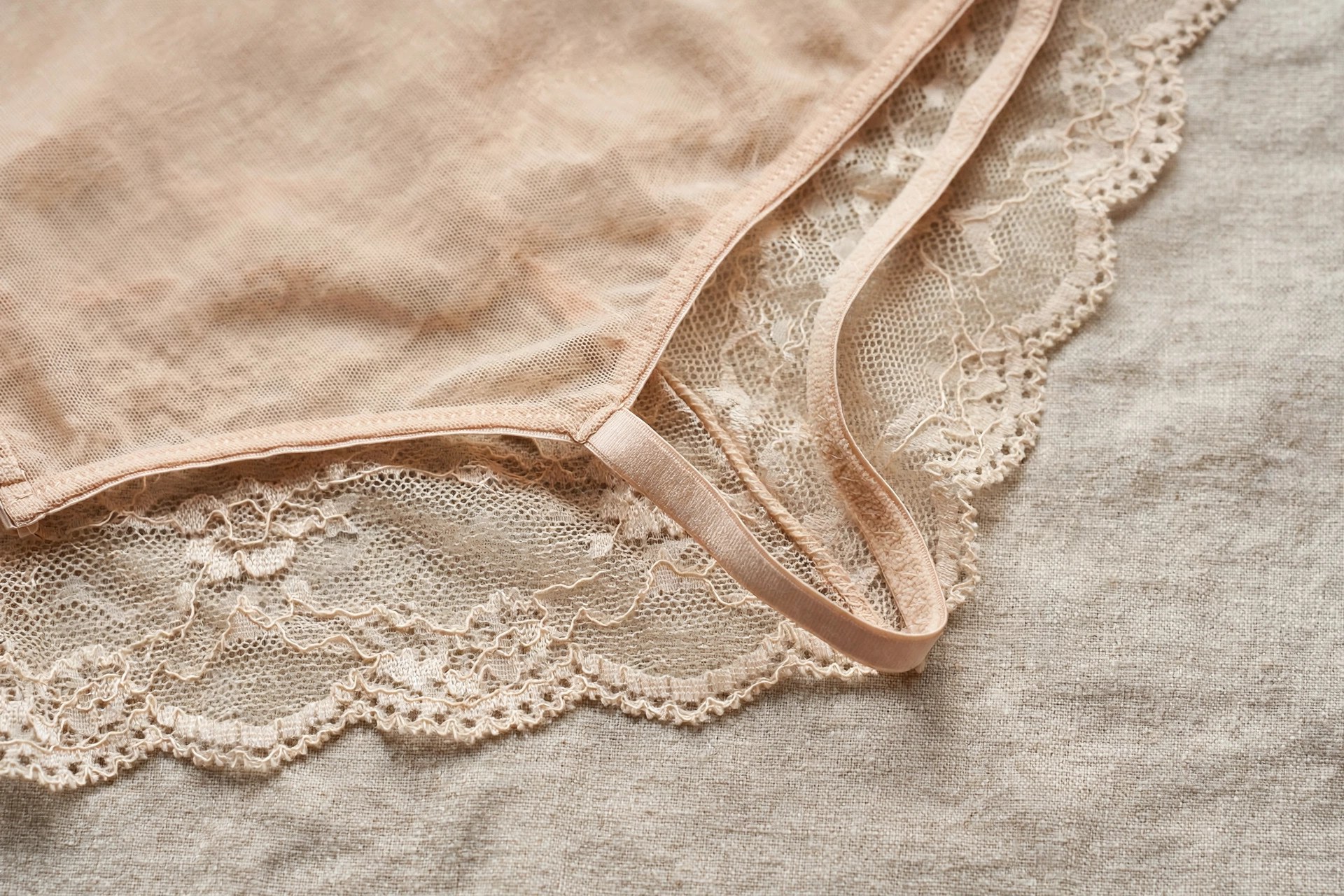
Three features define the cut. First, the sides: instead of wide panels or a thin string, a tanga has narrow fabric straps, typically one to three centimetres wide, sometimes trimmed with lace or a double strap. Second, the back: a curved panel that sits across the fullest part of the buttocks and narrows toward the centre, covering about a third to a half of the cheek. Third, the rise: tangas are most often low or mid-rise, sitting below the natural waist, which is part of why they work under lower-cut trousers and skirts.
Because the back panel has real fabric in it, a tanga behaves differently from a thong in wear: it stays in place more predictably, distributes pressure across the panel instead of a single cord, and gives a smooth, rounded outline rather than a completely bare one. It is the cut many people arrive at after finding briefs too visible under clothes and thongs not comfortable enough for all day — a compromise that, for once, actually works as a compromise should.
Tanga vs Thong vs Brazilian vs Brief
Tanga
Back coverage around a third to a half, on a narrow side strap. Visible panty line: low, because the back edge lies diagonally across the cheek rather than across its fullest part horizontally. Comfort: high — fabric back, no cord. Best for: everyday wear under fitted clothes when you want a middle option.
Thong
Back coverage is a narrow strip or string, leaving the buttocks essentially bare. Visible panty line: the lowest of any cut, which is its entire purpose. Comfort: the most divisive — some wearers forget it, others never adjust. Best for: very tight or thin fabrics where any edge would show. Our thong underwear guide covers that cut on its own.
Brazilian
The closest relative, and the terms blur in shops. A Brazilian cut usually has wider side panels and a higher-cut leg with a back that covers about half, often with a ruched or seamed centre back. In practice a Brazilian reads as a cheekier brief and a tanga as a leaner, strap-sided cut; when a brand uses the words interchangeably, judge by the back coverage in the product photo, not the label.
Brief
Full back coverage, wide sides, rises from low to high-waisted. Visible panty line: the highest, though seamless briefs reduce it a great deal. Comfort and security: the highest, and the default for sleep, sport, menstruation and long travel days. The tanga is not a brief replacement; it fills the gap beside it in the drawer. For the full landscape, see the women's panties guide.
Fabrics and Fit: Getting the Tanga Right
Microfibre and smooth modal make the most invisible everyday tangas — flat, stretchy, and kind under close-fitting clothes, especially in seamless or laser-cut versions with bonded edges. Cotton tangas breathe best and are the sensible daily and warm-weather choice; look for a cotton gusset on any fabric, which better brands include as standard. Lace tangas are the dressier end: choose soft, flat stretch lace, because scratchy lace on a narrow strap announces itself within the hour. Satin and silk exist but stretch little, so sizing must be exact.
Fit failures are specific to the cut. If the back panel keeps migrating, the size is usually too small or the rise too low for you — size up before blaming the style. If the side straps dig, look for wider or lace-trimmed straps, which spread pressure. The front should lie flat without pulling, the back panel should sit centred, and the whole garment should be forgettable within ten minutes of dressing: that, and not the mirror, is the real fit test for any minimal cut. As with bras, a drawer of two or three cuts in rotation serves most people better than loyalty to one.
When to Wear a Tanga — and Care
Choose a tanga under fitted trousers, pencil skirts, bodycon and most dresses, where a brief's edge would show but a thong feels like too little for a long day. It is a strong travel cut: small, quick-drying in microfibre, comfortable for long sitting in a way cords are not. For sport, a cotton or technical tanga works for low to moderate activity, though dedicated sports briefs support better at high intensity. For sleep and period days, most people still prefer a brief — the tanga's narrower panel is simply not designed for either job, and wearing the right cut for the day is the entire point of owning several.
Care is ordinary but worth doing well, because narrow elastic and lace age first. Machine-wash cool in a mesh bag with similar colours, or hand-wash lace and silk; skip fabric softener, which coats elastane and shortens its life; and air-dry flat or on a line rather than tumble-drying, since heat is the main killer of elastic. Replace tangas when the straps lose recovery or the back panel no longer sits where it should — stretched minimal cuts fail by wandering, and no adjustment fixes tired elastane.
Common Questions
- What is the difference between a tanga and a thong?
- Coverage and construction. A tanga has a real fabric back panel covering roughly a third to a half of the buttocks on narrow side straps. A thong's back is a narrow strip or string, leaving the buttocks bare and eliminating the panty line almost entirely.
- Is a tanga the same as a Brazilian cut?
- They are close cousins and brands blur the terms. A tanga usually has narrower, strap-like sides and a leaner back; a Brazilian tends to have wider side panels, a higher leg line and about half coverage. Judge by the garment, not the label.
- Are tangas comfortable for everyday wear?
- For many people, yes — that is their niche. The fabric back stays in place better and feels less intrusive than a thong cord, while the diagonal back edge shows less under clothes than a brief. Correct size is essential.
- Do tangas show under tight clothes?
- Much less than briefs. The back edge crosses the cheek diagonally and the sides are narrow. For the absolute minimum line, choose a seamless, laser-cut microfibre tanga in a shade close to your skin tone.
- What fabric is best for a tanga?
- Microfibre or modal for invisibility under clothes, cotton for breathability and everyday wear, soft stretch lace for dressier versions. Whatever the outer fabric, a cotton gusset is a good sign of quality.