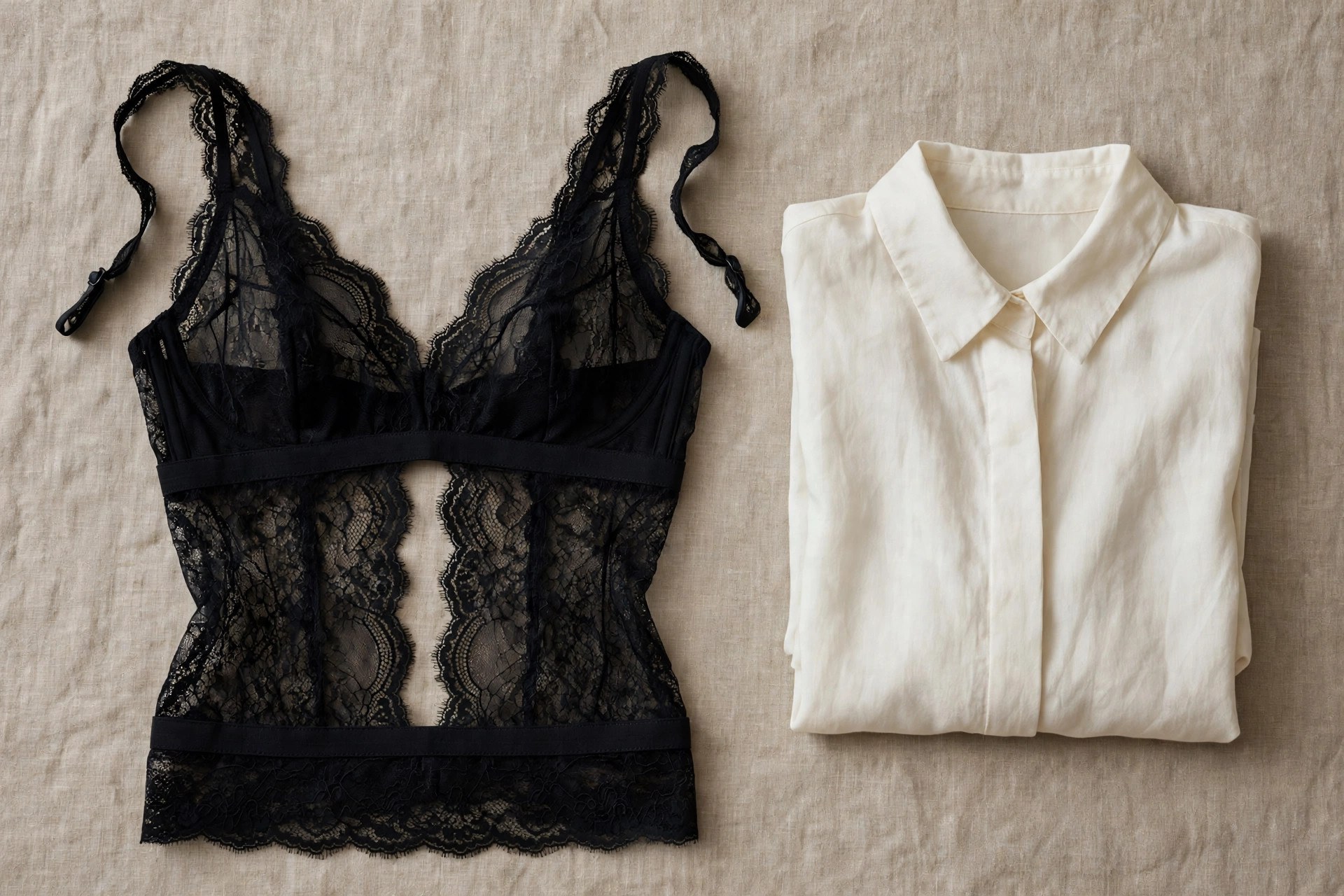
A longline bra is a bra whose underband extends well below the bust — anywhere from a few centimetres to the natural waist — instead of ending in the narrow band of a regular bra. That extended band, often lightly boned and fastened with a long column of hooks, is the defining feature: it anchors the bra to the ribs, spreads its support over a much wider area, and smooths the back and sides as it does so.
Why the Long Band Works: Support and Smoothing
In any bra, most support should come from the band, not the straps — and a longline multiplies the band. A band that grips ten or fifteen centimetres of ribcage cannot ride up, shift or dig in the way a narrow band can, so the cups stay where they were fitted and the straps have less work to do. This is why longlines are a long-standing answer for fuller busts, for strapless styles (where the band is the only support there is), and under formal dresses, where the bra cannot be adjusted once the outfit is on — the longline's original job in bridal and evening wear.
The same band is a smoother. It flattens the under-bust and upper back, eliminates the bulge a narrow elastic band creates above and below itself, and gives a cleaner line under fitted knitwear and dresses — a light shaping effect without separate shapewear. Many longlines add flexible side boning to stop the band rolling, multiple hook rows so the lower band can be fitted independently, and wider, more comfortable straps. The trade-offs are honest ones: a longline is warmer, more garment to wash and wear, and under very short or cropped outfits the band itself may show — which, as the styling section explains, fashion has lately turned into a feature.
Longline vs Regular Bra
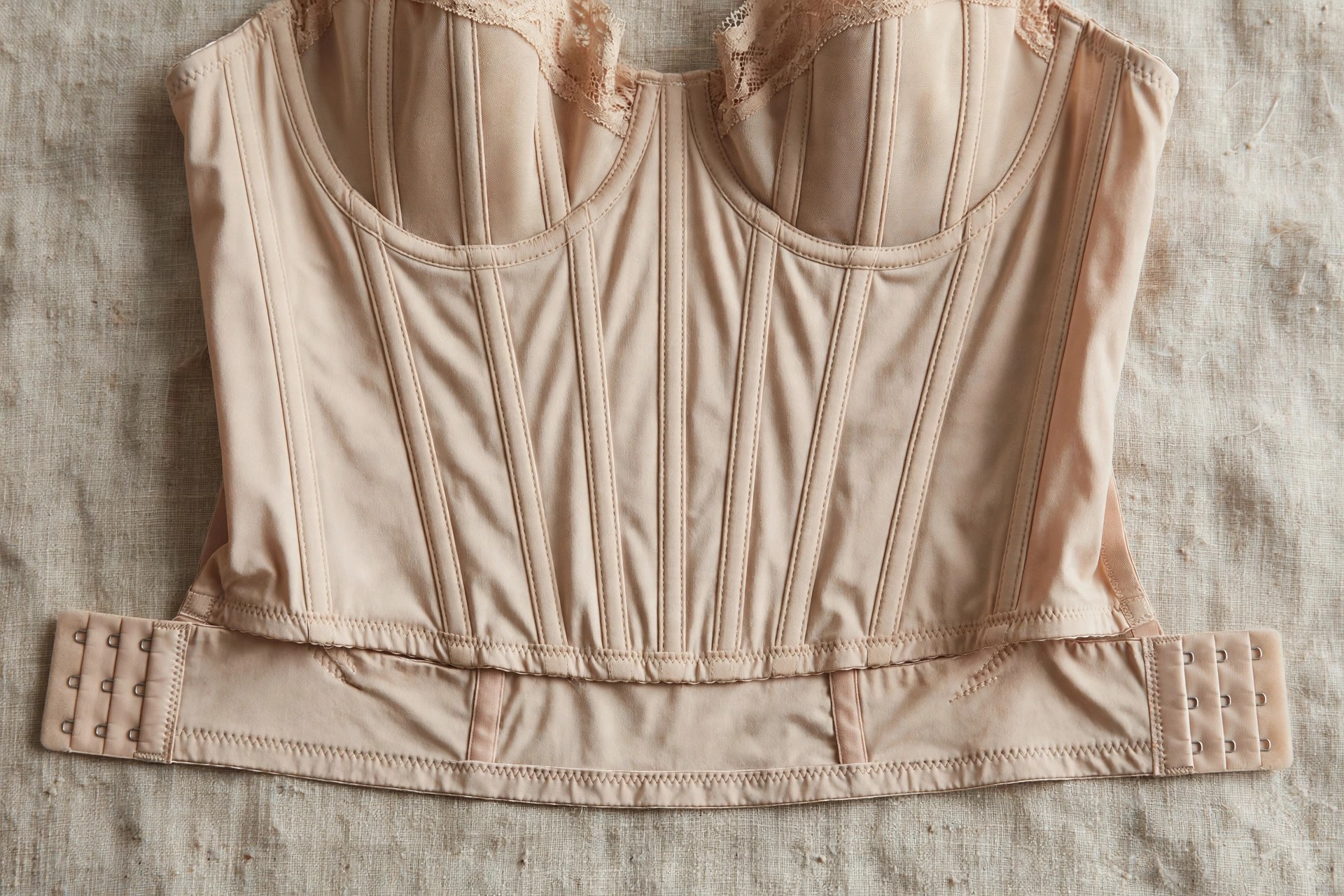
A regular bra's band ends just below the cups: cooler, smaller, cheaper, easier to fit, and sufficient for most everyday needs, especially in smaller cup sizes. A longline extends the band toward the waist and in return gives more anchoring, more smoothing, more strapless security and a more formal, structured feel. Where the regular bra is a daily default, the longline is a specialist that earns its drawer space on specific days: strapless and formal outfits, fuller-bust support, back-smoothing under fitted clothes, and outfits that show the bra deliberately.
Cup styles carry over: longlines come in balconette, plunge, full-cup and strapless versions, in lace, satin and smooth microfibre. The balcony bra guide explains the most common partner style. What does not carry over is sizing forgiveness — because the long band must fit the ribs at two levels, a longline in the wrong size is more obviously wrong than a regular bra, which makes the fit checks below worth the two minutes they take.
Fitting a Longline: What to Check
Fit it like a bra, then fit the band extension separately. Cups first: no spilling, no gaping, centre gore close to the chest in wired styles, straps adjusted but not load-bearing. Then the band: the top band should be firm on the loosest hook when new, level all the way round. Then the extension: it should lie flat against the ribs and waist without rolling at the bottom edge, gaping away from the body, or compressing so hard it is hard to breathe or sit — sit down in it before deciding, because longlines are worn seated through dinners and ceremonies, not just standing in fitting rooms.
Rolling is the classic fault, and its cause is usually a size or shape mismatch: a band too small rolls up, one too large rolls down, and a very short extension on a longer torso hits an awkward point. Light boning helps, but the real fix is the right size and a band length that suits your torso. If you are between sizes, the sister-size rule from regular bras applies to the top band — but always re-check the extension, since it is the part with no equivalent in a normal bra. Our women's bras guide covers the general fitting method in full.
Styling: Under Outfits — and as the Outfit
Under clothes, the longline is the foundation for strapless, off-shoulder and fitted formal dresses, the bra that will not migrate during an event. In smooth microfibre it disappears under knit dresses while smoothing the back; in a low-back longline variant, with a band that dips at the back, it solves the backless-dress problem that defeats regular bras. Under everyday fitted tops it earns a place whenever the back view matters.
As a visible garment, the longline has had a second career: lace and satin longlines are worn as crop tops under an open blazer, a sheer shirt, or a low cardigan, and as standalone summer tops with high-waisted trousers or skirts — a direct descendant of the bustier. Keep the rest of the outfit structured and the coverage deliberate, and the look reads styled rather than unfinished. Care, finally: a longline has more hooks, boning and elastic to protect than any other bra, so hand-wash or use a mesh bag on a gentle cool cycle, close the hooks first, never tumble-dry, and dry it flat with the band extended so it keeps the shape it was bought for. Rotate it like any bra — a day's rest between wears lets the wide elastic recover, extending the life of the support you paid for.
Common Questions
- What is the point of a longline bra?
- The extended band. It anchors the bra over a wide area of ribcage, so support improves, the band cannot ride up, strapless styles stay secure, and the back and sides are smoothed under fitted clothes — all in one garment.
- Is a longline bra more supportive than a regular bra?
- Usually yes, because support comes mainly from the band and a longline has far more of it. That is why longlines are recommended for fuller busts and for strapless wear, where band support is the only support available.
- Can you wear a longline bra as a top?
- Yes — lace and satin longlines are commonly styled as crop tops under an open blazer or sheer layer, or alone with high-waisted bottoms. Choose a style designed with finished outer fabrics and neat edging for this use.
- Why does my longline bra roll up?
- Usually size or torso mismatch: too small rolls up, too large rolls down, and a short band on a long torso ends at an unstable point. Try a different size or band length, and look for flexible side boning, which resists rolling.
- How do you wash a longline bra?
- Hand-wash ideally, or machine-wash cool in a mesh bag with the hooks closed. Never tumble-dry — heat destroys the wide elastic. Dry flat with the band laid out straight, and rest it a day between wears.