Women's Balcony Bra Guide
Wide-set straps, a straight-across neckline, and lift that comes from cut rather than padding — the balconette does one job beautifully.
Shop Women's Balcony Bras Now
Shop Women's Balcony Bras on Amazon Shop Women's Balcony Bras on eBayThe Amazon and eBay links on this page are affiliate links. If you make a purchase through them, Apparel Search may earn a commission.
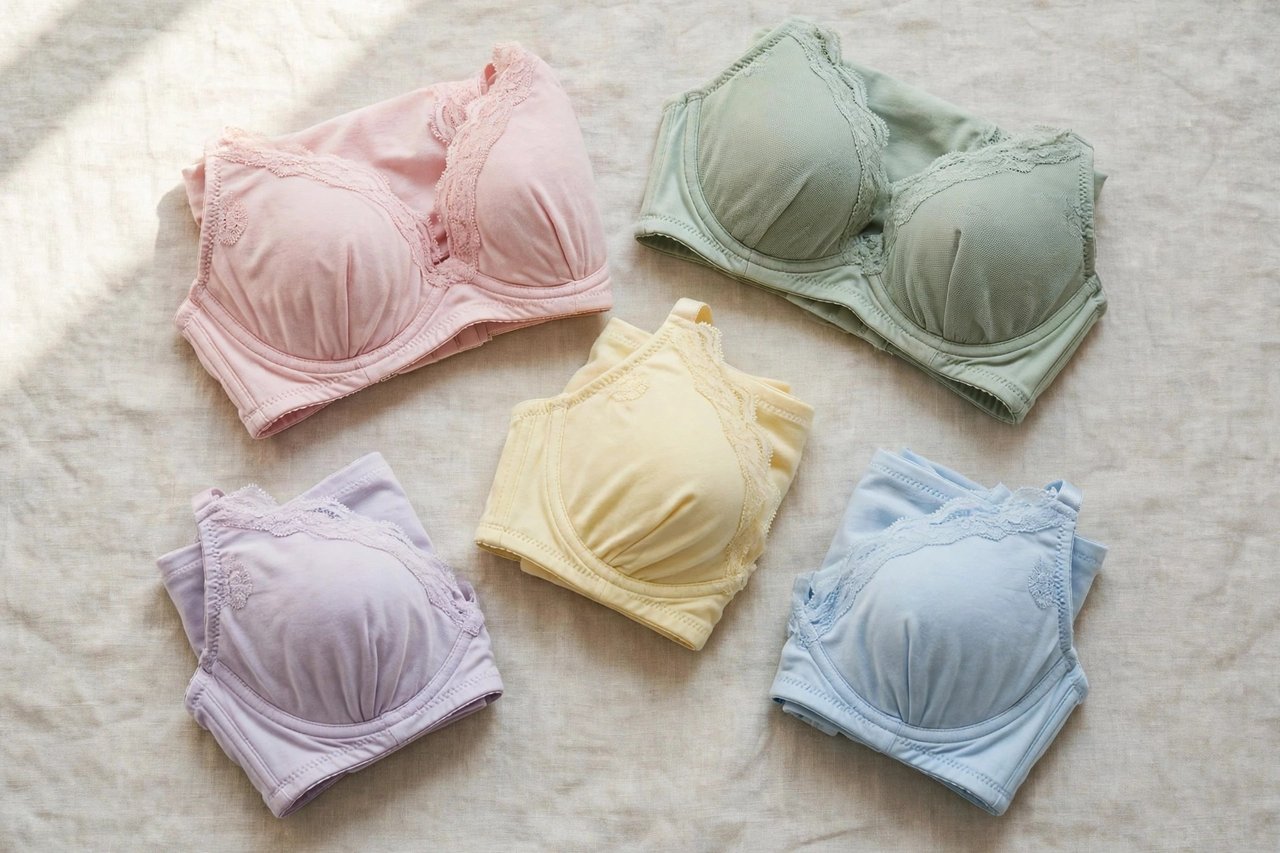
The balcony bra, also called the balconette, is named for the little architectural ledge it creates: cups cut low and straight across, so the bust rests on them like guests on a balcony. It is one of the oldest modern bra silhouettes and still one of the most flattering, because it lifts from below and presents a rounded, uplifted shape without relying on thick padding or push-up engineering. For many wearers it is the bra that makes everyday necklines suddenly look intentional.
Its signature details are consistent across brands: a horizontal cup neckline that covers roughly the lower half to three quarters of the bust, wide-set straps that attach at the outer edges of the cups, and cups built from seamed panels that shape by geometry. This guide explains how that construction produces its lift, who it tends to suit, how to fit it precisely, and which necklines and fabrics it pairs with best, so you can judge in the fitting room whether the style earns a place in your rotation.
Anatomy of the Balconette Cut
Look at the cup shape first. Where a plunge bra cuts diagonally and a full-coverage bra rises high, the balconette cup edge runs nearly straight across the bust, ending at a point well below where a t-shirt bra cup finishes. The cups are typically built from two or three seamed sections, often with a vertical seam that directs the bust upward and slightly forward, plus a reinforced lower panel that does the lifting work. The center gore is usually medium height, and the underwire follows a wide, shallow curve that matches the wide strap placement.
The wide-set straps are not decoration. Positioned at the outer cup edges, they open up the entire neckline and chest, which is why the style disappears under square and wide scoop necklines where ordinary straps would show. The trade-off is that the straps sit closer to the shoulder edge, so they demand a correct band size to stay in place; on a loose band they migrate outward and slip. Lace-edged versions soften the straight cup line, while smooth molded balconettes borrow the cut and add a seamless finish for knit tops.
Lift Without Padding: How It Works
The balconette reputation for lift rests on mechanics, not foam. The seamed lower cup acts like a shelf: firm fabric, cut on a curve and supported by the underwire, holds the bust up from beneath, while the low open top simply gets out of the way. Because the shaping comes from cut, the resulting profile looks natural — rounded and lifted, with the fullness presented at the front rather than pushed together. Wearers who dislike the padded feel of push-up styles often find this the most comfortable route to a defined shape under clothing.
Padding does exist in the category: lightly lined balconettes smooth the silhouette and add a little modesty under thin fabrics, and a few styles add removable cookies for optional extra volume. But the honest test of a balconette is the unpadded seamed version. If that cut fits your shape, you get lift in hot weather, in lightweight fabrics, and in delicate lace styles where foam would feel bulky. If the seamed version gaps or spills, the issue is usually cup volume or breast shape match, both covered in the fit section below.
Who It Suits and Fit Checks
The balconette tends to flatter wide-set and fuller busts and shapes that carry fullness at the bottom, because the shelf cup supports from below and the open top accommodates upper fullness without cutting in. It can be less forgiving on very shallow or close-set shapes, where the wide gore and tall outer cup may gape or sit on tissue. Fit checks specific to this style: the straight cup edge should lie against the bust without pressing a line across it, the center gore should tack flat, and the wide straps should stay on the shoulders through arm movement without constant adjustment.
Sizing follows the usual band and cup rules, but expect to test your sister size: because the cups are open at the top, some wearers take a cup smaller than in a full-coverage style, while others find the seamed construction runs firm. Spilling over the straight edge means the cup is too small or the shape too shallow for you; empty space at the top corner near the strap usually means the cup is too large or too tall. Try the style in two neighboring sizes with the same fitted top over it — the balconette silhouette is unmistakable when it is right.
Necklines and Outfits It Suits
This is the bra of the square neckline: the straight cup edge mirrors the straight dress edge, the wide straps hide beneath wide-set dress straps, and the lifted shape fills the open frame exactly as designers intend. It also serves wide scoop necks, sweetheart necklines, boat necks, and off-the-shoulder tops for the same reasons, and it is a classic partner for fitted bodices, dirndl-style dresses, and structured tops where a smooth high cup would ridge visibly under the fabric.
It is the wrong tool for plunging V-necks, where the straight edge and medium gore will show, and it can peek above very low-cut tops since the straps sit wide. Under thin clingy knits, choose the smooth molded version; seamed lace balconettes show their architecture through fine jersey. Color strategy is simple: a nude-to-you balconette under light colors, and let black or deep-toned lace versions be the deliberate choice under darker evening necklines where the straight elegant edge reads as part of the styling.
Fabrics, Details, and Care
Seamed balconettes showcase bra-making fabrics at their best: rigid lace and embroidered tulle on the cup for shaping that does not stretch out, power mesh wings for a firm band, and satin or microfiber slings inside the cup for support. Molded versions use foam or spacer fabric for smoothness. Details to inspect include strap adjustability along the full length, cushioned hook closures with three rows for band flexibility, and wire casing that feels smooth at the underarm, where the balconette wider wire makes its presence known first if the size is off.
Care mirrors any quality bra but with lace in mind: hand wash cool with mild detergent, or machine wash hooked inside a mesh bag on a gentle cycle, then reshape and air dry away from heat that would tire the band elastic. Rotate the style with your other bras rather than wearing it daily, since the firm lower cup and wide band work hard. Stored flat with cups nested and straps untwisted, a good balconette holds its shaping geometry for many months — and when the straight edge starts to wave or the band only works on the tightest hook, the shelf has done its service and it is time to replace it.
Related Women's Guides
Looking for Women's Clothing Stores?
This guide helps you choose women's balcony bras by style and fabric. To browse where to buy, visit our women's clothing store directory, where you can find retailers that carry them.