Women's Brassiere Guide
From a French word for a child undershirt to the most engineered garment in the drawer — the brassiere has a story worth knowing.
Shop Women's Brassieres Now
Shop Women's Brassieres on Amazon Shop Women's Brassieres on eBayThe Amazon and eBay links on this page are affiliate links. If you make a purchase through them, Apparel Search may earn a commission.
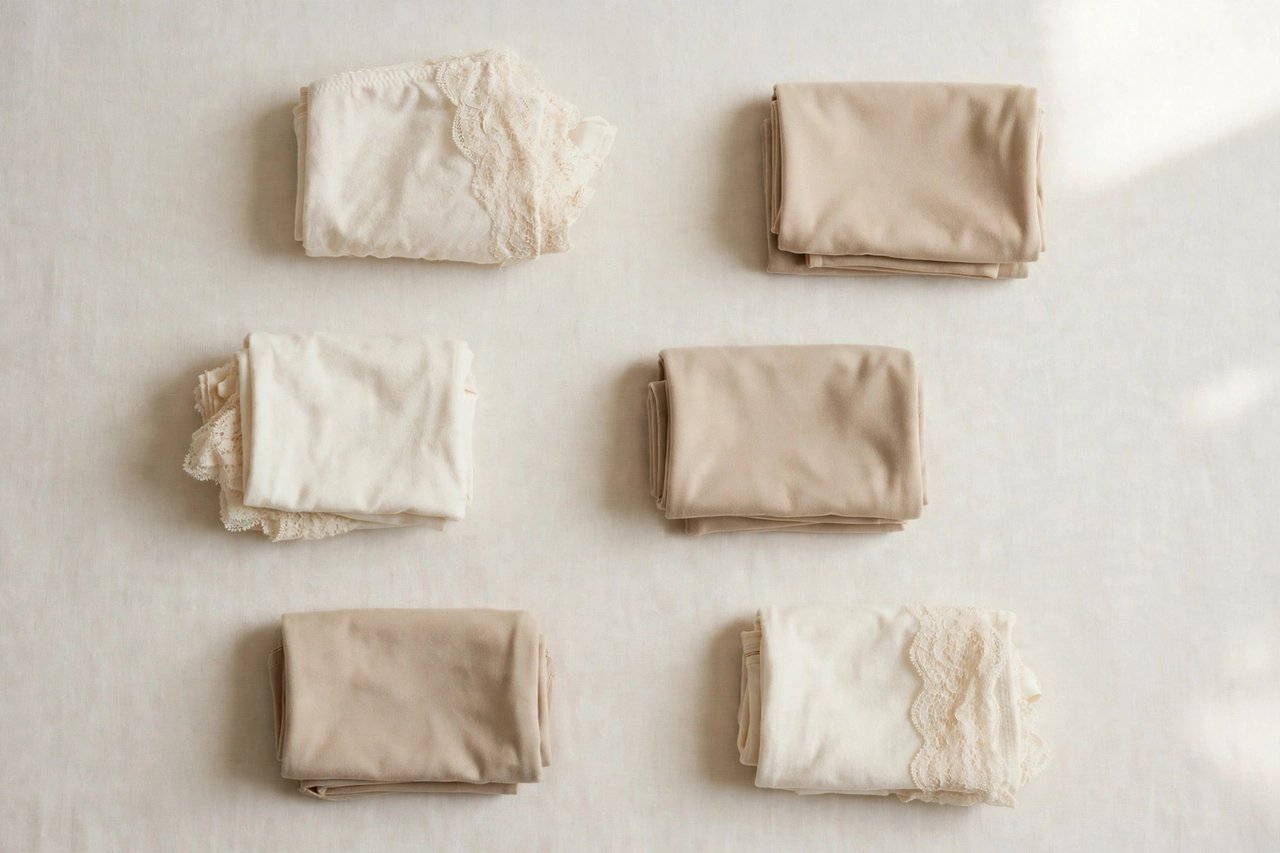
Brassiere is the full, formal name of the garment most people simply call a bra. The word survives today on department-store signage, in older sewing patterns, in the catalogs of heritage lingerie makers, and in the vocabulary of anyone who learned the garment from a grandmother. Behind the old-fashioned syllables sits a genuinely interesting history: a borrowed French word, a century of restless redesign, and a modern garment whose construction — wires, seamed cups, calibrated elastic — is more sophisticated than its size suggests.
This guide uses the term the way the industry does, as the general name for the supportive upper-body undergarment, and it covers three things: where the word and the garment came from, how construction evolved from flattened bandeaus to engineered cups, and the fit basics that have not changed despite a hundred years of fashion. Whether you search for brassiere, bra, or something more specific, the fundamentals of sizing and support in the final sections apply to every modern version.
The Word: A Brief History of Brassiere
Brassiere comes from French, where a brassiere originally meant a child bodice or undershirt, from bras, the word for arm. English borrowed it in the early twentieth century as structured corsetry gave way to separate garments for the bust, and American retailers promoted the French term because it sounded refined for a product catalogs had struggled to describe politely. The Oxford English Dictionary recorded it in 1911, manufacturers standardized on it, and for decades brassiere was simply the correct commercial word, printed on boxes and advertisements everywhere.
The clipped form bra emerged in the 1930s and slowly won everyday speech, helped by its brevity and by a folk association with the French word for a strap. Brassiere never disappeared, though: it persisted in formal retail, in legal and patent language, and as the root of related terms like bralette and longline brassiere. The spelling brassier, seen on this site and in some older trade listings, is a long-standing variant in American retail usage. Whichever form a label uses, all of them name the same garment family.
From Corsets to Cups: Construction Evolves
Before the brassiere, bust support came from the corset, which shaped the whole torso as one structure. Early brassieres of the 1900s and 1910s were soft, corset-cover-like garments that flattened and lifted modestly. Mary Phelps Jacob patented a lightweight design in 1914 made from handkerchiefs and ribbon, often cited as a landmark. The 1920s favored bandeau styles that flattened the bust for the era straight silhouette, the opposite goal from the shaped cups that followed in the 1930s.
The 1930s brought the modern template: separate cups, the A to D letter sizing introduced by manufacturers, elastic panels, and adjustable straps. Postwar decades added underwires for defined shaping, molded and padded cups, front closures, and eventually seamless knit construction, sports-specific designs, and spacer foams that shape without bulk. Each era fashion left a permanent tool in the kit, which is why a modern shopper can choose between a seamed 1950s-style silhouette and a smooth molded cup that owes everything to late twentieth-century materials science.
Anatomy of the Modern Brassiere
Whatever the era or style, the parts are constant. Cups contain and shape, whether seamed from cut fabric panels, molded from foam, or knitted seamlessly. The band anchors the garment around the ribcage and delivers most of the support, closing with hook-and-eye fastenings that allow adjustment as elastic ages. The center gore joins the cups, underwires in wired styles outline the bust and transfer load to the band, and straps position the cups and finish the fit rather than carrying the main weight.
Materials divide by job: stable fabrics and lace where shaping must not stretch, power mesh and elastic where controlled give is needed, and soft microfibers against the skin. Details distinguish quality — fully adjustable straps, cushioned closures, wires with capped ends, and seams finished so they do not print through clothing. Understanding the anatomy turns shopping from guesswork into inspection: you can see which job each part is doing and judge whether a given garment does it well before it ever reaches the fitting room.
Modern Fit Basics
Fit principles have survived every fashion cycle. Size comes from the ribcage measurement for the band and the difference between underbust and full-bust measurements for the cup, and the band should fit snugly on the loosest hook when new, sitting level rather than riding up. Cups should fully contain the bust with no spilling or gaping, the gore of a wired style should rest against the chest, and wires should sit behind the breast tissue, never on it. Straps stay adjusted to about two fingers of tension.
Because sizing systems and brand fits vary, the numbers are a starting point and the checks are the verdict. Bodies also change over time, so a fitting every year or two, or after any significant change in weight or life stage, keeps the size honest. Comfort is the final test: a correct brassiere can be forgotten while worn, supports without shoulder grooves or back strain, and improves how clothes hang. If a garment fails those tests, the style or size is wrong — a century of design evolution means a better option exists.
Choosing and Caring for One Today
Start from the wardrobe rather than the drawer: most people need a smooth everyday style for knit tops, a seamed or lace style for shape under woven clothing, a strapless or convertible for occasion necklines, and activity-appropriate support for exercise, with wire-free soft styles for rest days. Buy the best construction your budget allows in the styles worn most, since seams, elastic quality, and wire finishing decide both comfort and lifespan, and rotate at least three everyday pieces so elastic can rest between wearings.
Care is consistent across the garment family: hand wash cool with gentle detergent when possible, or use a mesh bag, fastened hooks, and a gentle machine cycle; never tumble dry, because heat breaks elastic. Dry flat or hung from the gore, store molded cups nested without inversion, and retire a brassiere when the band only works on its tightest hook or the cups have lost their edge. The word may be a hundred years old, but a well-chosen, well-kept brassiere remains one of the most cost-effective comforts in a wardrobe.
Related Women's Guides
Looking for Women's Clothing Stores?
This guide helps you choose women's brassieres by style and fabric. To browse where to buy, visit our women's clothing store directory, where you can find retailers that carry them.