Cotton in India
Apparel Search world clothing industry directory — apparel, fashion and textile resources for India.
India Fashion Industry Resources
- India Fashion Industry Directory
- About the India Apparel Industry
- About India's Textile Industry
- Textile Dyeing and Printing in India
- India Fashion and Textile Industry Summary
- Indian Textile Associations
- India Textile Industry Links
- India Clothing Glossary
- Made in India
- India Fashion Week
- Indian Fashion Designers
- India Trade Shows
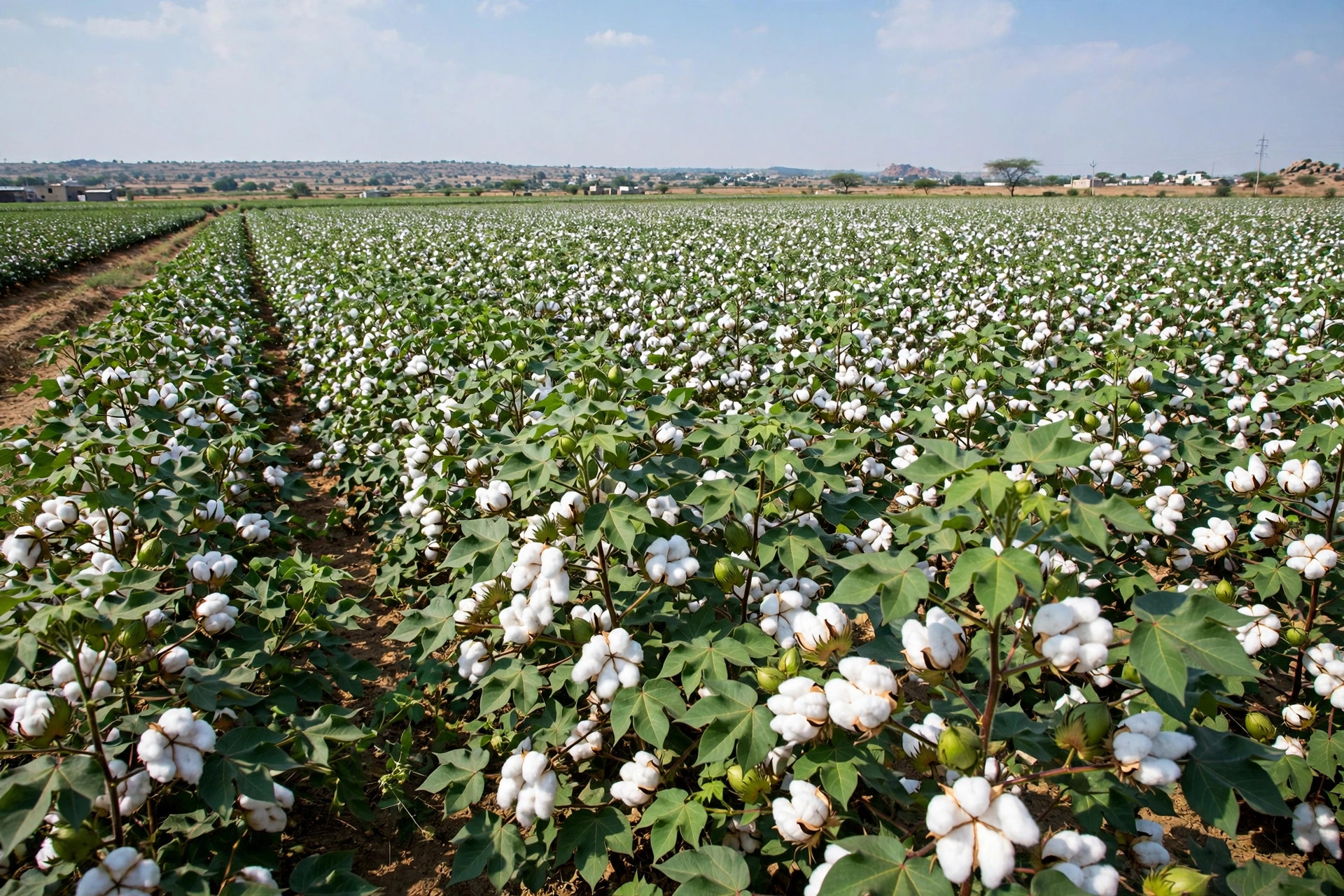
India is clearly an important factor for the international fashion industry. Cotton is among the many resources that the country grows, warehouses, and distributes. These resources are helpful for anyone who works with India in regard to cotton procurement.
Cotton Industry Resources
Ministry of Textiles, Government of India
The Ministry of Textiles is responsible for policy formulation, planning, development, export promotion and trade regulation in respect of the textile sector. This includes all natural and manmade cellulosic fibers that go into the making of textiles, clothing and handicrafts.
Textile Commissioner
The Office of the Textile Commissioner was established in 1943 during the Second World War period for arranging the supply of cloth to the defense forces as well as the civilian population. After the end of the Second World War, the Textile Commissioner was given the regulatory function of administering the prices, distribution and control of certain varieties of cloth meant for civilian consumption in the post-war conditions of scarcity.
Technology Mission on Cotton
With the liberalization of world trade following the progressive phasing out of the Multi Fibre Arrangement (MFA), quality and price competitiveness are becoming the most important criteria for good export performance of Indian textiles. Even for domestic use, textile goods have to excel in quality and be competitive in price.
Cotton Association of India
The Cotton Association of India (formerly the East India Cotton Association) is a compendium of all matters relating to every branch of the Indian cotton trade, containing exhaustive information and statistical tables relating to crops, exports, imports, prices, stocks, consumption and government notifications.
The Cotton Textiles Export Promotion Council (Texprocil)
Since its inception in 1954 as an autonomous, non-profit export promotion body, Texprocil has become the international face of Indian cotton textiles, successfully facilitating exports. For the foreign buyer, it has opened the entire range of Indian cotton yarns, fabrics and made-ups and has become the one-stop source for them.
Indian Handlooms
The handloom sector is known for its heritage and the tradition of excellent craftsmanship. It provides livelihood to millions of weavers and craftspersons. The industry has not only survived but also grown over the decades due to its inherent strengths, such as flexibility of production in small quantities, openness to innovation, low level of capital investment and immense possibility of designing fabrics. The Government of India has continued to accord priority to this sector, and the office of the Development Commissioner for Handlooms, Ministry of Textiles, works to promote and develop its exclusiveness for the global market, including merchandising and marketing at domestic and international levels; brand equity of handlooms is a priority.
Cotton Resources for India
The cotton chain behind the textile industry is covered across five connected pages: cotton in India gathers the resources, the Cotton Corporation of India (CCI) carries out price support operations in the market yards, the Commission for Agricultural Costs and Prices (CACP) recommends the prices, the minimum support price (MSP) itself is explained on its own page, and the Department of Agriculture and Cooperation (DAC) administers the agricultural programmes behind them.
More to Explore
Common Questions
Why does cotton matter to India's fashion industry?
Cotton is among the many resources India grows, warehouses and distributes, and it is the raw material behind the cotton yarns, fabrics and made-ups that Indian mills and garment exporters sell worldwide. The resources on this page cover cotton procurement from the Ministry of Textiles to the export promotion council.
What is Texprocil?
The Cotton Textiles Export Promotion Council, set up in 1954 as an autonomous, non-profit export promotion body. It has become the international face of Indian cotton textiles and the one-stop source for foreign buyers of Indian cotton yarns, fabrics and made-ups.
What does the Cotton Association of India publish?
A compendium of all matters relating to every branch of the Indian cotton trade, with exhaustive information and statistical tables on crops, exports, imports, prices, stocks, consumption and government notifications.