Minimum Support Price (MSP) - India
Apparel Search world clothing industry directory — apparel, fashion and textile resources for India.
India Fashion Industry Resources
- India Fashion Industry Directory
- About the India Apparel Industry
- About India's Textile Industry
- Textile Dyeing and Printing in India
- India Fashion and Textile Industry Summary
- Indian Textile Associations
- India Textile Industry Links
- Cotton in India
- India Clothing Glossary
- Made in India
- India Fashion Week
- Indian Fashion Designers
- India Trade Shows
In economics, a price support may be either a subsidy or a price control, both with the intended effect of keeping the market price of a good higher than the competitive equilibrium level. In the case of a price control, a price support is the minimum legal price a seller may charge, typically placed above equilibrium. It is the support of certain price levels at or above market values by the government. A price support scheme can also be an agreement set in order by the government, where the government agrees to purchase the surplus at a minimum price: if a price floor were set for agricultural wheat, for example, the government would purchase the resulting surplus from the wheat farmers, thereby subsidizing the farmers, and store or otherwise dispose of it.
MSP in India
Minimum Support Price (MSP) is a form of market intervention by the Government of India to insure agricultural producers against any sharp fall in farm prices. Assurance of a remunerative and stable price environment for growers and farmers is very important for increasing agricultural production and productivity. The market price for agricultural produce many times tends to be unstable and volatile, which may result in undue losses to the growers and discourage adoption of modern technology and required inputs.
The Government's price policy for agricultural commodities seeks to ensure remunerative prices to growers for their produce, with a view to encouraging higher investment and production, and to safeguard the interest of consumers by making available supplies at reasonable prices with low cost of intermediation. The price policy also seeks to evolve a balanced and integrated price structure in the perspective of the overall needs of the economy.
How MSPs Are Announced
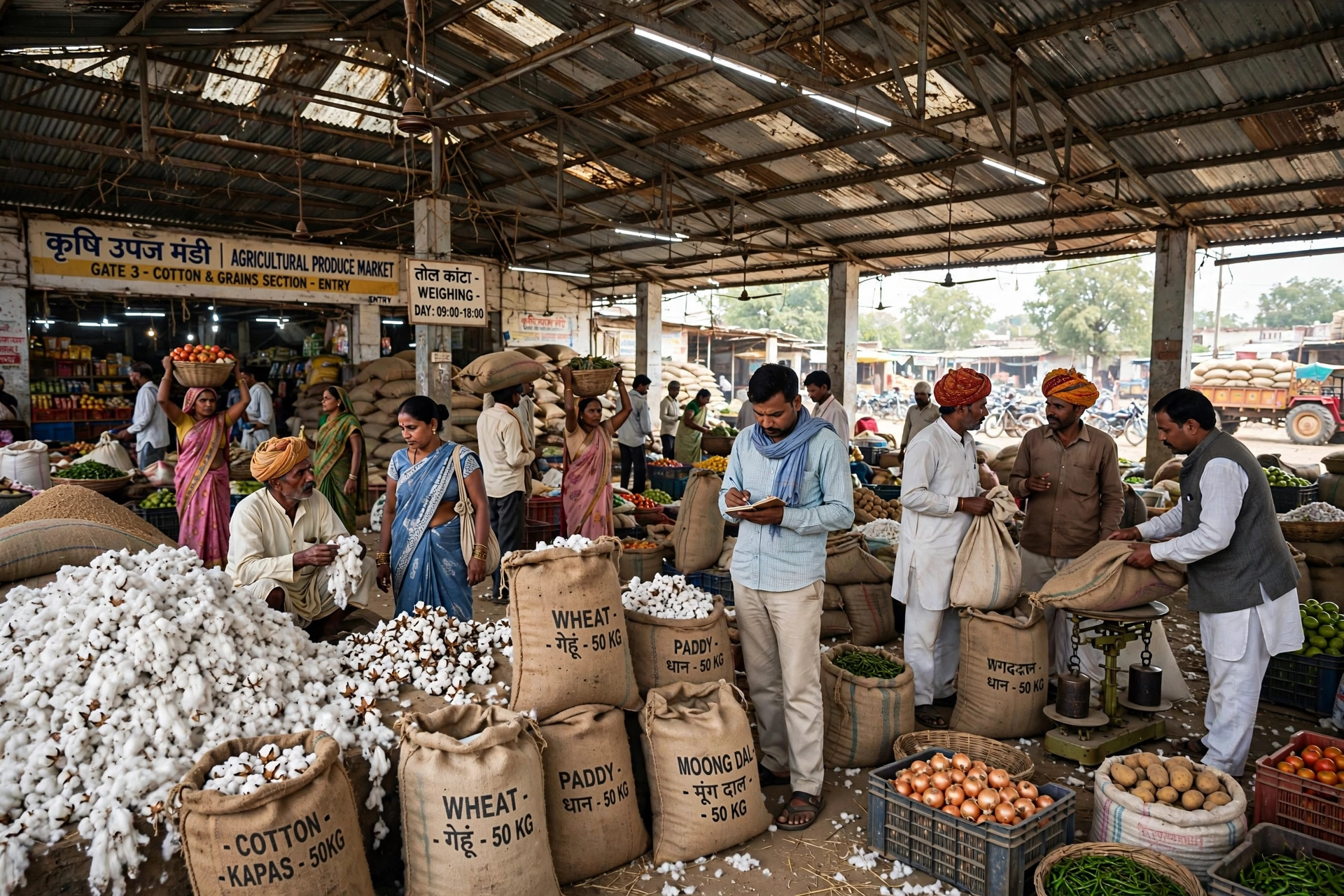
Towards this end, the Government of India announces minimum support prices for major agricultural commodities each year in both crop seasons, after taking into account the recommendations of the Commission for Agricultural Costs and Prices (CACP). For cotton, the support price is the floor under the kapas (seed cotton) market: when market prices touch the MSP, the Cotton Corporation of India undertakes its price support purchases. The minimum support price data by year is provided by the Directorate of Economics and Statistics, Department of Agriculture and Cooperation.
Minimum Support Price Statement
The MSP statement provided by the Directorate of Economics and Statistics, Department of Agriculture and Cooperation (PDF).
Cotton Resources for India
The cotton chain behind the textile industry is covered across five connected pages: cotton in India gathers the resources, the Cotton Corporation of India (CCI) carries out price support operations in the market yards, the Commission for Agricultural Costs and Prices (CACP) recommends the prices, the minimum support price (MSP) itself is explained on its own page, and the Department of Agriculture and Cooperation (DAC) administers the agricultural programmes behind them.
More to Explore
Common Questions
What is a minimum support price?
A form of market intervention by the Government of India to insure agricultural producers against any sharp fall in farm prices: a price support that keeps the market price of a good at or above a set level, with the government agreeing to purchase the surplus at the minimum price.
Why does MSP matter for cotton?
Cotton is one of the agricultural commodities covered. The MSP is the floor under the kapas (seed cotton) market: assurance of a remunerative and stable price environment encourages growers to invest and adopt modern technology, and when market prices touch the MSP, the Cotton Corporation of India buys kapas under its price support operations.
Who recommends and who announces MSPs?
The Commission for Agricultural Costs and Prices (CACP) recommends them; the Government of India announces minimum support prices for major agricultural commodities each year in both crop seasons after taking those recommendations into account.