Alexander McQueen Women's Fashion Brand
Lee Alexander McQueen, CBE, was a British fashion designer and couturier, known for having worked as chief designer at Givenchy from 1996 to 2001 and for founding his own Alexander McQueen label. the Alexander McQueen brand was founded by the designer in 1992; in December 2000 the Gucci Group acquired 51% of his company and appointed him as Creative Director. Alexander McQueen died in 2010, but his brand has lived on successfully - the profile adding, in parentheses, that it would have been even better with him still at the helm.
Shop Women's Alexander McQueen Now
Shop Women's Alexander McQueen on Amazon Shop Women's Alexander McQueen on eBayThe Amazon and eBay links on this page are affiliate links. If you make a purchase through them, Apparel Search may earn a commission.

Lee Alexander McQueen, CBE, was a British fashion designer and couturier, known for having worked as chief designer at Givenchy from 1996 to 2001 and for founding his own Alexander McQueen label. the Alexander McQueen brand was founded by the designer in 1992; in December 2000 the Gucci Group acquired 51% of his company and appointed him as Creative Director. Alexander McQueen died in 2010, but his brand has lived on successfully - the profile adding, in parentheses, that it would have been even better with him still at the helm.
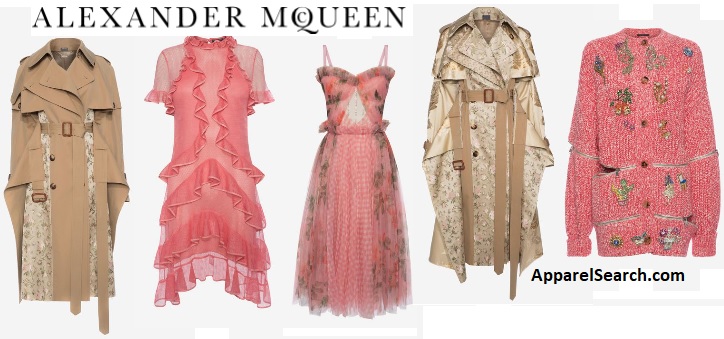
For women, the label means the meeting of savage tailoring and romantic drama: jackets cut with a sculptor's severity, dresses that treat history, nature and theatre as raw material. In total, McQueen designed 36 collections for his London label, including his MA graduate collection - a body of work small enough to study and large enough to have changed what a runway could be.
The Shows That Made the Name
Alexander McQueen staged lavish and unconventional runway shows: a recreation of a shipwreck for his Spring 2003 collection, Spring 2005's human chess game, and the Fall 2006 show, Widows of Culloden, which featured a life-sized hologram of supermodel Kate Moss dressed in yards of rippling fabric. Those productions were not decoration on the clothes; they were the argument for them, and they are why the women's pieces from his tenure are collected rather than merely worn.
On 27 July 2006, the company launched a lower-priced diffusion line, McQ, linked alongside the main label. The two-tier structure still organises secondhand buying: mainline McQueen carries the tailoring and the showpiece construction, while McQ pieces are the younger, more casual diffusion designs. Knowing which line a listing belongs to is the first step in judging whether its price makes sense.
Buying Alexander McQueen for Women
Begin with tailoring, the house's foundation skill. A McQueen jacket should hold its sculpted shape off the body, with shoulders and waist placed exactly where the design intends; soft or slumped structure in a supposedly structured piece is a warning sign in a used garment. Dresses reward the same scrutiny at the internal construction - boning, lining and finish should feel engineered, because in this house they were.
Authenticity matters at these prices: buy from sellers who show labels, hardware and construction in detail, and be suspicious of showpiece designs offered cheaply. Care follows the garment's ambition - structured and embellished pieces are dry-clean and specialist territory, stored supported rather than crushed. Apparel Search also maintains a fuller Alexander McQueen designer profile and blog coverage, linked from this page, for readers who want the biography behind the brand.
Common Questions
Who founded Alexander McQueen, and when?
British designer Lee Alexander McQueen founded his own label in 1992. He was also chief designer at Givenchy from 1996 to 2001, and the Gucci Group acquired 51% of his company in December 2000.
What is McQ?
The company's lower-priced diffusion line, launched on 27 July 2006 - younger and more casual than the mainline label.
How many collections did McQueen design for his London label?
Thirty-six in total, including his MA graduate collection.
More in Women's Fashion Brands A
The A letter hub and related A brands:
Photos
More to Explore on Apparel Search
References & Further Reading
Looking for Women's Clothing Stores?
This profile helps you research the Alexander McQueen women's fashion brand. To browse where to buy, visit our women's clothing store directory, where you can find retailers that carry women's clothing.