Women's Sunglasses Guide
Sunglasses are tinted eyewear that protect the eyes from sunlight and glare — and the right pair depends as much on lens standards and fit as on the frame shape you love.
Shop Women's Sunglasses Now
Shop Women's Sunglasses on Amazon Shop Women's Sunglasses on eBayThe Amazon and eBay links on this page are affiliate links. If you make a purchase through them, Apparel Search may earn a commission.

Sunglasses are, in the original guide's plain definition, a type of eyewear tinted to protect the eyes from sunlight or glare, designed to prevent bright sunlight and high-energy visible light from damaging or discomforting the eyes. The same page was equally honest about the second function: sunglasses are also designed to help the wearer look good, and finding the proper pair for your face can become quite an adventure. Both jobs matter, and this guide refuses to trade one for the other.
That means treating sunglasses as protective equipment first and as a fashion accessory second — in that order when you shop, even if the frame is what you fall for. The pages ahead cover what real UV protection means, the lens options that go beyond dark tint, how frame shapes interact with face shapes, and the fit checks that decide whether a beautiful pair is still comfortable at hour three of a bright day.
Protection: UV, Impact and Why Dark Is Not Enough
Tint alone protects against nothing but brightness. Genuine protection means lenses that block 99 to 100 percent of UVA and UVB rays, sometimes labeled UV400, and that label matters more than how dark the lens looks — a dark lens without UV filtering can actually be worse than none, because the eye relaxes behind the shade while ultraviolet light still enters. Buy from reputable makers who state the UV rating plainly, and treat unmarked novelty sunglasses as costume, not eyewear.
In the United States, sunglasses are regulated as medical devices, and the original page linked the U.S. Food and Drug Administration guidance on sunglasses, spectacle frames and lenses for good reason: the FDA requires sunglasses sold in the U.S. to meet impact-resistance standards, so lenses must be tested not to shatter dangerously. Wraparound and oversized styles add physical coverage, keeping light and wind from slipping in at the edges — one reason athletes and drivers favor them beyond fashion. Protection, in short, is a specification, and it should be printed, not implied.
Lenses: Tints, Polarization and Prescription Options
Lens color changes what you see, not just how you look. Gray lenses reduce brightness while keeping colors true, the safest all-purpose choice. Brown and amber lenses increase contrast and suit driving and changeable light. Green lenses offer a balance of contrast and accuracy with a classic feel. Gradient lenses, darker at the top and lighter below, are kind to dashboards and reading outdoors. Mirrored coatings cut glare further and hide the eyes completely — the original guide noted sunglasses are sometimes worn simply to conceal the eyes, and mirrored lenses are the emphatic version.
Polarized lenses filter the horizontal glare that bounces off water, wet roads and car hoods, and they are the single most noticeable upgrade for driving, boating and beach days; they can, however, dim some instrument screens and make ice patches on roads harder to read. Photochromic lenses that darken in sunlight suit prescription wearers, and most popular frame styles now accept prescription sun lenses, so needing correction no longer means choosing between seeing and squinting. Decide by your brightest regular activity, not by the display photograph.
Frames and Face Shapes
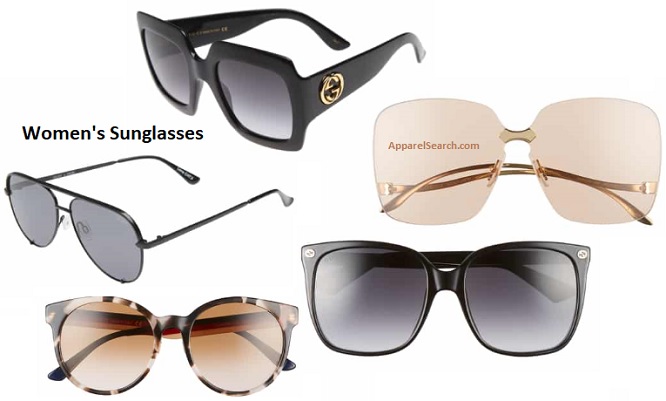
Sunglasses come in a very wide variety of colors, shapes and sizes, as the original guide observed, and some shapes stay popular year after year while trendy versions rotate through. The durable families are aviators, wayfarer-style squares, cat-eyes, round frames and oversized shields. The usual face-shape guidance is a starting point, not a law: angular frames balance rounder faces, rounder frames soften angular faces, and cat-eyes lift features on almost everyone, which is why the style keeps returning decade after decade.
Fit outranks shape. Frames should sit without pinching the temples or sliding down the nose, lashes should not sweep the lens when you blink, and the top of the frame should roughly follow your brow line. The width printed inside most temple arms — lens width, bridge width and temple length in millimeters — lets you compare a comfortable pair you own against any pair online. Designer sunglasses from high-end fashion brands add finish, materials and cachet, and fashion trends will always pull shapes in cycles; a well-fitting classic bought once serves longer than three trendy pairs that pinch.
Care, Cases and a Second Pair
Sunglasses fail by scratches and by being sat on, rarely by age. Keep them in a hard or structured case whenever they are off your face, clean lenses with a microfiber cloth rather than a shirt hem or tissue, and rinse beach grit off before wiping, since sand is an abrasive that one wipe will drag across the lens. Avoid leaving pairs on a hot dashboard, where heat can warp acetate frames and damage lens coatings, and tighten hinge screws once in a while before they loosen past saving.
A sensible collection is small: one best pair that fits properly and meets the protection standards above, and one inexpensive backup for the beach bag, the car and the days when losing a pair is a real possibility. Rotate them by risk, not by outfit. Chosen with the specifications in hand and the fit checked honestly, a pair earns its keep every bright day of the year.
Related Women's Guides
Photos From Our Original Guide

More to Explore on Apparel Search
Women’s Clothes Guide by Letter: Women's Clothing Directory P · Women's Apparel Directory Q · Women's Fashion Directory R · Women's Clothes Directory T
References & Further Reading
More to Explore on Apparel Search
Looking for Women's Clothing Stores?
This guide helps you choose women's sunglasses. To browse where to buy, visit our women's clothing store directory, where you can find retailers that carry them.