Fashion Eyewear
Apparel Search fashion summary — a short guide to fashion eyewear.
Eyewear is everything worn on or over the eyes: spectacles, sunglasses and the rest. Fashion eyewear is eyewear designed to be stylish or trendy by current standards — chosen for fashion or adornment, for protection against the environment, and to improve or enhance visual acuity, all at once. It is the umbrella category under which the individual eyewear products sit.
Fashion Eyewear — Explore & Resources
The Full Eyewear Category
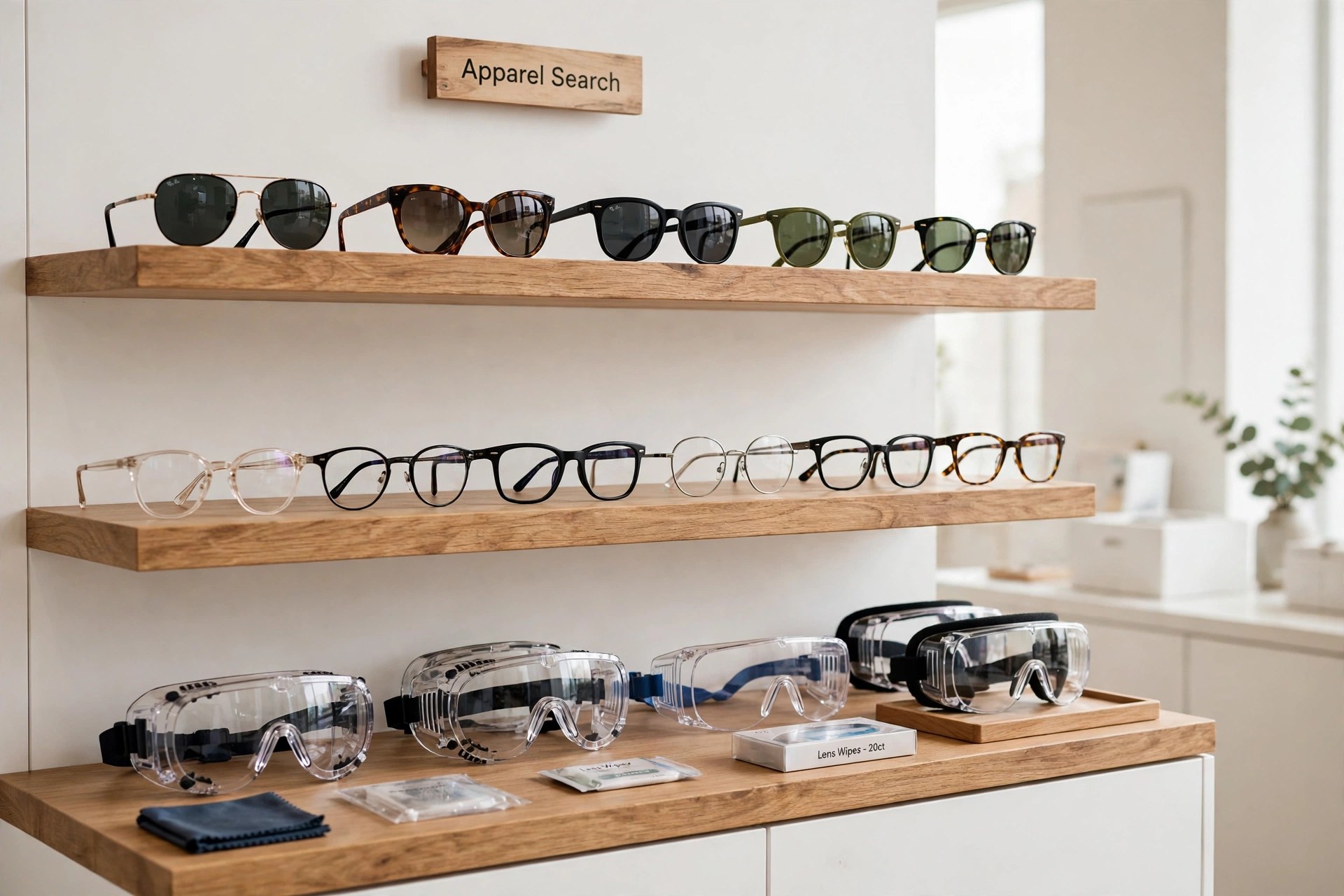
Common forms of eyewear include glasses (eyeglasses or spectacles), sunglasses and contact lenses. Eyewear also includes utilitarian eye protection such as goggles, while blindfolds count as eyewear of the opposite purpose — worn to block vision rather than improve it. Fashion eyewear concentrates on the visible, wearable end of that range: prescription glasses, sunglasses and frames designed not only to function but to make a statement.
That dual role is what makes eyewear a fashion accessory in its own right. Frames enhance a wearer's appearance and personality, accentuate facial features and complete an outfit, which is why designers and brands treat eyeglasses and sunglasses as collections that change with the seasons. The short version of the whole category: consult a fashionista if you want to look good in eyewear, and consult an optician if you wish to see well in it — most buyers need both.
Trends and Technology in Eyewear
Recent eyewear trends run in several directions at once. Retro revival brings back vintage shapes — cat-eye frames, aviators and oversized round glasses from the 1950s through the 1980s. Transparent and clear acetate frames offer a near-frameless look that suits many outfits. Bold geometric shapes — hexagons, octagons and irregular designs — and embellished frames with pearls, rhinestones and patterns serve wearers who want the opposite of invisible. Sustainable materials such as bamboo, recycled plastics and biodegradable acetate serve the growing eco-conscious market.
Technology is reshaping the category from the workshop outward. 3D printing allows intricate, customisable frames that traditional methods could not make. Virtual try-on tools use augmented reality so online shoppers can see frames on their own faces before buying. Materials and lens technology keep advancing together: lightweight high-index lenses, anti-reflective and blue light-blocking coatings, photochromic lenses that darken in sunlight, and at the frontier, tech-integrated eyewear with displays and smart sensors built into the frame.
Building a Small Eyewear Wardrobe
Most wearers are best served by a small eyewear wardrobe rather than a single pair. One dependable everyday frame that suits work and most clothing; one bolder pair for evenings and occasions, where embellished or geometric designs earn their keep; and one proper pair of sunglasses, chosen for real sun protection rather than tint alone, with polarised lenses if glare from water or roads is a regular problem. That three-pair structure covers the category's main jobs — correction, expression and protection — and each pair lasts longer when it is not being worn for everything. The eyeglasses and glasses summaries linked from this page take two of those jobs in more detail.
Photos

Common Questions
What counts as eyewear?
Anything worn on or over the eyes: glasses and spectacles, sunglasses, contact lenses and protective forms such as goggles. Fashion eyewear is the part of the category designed to be stylish as well as functional.
What are the main fashion eyewear trends?
Retro revivals such as cat-eye and aviator shapes, transparent acetate frames, bold geometric shapes, embellished frames, and sustainable materials such as bamboo, recycled plastic and biodegradable acetate.
How is technology changing eyewear?
Through 3D-printed custom frames, augmented-reality virtual try-ons, advanced lens coatings including blue light-blocking and photochromic lenses, thinner high-index materials, and smart eyewear with built-in displays and sensors.