Women's Designer Sunglasses
Great sunglasses protect your eyes first and flatter your face second — this guide covers frames, lenses and how to spot the genuine article.
Shop Women's Designer Sunglasses Now
Shop Women's Designer Sunglasses on Amazon Shop Women's Designer Sunglasses on eBayThe Amazon and eBay links on this page are affiliate links. If you make a purchase through them, Apparel Search may earn a commission.
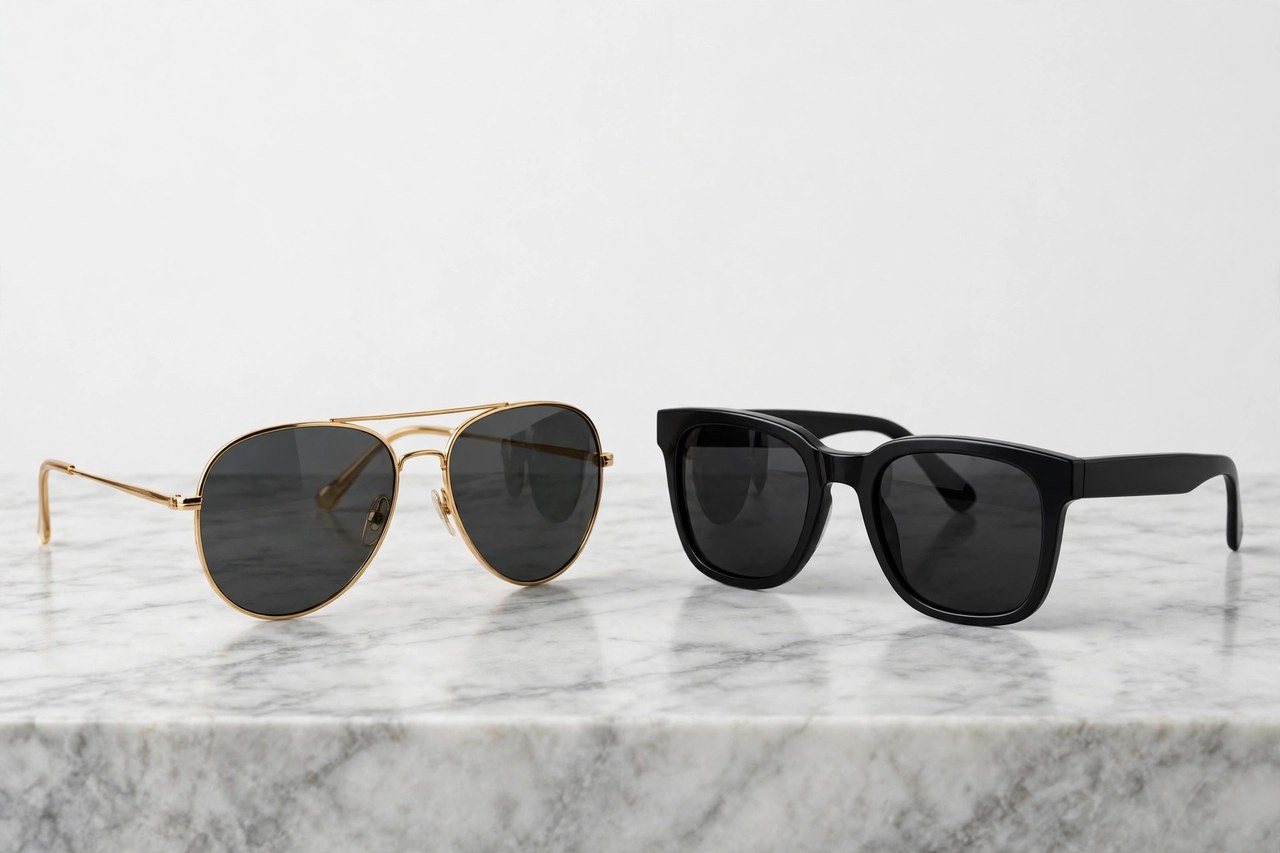
Designer sunglasses sit at the meeting point of eyewear engineering and fashion. Done well, they give you glare-free vision, full ultraviolet protection, and a frame shape that sharpens your features the way good tailoring sharpens a silhouette. Done poorly, they are just dark plastic with a famous name. The difference is in the frame material, the lens, and dozens of small finishing decisions.
Each house has a visual language — oversized glamour, sharp cat-eyes, classic aviators, minimal rimless shields — so choosing starts with the mood you want. But fit and lens quality should always outrank the logo. This guide walks through materials, protection, face-shape fit, and the authenticity checks that matter, so a premium purchase feels premium every time you put it on.
Frame Materials: Acetate, Titanium and More
Cellulose acetate is the luxury standard for bold frames. It is plant-derived, can be layered and polished to a deep, marbled shine, holds rich colour without paint, and can be adjusted by an optician with heat. Quality acetate feels substantial, has no moulding seams on the front, and polishes to a glassy finish. Cheaper injected plastic feels lighter, looks flatter, and is more prone to warping and surface scratches.
Metals bring lightness and precision. Titanium is exceptionally light, strong, flexible, and hypoallergenic, ideal for slim aviators and rimless styles, while stainless steel and monel are common in mid-weight frames. Combination frames pair an acetate front with metal temples for balance. Check that hinges move smoothly, nose pads sit evenly, and temple tips are finished without sharp edges — you will feel any roughness within minutes of wearing them.
Lens Quality and Real UV Protection
Darkness is not protection. Insist on lenses labelled as blocking 100 percent of UVA and UVB rays, often marked UV400, which covers wavelengths up to 400 nanometres. Reputable designer lenses meet this as standard; if a listing is vague about UV, walk away. Lens materials include nylon and polycarbonate for lightness and impact resistance, and glass for superb clarity at extra weight. Polarised lenses add a filter that cuts reflected glare from water, roads, and snow, which drivers and boaters especially appreciate, though they can dim some screens.
Good lenses are optically true: look at a straight edge through the lens and move it slowly — the line should not wobble or bend. Tints are functional as well as stylish. Grey keeps colours truest, brown and amber heighten contrast, green is a balanced classic, and gradient lenses, darker at the top, suit driving and reading outdoors. Mirrored coatings reduce brightness further and hide the eyes, but show scratches more, so they reward careful handling.
Authenticity: Hinges, Logos, Case and Weight
Authenticity lives in consistency. Logos and model markings should be crisp, correctly spelled, and in the house's proper typeface, etched or inlaid rather than printed crookedly on the surface. The inside temples usually carry the model code, size, colour code, and country of manufacture, matching the box and authenticity card exactly. Hinges on genuine frames are often five- or seven-barrel metal hinges, screwed not glued, opening with even resistance and no looseness at the joint.
Feel the weight and finish. Real acetate and metal frames feel balanced, neither suspiciously feather-light nor clumsy, with polished edges and no rough flashing. The case, cleaning cloth, and cards should be finished to retail standard — flimsy cases and blurry printing are warning signs. Buy from the house, department stores, or authorised opticians, and be wary of prices far below retail, marketplace listings with stock photos only, and sellers who cannot show the temple markings.
Fit for Your Face, Price Logic and Care
Fit starts with width: the frame front should be roughly as wide as your face, lenses centred over your eyes, temples straight without squeezing. As a starting guide, round faces gain definition from angular and cat-eye shapes, square faces soften with round or oval frames, heart-shaped faces balance with wider bottoms or aviators, and oval faces suit most styles, so proportion matters most. Your brows should sit just above or along the top line, lashes should not brush the lens, and the bridge should rest without sliding or pinching.
You pay for lens optics, acetate quality, hinge engineering, and design, not decoration alone, so a mid-priced authentic pair beats a cheap imitation on every measure including safety. Care is simple: rinse dust off before wiping, clean with the microfibre cloth and a drop of lens solution, store in the hard case rather than on your head or car dashboard, and keep them away from heat that can warp acetate. Tighten hinge screws gently if they loosen, and have an optician adjust fit rather than bending frames by force.
Related Women's Guides
Lens Colors and Frame Materials
Designer sunglasses are about more than a trendy frame — lens color, polarization, gradation, mirroring and materials can all be combined in a single pair. As a general guide (consult an eye doctor for advice specific to your eyes): gray and green lenses are considered neutral because they maintain true colors; brown lenses cause some color distortion but increase contrast; turquoise suits medium and high light, enhancing contrast without significant distortion; yellow and amber sharpen object definition and make distant objects appear more distinct in snow or haze — popular with skiers, hunters, boaters and pilots; and blue or purple lenses are popular with shooters because they increase the contrast of orange targets against green foliage. For general use, red, grey, green or brown are recommended to minimize the color distortion that could affect safety while driving. A mirrored coating deflects some light before it is transmitted through the lens — useful in bright conditions, though it does not by itself block UV — and can be made in any color for styling.
Frames are generally plastic, nylon, metal or a metal alloy. Nylon frames are the sports choice: lightweight and flexible, they bend slightly and return to shape instead of breaking, and the flex helps them grip the face. Metal frames are more rigid and can be damaged more easily in sport, but often add spring-loaded hinges for a better hold; the resting hooks and nose bridge may be textured or rubber-tipped to improve grip, and hook ends are usually curved to wrap around the ear. Compare styles in our women's sunglasses and women's eyewear guides, or find retailers in the sunglass stores directory.
Designer Sunglasses From Our Original Guide


More to Explore on Apparel Search
Looking for Women's Clothing Stores?
This guide helps you choose women's designer sunglasses by label, style and fit. To browse where to buy, visit our women's clothing store directory, where you can find retailers that carry them.