1750-1795 Fashion History presented by Apparel Search
Fashion Industry Fashion History Color Trend Forecasting Artist Guide Merchandising Fashion Industry News Definition List
In the period 1750-1795 in European and European-influenced countries, fashionable women's clothing styles tended to be somewhat confining and cumbersome. The hoop-skirts of the 1740s were left behind, but wide panniers came into style several times, and the aesthetic of an inverted conical corseted torso above full skirts prevailed during most of the period.
The 1770s were notable for extreme hairstyles which were built up very high, and often incorporated decorative objects (sometimes symbolic, as in the case of the famous engraving depicting a lady wearing a large ship in her hair with masts and sails called the "Coffure l'Independance ou la Triomphe de la libert" to celebrate naval victory in the American war of independence). These coiffures were parodied in several famous satirical caricatures of the period.
In the 1780s, panniers finally disappeared, and bustles were worn for a time. Elaborate hats replaced the former "big hair".
By 1790, skirts were still somewhat full, but they were no longer obviously pushed out in any particular direction (though a slight bustle might still be worn). The "pouter-pigeon" front came into style (many layers of cloth pinned over the bodice), but in other respects women's fashions were starting to be simplified by influences from Englishwomen's country outdoors wear (thus the "redingote" was the French pronunciation of an English "riding coat"), and from neo-classicism. By 1795, waistlines were somewhat raised, preparing the way for the empire silhouette and unabashed neo-classicism of ca. 1800 fashions.
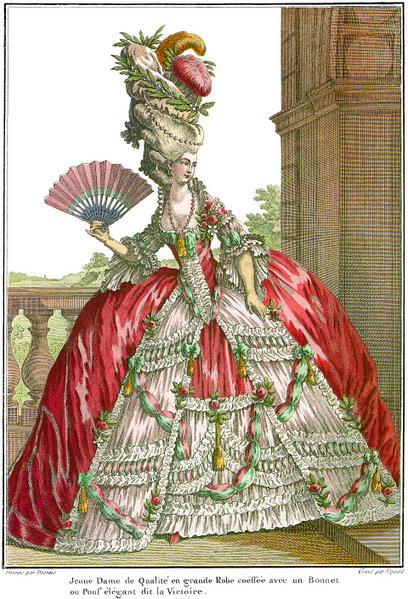
Photo: 1778 fashion plate of French court dress with wide panniers.
| The above article is licensed under the GNU Free Documentation License. From Wikipedia, the free encyclopedia https://en.wikipedia.org/wiki/1750-1795_in_fashion 1/13/06 |
Designer Definition (from U.S Department of Labor)
Learn about another era in fashion:
1980's Fashion History / 1980's Fashion Term (terms section)
