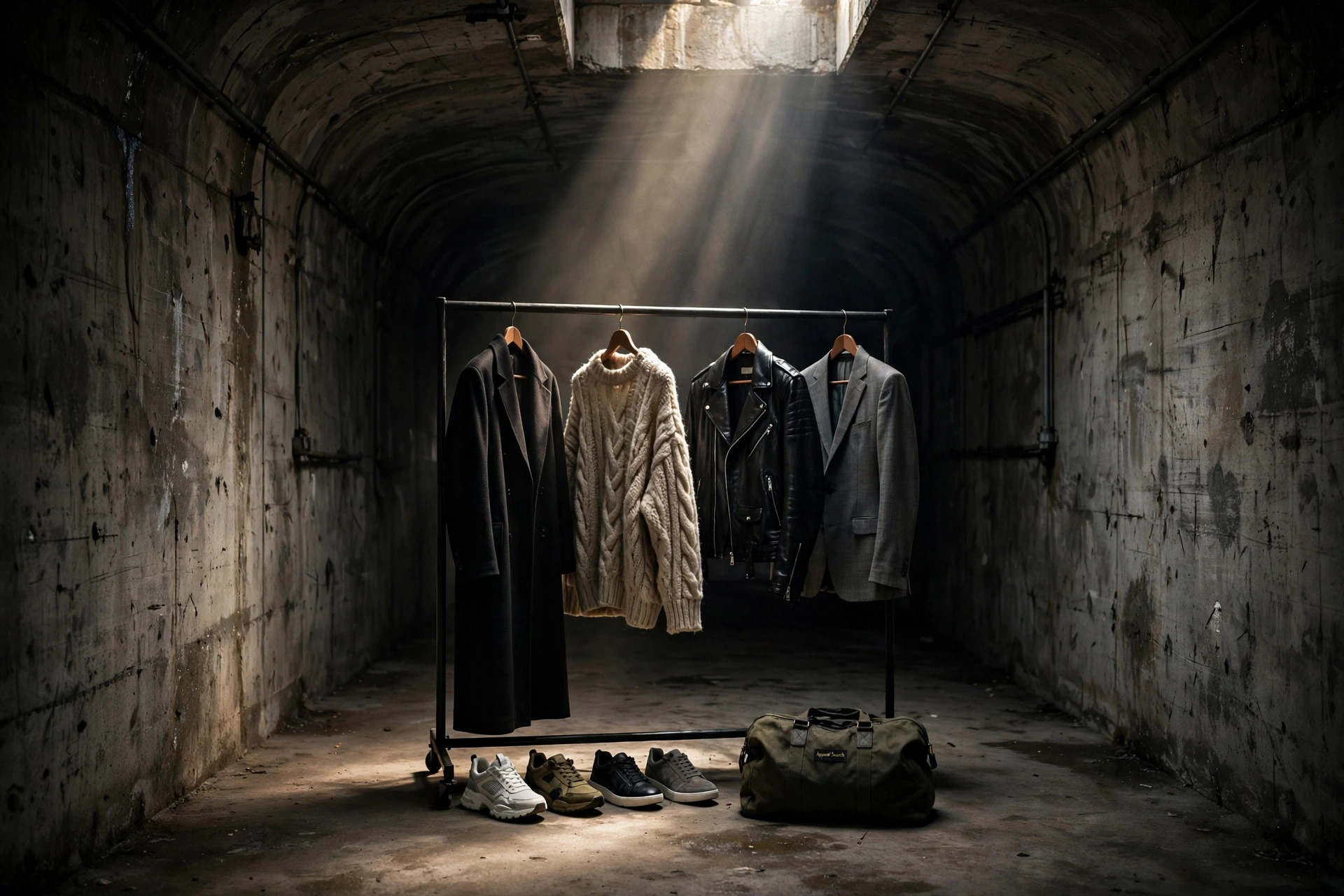
01 / OriginsThe Dress Code That Backfired Beautifully
In 2005, the NBA introduced a dress code for players engaged in league business: business casual, no sleeveless shirts, no chains worn outside clothing. The intent was tidiness. The effect, over the following decade, was transformation. A generation of players raised under the rule learned tailoring as a competitive skill — first wearing the blazer correctly, then wearing it personally, then abandoning the blazer for a wardrobe with no ceiling at all. Compliance turned into competition: if everyone must arrive dressed, then arrival becomes a contest of who dresses best. The tunnel — the walk from arena door to locker room that every player must make, in front of every camera the team employs — became the contest's arena.
The symbolism landed in the 2018 Finals, when LeBron James's Cleveland Cavaliers arrived game after game in matching made-to-measure Thom Browne suits — cropped trousers, cardigans, sunglasses, the full uniform of a fashion house worn as a team kit. ESPN priced the per-player wardrobe north of $17,000. A team had dressed as one man, in a designer's complete look, for a basketball game. The tunnel was no longer where players happened to be photographed. It was where they performed.
02 / The MediaThe Hallway Gets an Editor
What turned scattered photos into a culture was curation. In April 2018, SLAM magazine launched LeagueFits, created by Ian Pierno: an account devoted entirely to NBA arrival fashion, which grew past a million followers and professionalized the genre — daily posts, debate, shopping links, and an annual awards structure (All-LeagueFits teams, an MVP) that mirrors the league's own honors. A fit now had a record, a ranking and a season. The league itself followed the audience, building tunnel content into its official channels. The commercial physics are simple and were proven early: when a player wore a piece in the tunnel, it moved — Kyle Kuzma's oversized pink sweater became a multi-year meme and a sales event; a Shai Gilgeous-Alexander appearance in a buzzy label reliably spiked searches for the brand the following week. The tunnel is not coverage of fashion. It is a distribution channel for it.
03 / The CastThe Defining Dressers
04 / The Other TunnelThe WNBA Built Its Own Runway
The women's game adopted the format and then accelerated it. The WNBA's 2024 season — a landmark year for attention — made its tunnel a fashion beat in its own right: arrivals covered nightly, dedicated style accounts, and a draft night on which Caitlin Clark wore Prada, the first time the house had dressed an athlete for an NBA or WNBA draft. A'ja Wilson, the league's defining player, dresses the tunnel with the same command she plays with and launched her own Nike signature shoe, the A'One, in 2025; Angel Reese arrived from college with a fashion persona fully formed and a nickname (“Bayou Barbie”) that is itself a style brand. The WNBA tunnel matters to the fashion industry for the same reason the NBA's does, plus one more: it is a runway where the audience, the athletes and the clothes are all still rising at once.
05 / The BusinessThe Economy Underneath
A nightly runway runs on labor. Behind the top tunnel dressers stands a professional class of athlete stylists who maintain wardrobe pipelines, fly in for fittings, source pieces across continents and tailor everything to a body that must also play a game in four hours. Reported annual clothing budgets for the league's committed dressers run into five and six figures; a single bag can cost more than a car. Brands, for their part, treat placement in the tunnel as media buying with better returns — a point the league's own fine book underlines from the other side: in the 2025 playoffs, Jalen Williams was fined $25,000 for a profanity printed on a warm-up shirt. Even fashion's freest runway is a workplace, with a dress code still buried in it — which is, of course, where the whole culture started.
06 / The SpreadEvery Sport Has a Tunnel Now
The format escaped basketball. NFL arrivals are now covered as fashion. Soccer had a head start in spirit — players like Héctor Bellerín were front-row fixtures years before “tunnel fit” was a phrase — and the football shirt itself became streetwear, as our soccer jersey guide tells. Tennis has begun staging arrival content at its events. And in Formula 1, the paddock walk produced the phenomenon's most decorated practitioner, Lewis Hamilton, whose arrivals predate the term and whose fashion career — collections, a Dior capsule, a label of his own — is the tunnel economy's proof of concept. The lesson every league has now learned is the one the NBA's 2005 dress code taught by accident: athletes walking to work are a fashion medium, and the medium belongs to whoever dresses best for it. Even the jewelry followed them down the tunnel — championship nights end with the pieces in our NBA championship rings guide.