Bronzer
Capturing the sun-kissed glow — warmth and dimension, without the sun.
Bronzer makeup is a cosmetic product designed to create the illusion of a sun-kissed complexion — a versatile tool for adding warmth and dimension to the skin, enhancing features and achieving a healthy, radiant look. This page explains what bronzer is, its four main uses, exactly how to apply it, and how to shop for the right shade, formula and finish. Start from the Makeup Guide or browse Beauty.
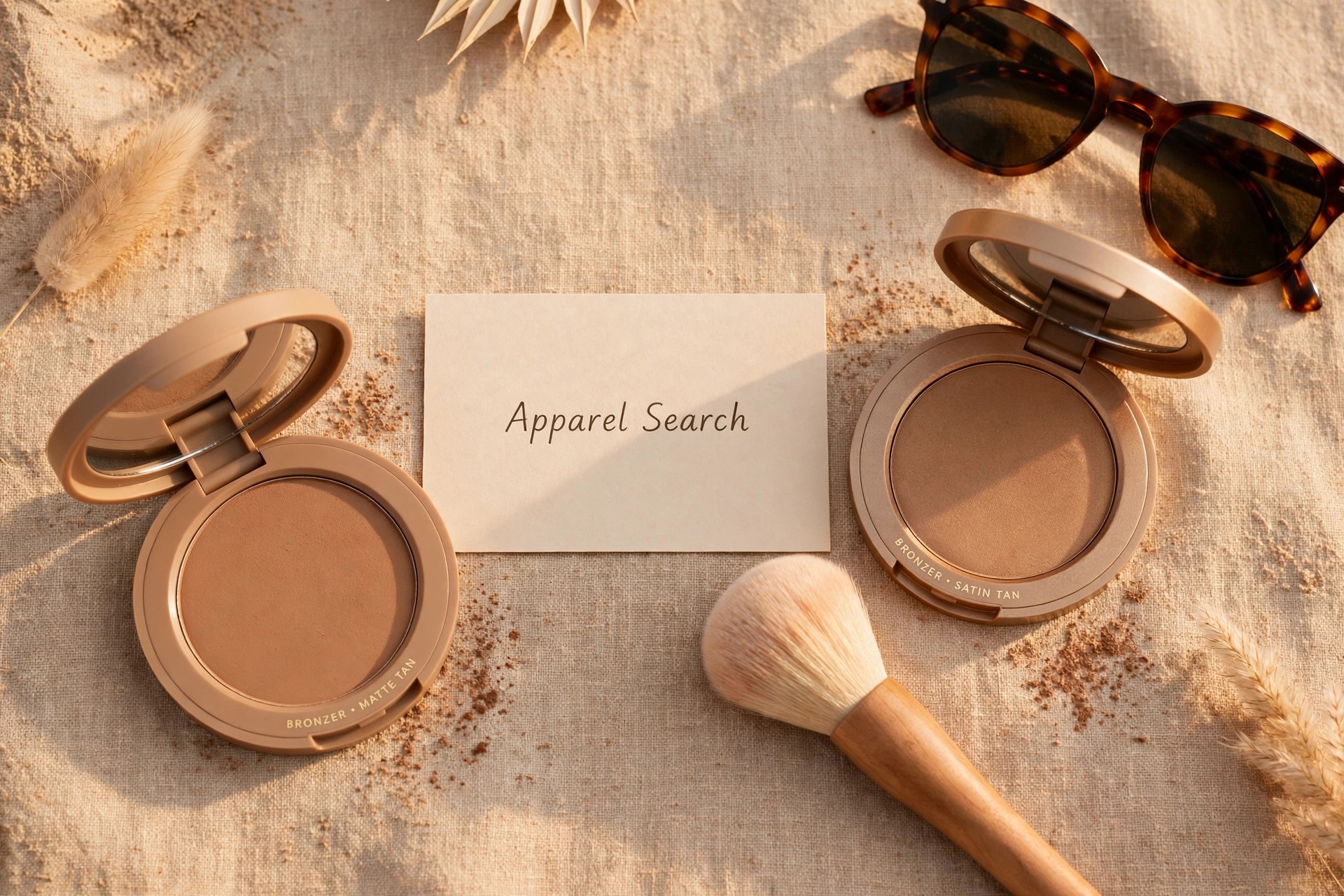
What Bronzer Makeup Is
Bronzer is typically a powder or cream product that is a few shades darker than your natural skin tone. It mimics the appearance of a tan by adding warmth and depth to the face. While bronzer is often used on the cheeks, it can also be applied to the temples, jawline and nose to create a more sculpted and radiant look — placed, in other words, where sunlight itself would land first.
Uses: Contouring, Warmth, Blending, Eyes
Contouring: applied to the hollows of the cheeks, along the jawline and around the hairline, bronzer defines and shapes the face, creating the illusion of more sculpted features. Warming the complexion: bronzer adds a touch of warmth that makes skin look healthier and more vibrant — ideal for fair to medium skin tones that want a sun-kissed glow without sun exposure. Blending makeup: bronzer softens the edges of other products such as blush and highlighter, creating a seamless, harmonious look. Eye makeup: bronzer doubles as eyeshadow for a natural, cohesive look, adding depth and warmth to the lids in the same tone family as the rest of the face.
How to Apply Bronzer
Choose the right shade — only a few shades darker than your natural skin tone, with warm undertones preferred for a sun-kissed effect. Use a soft, fluffy brush for even application; a tapered end helps you contour and blend precisely. Apply where the sun would naturally hit your face — cheekbones, temples, jawline and the sides of the nose — and blend well to avoid harsh lines. Build gradually: start light and add color as needed, so you control the intensity instead of correcting it. For longer wear, set bronzer with a translucent setting powder.
Shopping Tips for Bronzer
Determine your skin tone first: lighter bronzers suit fair skin, while medium to deep skin tones can opt for darker shades. Select the formula for your skin — powder for oily skin and a matte finish, cream for a dewy, natural look. Shop at reputable retailers such as Sephora, Ulta and department stores, read reviews for pigmentation, blendability and longevity, and ask beauty experts or makeup artists for recommendations when unsure. Swatch shades on your wrist or jawline and check the color in natural light. Decide the finish deliberately (matte for contouring, slight shimmer for radiance), check ingredients if you have sensitive skin or allergies, and look for multitasking products that double as blush or eyeshadow. Great options exist at every price point, from drugstore to high-end — Benefit Cosmetics’ Hoola Bronzer is a cult favorite worth knowing as the category benchmark.
Common Questions
What is bronzer makeup?
Bronzer is typically a powder or cream product a few shades darker than your natural skin tone, used to mimic the appearance of a tan by adding warmth and depth to the face. Applied to the cheeks, temples, jawline and nose, it creates a sun-kissed, sculpted and radiant look — warmth without exposure to the sun.
How do you apply bronzer without overdoing it?
Choose a shade only a few shades darker than your skin, with warm undertones for a sun-kissed effect, and use a soft, fluffy brush (a tapered end helps precise contouring). Apply where the sun would naturally hit — cheekbones, temples, jawline and the sides of the nose — blend well to avoid harsh lines, and build gradually from a light first application. Set with translucent powder for longer wear.
Cream or powder bronzer?
Cream bronzers provide a dewy finish and are often favored for a natural look; powder bronzers are great for oil control and staying power and suit oily skin. Finish matters too: matte bronzers are ideal for contouring, while a slight shimmer gives a radiant, sun-kissed look. Some bronzers multitask as blush or eyeshadow, adding value to a makeup collection.