Men's Team Jerseys Guide
Men's team jerseys are the numbered, named shirts worn by players and supporters in organized sport - football, basketball, baseball, soccer, hockey and more - where the garment identifies team, player and number at a glance. This guide covers the jersey as a product: the tiers from stadium replica to authentic on-field spec, the fabrics and lettering methods, and how supporter jerseys differ from the uniform a team itself wears.
Shop Men's Team Jerseys Now
Shop Men's Team Jerseys on Amazon Shop Men's Team Jerseys on eBayThe Amazon and eBay links on this page are affiliate links. If you make a purchase through them, Apparel Search may earn a commission.
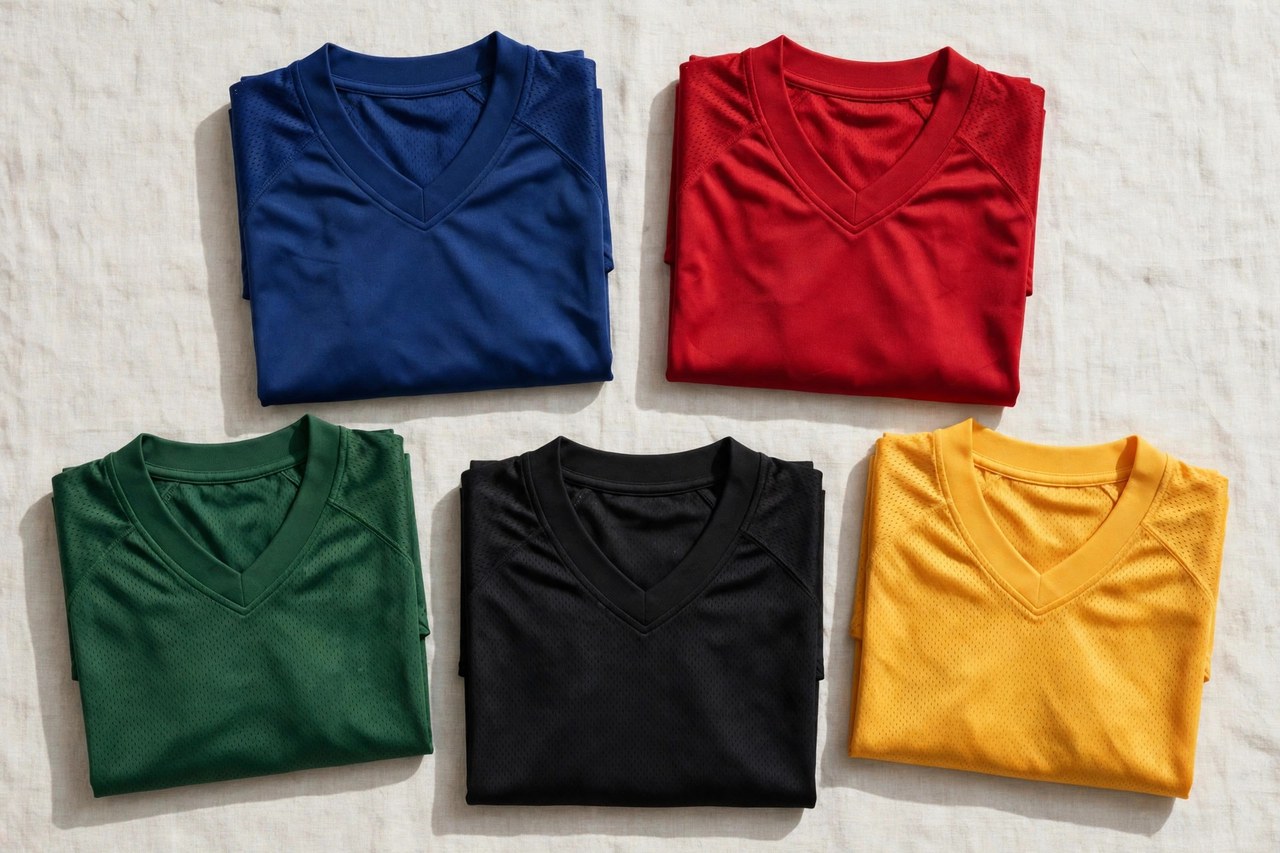
Men's team jerseys are the numbered, named shirts worn by players and supporters in organized sport - football, basketball, baseball, soccer, hockey and more - where the garment identifies team, player and number at a glance. This guide covers the jersey as a product: the tiers from stadium replica to authentic on-field spec, the fabrics and lettering methods, and how supporter jerseys differ from the uniform a team itself wears. This guide covers the styles worth knowing, the fit points that decide comfort, the fabrics and construction that separate a good buy from a regret, and the simple care that makes the garment last.
Styles and Construction
Modern team jerseys are knitted polyester, engineered light and moisture-managing for play, with mesh zones where athletes overheat. The market tiers matter: authentic (or match) jerseys replicate the on-field garment - slim athletic cut, heat-applied crests and numbers, lightest cloth - while replica (stadium) jerseys are cut looser for supporters, with embroidered or sewn twill lettering that survives washing better. Screen-printed budget jerseys sit below both. Lettering is the tell: stitched twill numbers outlast heat transfers, and a crest that is woven or embroidered outlasts a printed one. Sleeve and sponsor marks follow each league's rules, which is why the same team looks slightly different across competitions.
A top earns its keep in finishing: seams that hang straight and stay even at eight to twelve stitches per inch, collars and plackets that lie flat after washing, buttons sewn with thread shanks so they sit in their holes without pulling. Hold the cloth to the light - a tight, even weave or knit outwears a loose one at the same labeled weight, and pattern pieces cut on grain keep the garment from twisting around your body by the third wash.
Fit and Sizing
Decide which wearer you are. Authentic jerseys are athletic-cut and run slim - many supporters size up one. Replicas are cut for ordinary bodies and take your normal size. Length runs longer than a t-shirt in basketball and baseball patterns; soccer jerseys sit closest to tee proportions. Check the maker's size chart by chest measurement, and remember that a jersey worn over a hoodie in a cold stadium needs the size that allows the layer.
Fit tops shoulders and chest first, because tailors cannot cheaply move either: the shoulder seam ends at the shoulder bone, the chest closes without pulling, and both arms raise without the hem escaping the waistband. Tucked lengths must stay tucked sitting; untucked lengths should end mid-fly. Sleeves are the cheap alteration, shoulders the permanent one - reject a wrong shoulder for any reason, forgive a long sleeve for many.
Fitting one wearer is a try-on; fitting a roster is a data exercise. Our team sizing kits and reorders guide covers how organizers collect sizes for a whole squad — sizing kits and sample runs, self-report traps, size-run ratios and spares for late joiners.
Wearing and Care
Wash jerseys inside out, cool, and hang to dry - heat is the enemy of every applied number, nameplate and crest, and a dryer will crack in a season what a line keeps for a decade. Never iron directly on lettering. Store folded rather than on thin hangers, which stretch knit shoulders, and keep white jerseys out of prolonged sunlight, which yellows polyester slowly and permanently.
Launder tops by the label with three defaults: cool or warm water to protect color and trims, dark and printed pieces inside out, and low or line drying, which is the largest single lever on a shirt's lifespan. Fasten buttons and zips before washing to protect the whole load, treat stains before the dryer can set them, and store knits folded so their shoulders keep the shape they were knitted with.
Common Questions
What is the difference between authentic and replica jerseys?
Authentic jerseys copy the players' garment: athletic slim cut, lightest technical cloth, heat-applied badges and numbers. Replica jerseys are made for supporters: a looser, more comfortable cut, more durable sewn or embroidered details, and a lower price. Most fans who wear a jersey weekly are better served by the replica; collectors and players prefer the authentic spec.
How should a team jersey fit?
Replica jerseys take your normal t-shirt size. Authentic jerseys run slim through the body - size up if you are between sizes or plan to layer. Sleeves should end mid-bicep on soccer and football patterns, and the hem should cover the waistband without reaching mid-thigh, except basketball jerseys, which are cut longer by tradition.
How do I wash a jersey without ruining the numbers?
Inside out, cold or cool water, mild detergent, and hang dry - every time. Heat from hot water, dryers and irons is what cracks and peels applied lettering. Sewn twill numbers tolerate more, but the same routine keeps crests, sponsors and colors at their best for years.
More in Men's Clothes Guide T
Background and History
A jersey is an item of knitted clothing, traditionally in wool or cotton, with sleeves, worn as a pullover, as it does not open at the front, unlike a cardigan. It is usually close-fitting and machine knitted in contrast to a guernsey that is more often hand knit with a thicker yarn. The word is usually used interchangeably with sweater. A jersey that is used in sport is a shirt worn by a member of a team , typically depicting the athlete's name and team number as well as the logotype of the team or corporate sponsor. A sports team is a group of individuals who play sports, usually team sports, on the same team. Sport (UK) or sports (US) are all usually forms of competitive physical activity or games which, through casual or organized participation, aim to use, maintain or improve physical ability and skills while providing enjoyment to participants, and in some cases, entertainment for spectators. A fan, or fanatic, sometimes also called aficionado or supporter, is a
Looking for Men's Clothing Stores?
This guide explains men's team jerseys. To browse where to buy, visit our men's clothing store directory, where you can find retailers that carry them.