Men's Track Jackets Guide
A men's track jacket is the zip-front athletic jacket born on the warm-up track: a lightweight, close-fitting layer with a stand or ribbed collar, ribbed cuffs and hem, and the sport's signature side stripes in its classic form. It lives a double life - a genuine training and warm-up garment, and one of casual menswear's most borrowed silhouettes - and this guide covers the construction and fabrics that serve both.
Shop Men's Track Jackets Now
Shop Men's Track Jackets on Amazon Shop Men's Track Jackets on eBayThe Amazon and eBay links on this page are affiliate links. If you make a purchase through them, Apparel Search may earn a commission.
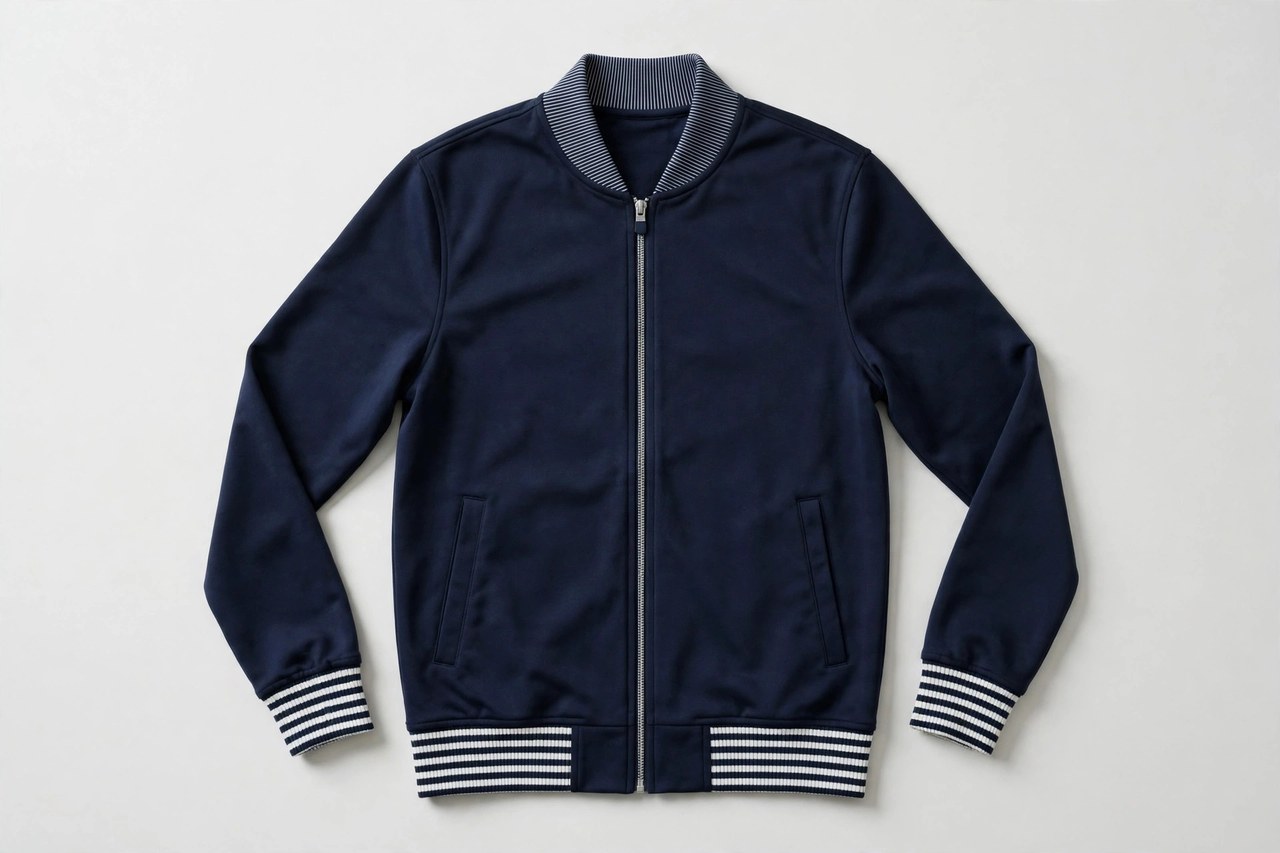
A men's track jacket is the zip-front athletic jacket born on the warm-up track: a lightweight, close-fitting layer with a stand or ribbed collar, ribbed cuffs and hem, and the sport's signature side stripes in its classic form. It lives a double life - a genuine training and warm-up garment, and one of casual menswear's most borrowed silhouettes - and this guide covers the construction and fabrics that serve both. This guide is built around the questions buyers actually ask: which style, which size, which fabric, and what will it look like after a year of real use - answered in order, with the trade-offs stated plainly.
Styles and Construction
Classic track jackets are knitted: polyester tricot with its slight sheen, cotton-blend fleece for softer retro versions, and modern technical knits that wick and stretch for actual training. The pattern's constants are functional - a full zip for temperature control and easy removal over kit, raglan or set-in sleeves that let the arms swing, zip pockets that keep contents aboard during movement, and ribbing at cuff and hem that seals the layer without drawcords. Taped side stripes are heritage decoration now, but the collar tells the era: stand collars and funnel necks are the athletic originals; ribbed baseball collars belong to the fashion descendants. A training-grade jacket adds ventilation panels and a hem that stays put at sprint mechanics.
Outerwear value hides below the surface: taped versus merely stitched seams, a zipper whose slider runs true under one hand, cuffs and hems that adjust to seal weather out, and a lining slippery enough to glide over the layers beneath. Shoulder build decides the hang over knitwear or a jacket, and pocket engineering decides whether hands and kit ride where your body expects them. Specify for the worst honest day, not the brochure day.
Fit and Sizing
A track jacket should fit close through the body - it is a layer, not a coat - with sleeves to the wrist and a hem at the hip bone. For training, test the full range: arms overhead, torso twisted, and the hem should stay in place and the zip should not dig at the throat when closed. For casual wear, the same close fit is the silhouette's point; sizing up turns a track jacket into a shapeless zip-up. Between sizes, athletes take the closer one, spectators the easier one.
Fit outerwear over the bulkiest layer it will honestly cover, and test the working range: arms forward as if driving, arms overhead, sitting with every closure fastened. The coat's shoulders should echo yours rather than extend past them, closures should meet without strain, and the hem must reach the coverage the garment exists to give. A coat fitted over a T-shirt alone belongs to a climate you may not live in.
Wearing and Care
Wash track jackets zipped up, inside out, with like synthetics, and dry low or on the line to protect ribbing and any taped stripes. Avoid fabric softener on technical knits. Store hung on a broad hanger or folded - never crushed at the bottom of a kit bag between sessions, which is how zips bend and ribbing takes a set. Inspect the zip slider each season; a slider replaced early saves the whole garment.
Hang outerwear on broad hangers that carry the shoulders, rest it between wears, and resist washing it often - spot-clean first, and wash by the maker's method with the detergent the fabric demands when a full clean is due. Refresh water-repellent finishes when rain stops beading, never store a coat dirty or compressed, and send leather and tailored pieces to professionals rather than experimenting at home.
Common Questions
What is the difference between a track jacket and a warm-up jacket?
The names overlap in shops, but the track jacket is the specific pattern: zip front, stand or ribbed collar, ribbed cuffs and hem, close fit, often with side stripes - designed originally for warming up and waiting between events. Warm-up jacket is the broader category and includes looser, woven training shells. If it has the ribbed trim and knit body, it is a track jacket whatever the label says.
Can a track jacket be worn casually without looking like sportswear cosplay?
Yes - that crossover is fifty years old. Keep the rest of the outfit clean and un-athletic: plain trousers or dark jeans, minimal shoes, no matching track bottoms unless the full tracksuit is a deliberate statement. A fitted track jacket in a dark, quiet color reads as a knit layer; the loudest retro colors are the ones that keep it in the stadium.
How should a track jacket fit?
Close and clean: shoulders at the shoulder bone, body skimming the torso, hem at the hip, sleeves at the wrist with the ribbed cuff holding them there. It should zip over a tee or training top without strain and move through a full arm swing without the hem riding up. Anything baggier belongs to a different jacket category.
More in Men's Clothes Guide T
Background and History
The top portion of a tracksuit is the jacket. It can be worn with the pants or separately. A tracksuit is an article of clothing consisting of two parts: trousers and a jacket usually with front zipper. This type of garment was originally intended for use in sports. It was mainly designed as apparel athletes wore over competition clothing (such as running shirt and shorts or a swimsuit). Athletes would take off the tracksuit before competition. The tracksuit is also known as a warm-up suit, or "warmups" for short, as they are intended for athletes to keep their bodies warm before or after competition, and during breaks, especially important in cold weather. Many tracksuits have a mesh interior. In addition to athletics a track jacket can be worn casually as well. Tracksuits first became popular around 1975, made out of cotton, polyester, terry cloth, or a mix. In the late 1970s velour became popular, so much so that it became the most used form of fabric on a tracksuit. The
Looking for Men's Clothing Stores?
This guide explains men's track jackets. To browse where to buy, visit our men's clothing store directory, where you can find retailers that carry them.