Men's Vintage Coats Guide
A vintage coat is an older men's overcoat, topcoat, car coat, trench-style coat or heavy winter coat bought for warmth, structure and period character. Coats are among the safest vintage purchases because heavy cloth, generous cuts and repairable construction age slowly when stored well. The buying task is to judge the shell, lining and insulation together, confirm the length and shoulder fit over layers, and check that closures, pockets and hems have survived intact.
Shop Men's Vintage Coats Now
Shop Men's Vintage Coats on Amazon Shop Men's Vintage Coats on eBayThe Amazon and eBay links on this page are affiliate links. If you make a purchase through them, Apparel Search may earn a commission.
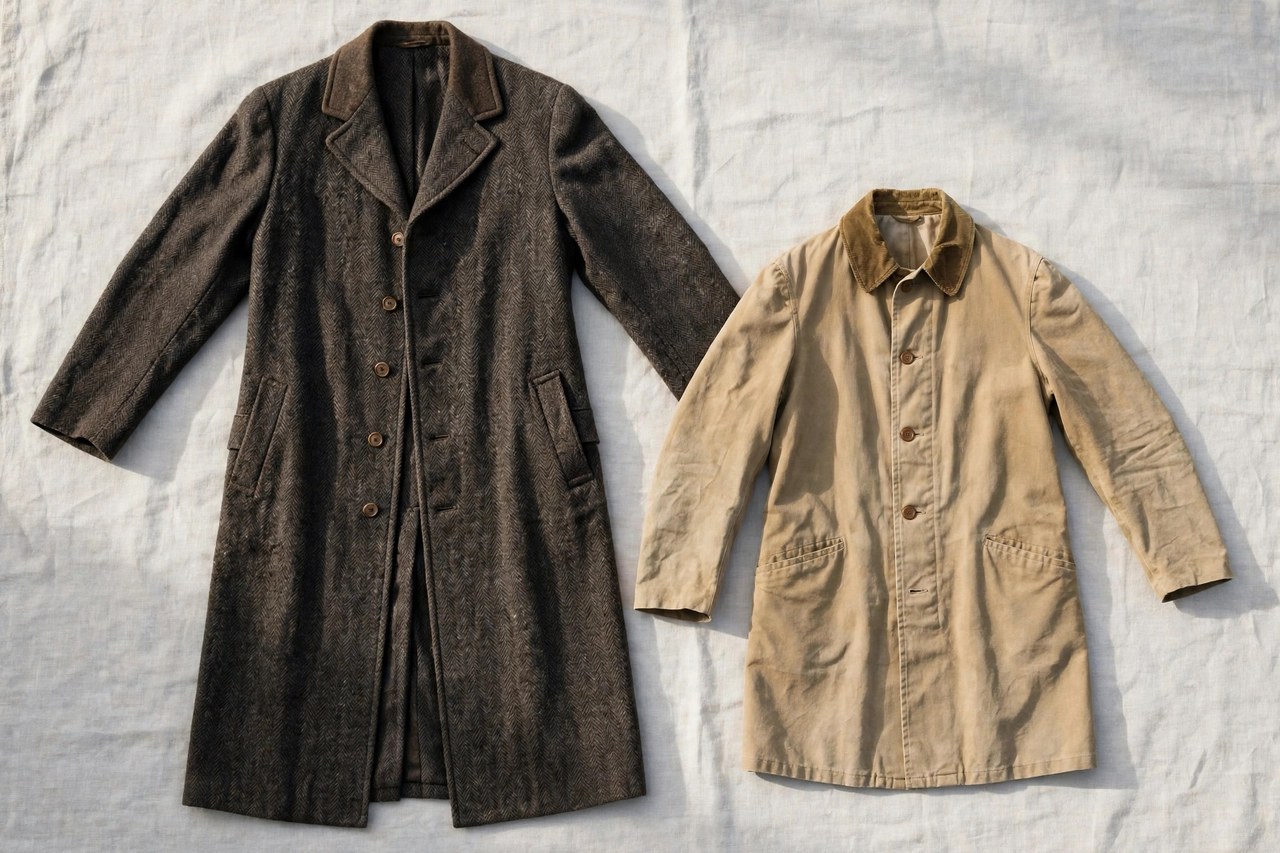
A vintage coat is an older men's overcoat, topcoat, car coat, trench-style coat or heavy winter coat bought for warmth, structure and period character. Coats are among the safest vintage purchases because heavy cloth, generous cuts and repairable construction age slowly when stored well. The buying task is to judge the shell, lining and insulation together, confirm the length and shoulder fit over layers, and check that closures, pockets and hems have survived intact. This guide is built around the questions buyers actually ask: which style, which size, which fabric, and what will it look like after a year of real use - answered in order, with the trade-offs stated plainly.
Styles and Construction
Era construction shows in the details: hand-set collars, bound buttonholes, full canvas or heavy interfacing in tailored coats, and linings in rayon, wool or quilted fabrics. Examine the collar underside, cuff edges, pocket corners and hem for fraying, and open the coat to inspect lining tears at the armholes and center back. Buttons should be original or closely matched, firmly attached with thread shanks, and buttonholes un-stretched. Sniff wool carefully for moth and storage damage.
Outerwear value hides below the surface: taped versus merely stitched seams, a zipper whose slider runs true under one hand, cuffs and hems that adjust to seal weather out, and a lining slippery enough to glide over the layers beneath. Shoulder build decides the hang over knitwear or a jacket, and pocket engineering decides whether hands and kit ride where your body expects them. Specify for the worst honest day, not the brochure day.
Fit and Sizing
Coat sizing is the most misleading vintage category of all, because older coats were cut to fit over suits and tagged by chest conventions that have shifted. Vintage sizes run smaller in the shoulder even when the body looks roomy, so measure shoulder, chest over your intended layers, sleeve from center back, and total length. Try the coat sitting and driving motions if possible. Length and waist can be tailored; narrow shoulders cannot be fixed.
Fit outerwear over the bulkiest layer it will honestly cover, and test the working range: arms forward as if driving, arms overhead, sitting with every closure fastened. The coat's shoulders should echo yours rather than extend past them, closures should meet without strain, and the hem must reach the coverage the garment exists to give. A coat fitted over a T-shirt alone belongs to a climate you may not live in.
Wearing and Care
Brush a wool coat after wear, rest it between outings on a broad, shaped hanger, and store it clean in a breathable cotton bag, never sealed plastic. Clean vintage coats professionally and sparingly, warning the cleaner about old buttons and fragile linings, and air them outdoors in shade to refresh. Check pockets are empty before storage, use cedar against moths, and mend lining splits early before they catch and tear further during wear.
Hang outerwear on broad hangers that carry the shoulders, rest it between wears, and resist washing it often - spot-clean first, and wash by the maker's method with the detergent the fabric demands when a full clean is due. Refresh water-repellent finishes when rain stops beading, never store a coat dirty or compressed, and send leather and tailored pieces to professionals rather than experimenting at home.
Common Questions
Are vintage wool coats still warm?
Usually yes. Dense older wool cloth, full linings and longer lengths block wind well, and many vintage coats use heavier fabric than modern equivalents. Warmth depends on condition: a compressed, thinned or damp-damaged coat loses insulation. Check the lining is intact, closures meet fully, and there is room for a sweater underneath on cold days.
How do I check a vintage coat for moth damage?
Look for small irregular holes, especially at the collar, cuffs, folds and areas hidden under arms, plus surface grazing where fibers look nibbled. Hold suspect areas to light and check storage folds closely. A few isolated holes can be rewoven, but widespread damage weakens the cloth and suggests other pieces stored with it were exposed.
Should a vintage coat fit over a suit jacket?
If you plan to wear it that way, yes, and you should judge measurements and try it on over a jacket, not a shirt. Traditional overcoats were patterned for that layering. If you will wear it only over knitwear, a closer fit is fine, but closures must still meet without pulling when you sit.
More in Men's Clothes Guide V
Background
A coat is a garment worn by both men and women, for warmth or fashion. Coats typically have long sleeves and are open down the front, closing by means of buttons, zippers, hook-and-loop fasteners, toggles, a belt, or a combination of some of these. Other possible features include collars, shoulder straps and hoods. As with most clothing the styling of a coat varies as trends change. The silhouette, color, fabric, and trim of a coat may change from season to season. Vintage clothing is a generic term for garments originating from a previous era. The phrase is also used in connection with a retail outlet, e.g. "vintage clothing store." Generally speaking, clothing which was produced before the 1920s is referred to as antique clothing and clothing from the 1920s to 20 years before the present day is considered vintage. Retro, short for retrospective, or "vintage style" usually refers to clothing that imitates the style of a previous era. Reproduction, or repro, clothing is a newly made copy of an older garment.
Looking for Men's Clothing Stores?
This guide explains men's vintage coats. To browse where to buy, visit our men's clothing store directory, where you can find retailers that carry them.