Men's Vintage Denim Guide
Vintage denim covers older men's jeans, denim jackets, shirts and workwear in indigo and other washes, valued for fade patterns, sturdy cotton cloth and period cuts. Denim rewards knowledgeable buying because its clues are visible: selvedge edges, chain stitching, rivets, pocket construction and the character of the fade. This guide focuses on judging authenticity of age, remaining strength at stress points, and honest sizing, so a handsome fade does not disguise cloth near the end of its life.
Shop Men's Vintage Denim Now
Shop Men's Vintage Denim on Amazon Shop Men's Vintage Denim on eBayThe Amazon and eBay links on this page are affiliate links. If you make a purchase through them, Apparel Search may earn a commission.
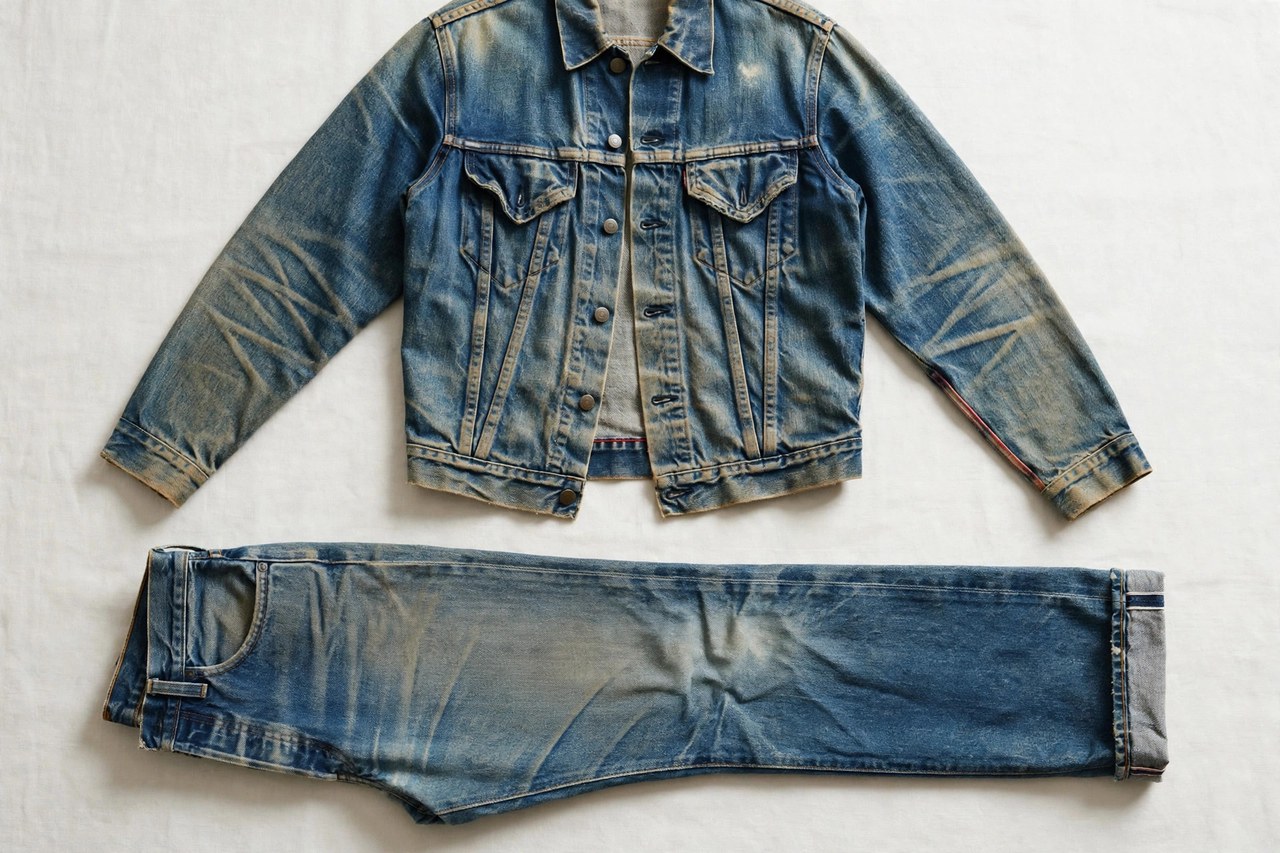
Vintage denim covers older men's jeans, denim jackets, shirts and workwear in indigo and other washes, valued for fade patterns, sturdy cotton cloth and period cuts. Denim rewards knowledgeable buying because its clues are visible: selvedge edges, chain stitching, rivets, pocket construction and the character of the fade. This guide focuses on judging authenticity of age, remaining strength at stress points, and honest sizing, so a handsome fade does not disguise cloth near the end of its life. This guide covers the styles worth knowing, the fit points that decide comfort, the fabrics and construction that separate a good buy from a regret, and the simple care that makes the garment last.
Styles and Construction
Look for construction details that help date denim: selvedge outseams, single-needle stitching, hidden or exposed rivets, button or zip flies, pocket bag fabrics and label or patch materials. Fades should follow wear logic, strongest at knees, seat, pocket edges and cuffs, with whiskers and honeycombs formed by movement. Check the inner thigh, seat and hems for thinning by holding them to light, and test pocket corners and belt loops with a gentle pull.
For any leg garment the rise is the first specification, because it decides sitting comfort before fabric gets a vote: measure from front waistband through to back and compare it with a pair that already works. Then audit the stress points - bar-tacked belt loops and pocket corners, double-stitched inseams, hems finished evenly - and the pocketing, which should be deep, smooth and strong enough to carry what the garment's pockets invite you to carry.
Fit and Sizing
Denim sizing demands extra caution because decades of washing shrink cotton significantly, and vintage sizes run smaller than the tagged waist suggests. Always buy by actual measured waist, inseam, rise, thigh and leg opening, taken flat and doubled where appropriate, and compare with jeans you own. Remember that raw or lightly worn denim may still shrink, while heavily washed pieces are usually stable. Rise and thigh decide comfort more than the waist number alone.
Measure where the waistband will actually sit, plus inseam to your preferred break, and thigh and seat for closer cuts. Then sit, squat and climb a step in the fitting room - a leg garment that only works standing still does not work. Waistbands relax roughly half an inch in wear and inseams shrink most in early washes, so buy the fit you want after those changes rather than the fit in the mirror.
Wearing and Care
Wash vintage denim rarely and gently: inside out, cool water, mild detergent, and no harsh agitation that could tear weakened cloth or strip remaining indigo unevenly. Air dry flat or hanging by the waistband, away from strong sunlight, and patch thinning areas with a darning repair before they become holes. Store folded rather than hung by loops, keep dry, and rotate wear so stressed areas recover. Never use chlorine bleach on old denim.
Wash leg garments inside out and cool; heat is the agent that fades dye, tires elastic and shortens inseams. Dry low or on the line, hang or fold promptly, and crease deliberately or not at all. Walk the stress points each season - hem edges, pocket corners, seat and inner thigh - and mend the small fray while it is still small: leg garments fail gradually, then suddenly, and the two-minute October repair prevents the November replacement.
Common Questions
How can I tell if vintage denim is genuinely old?
No single clue proves age, so combine them: selvedge fabric, period stitching, rivet and button style, label design, pocket construction and natural fade patterns that match how a body moves. Modern reproductions copy many details well. Price and confidence should reflect the whole evidence, the seller's measurements and photographs, and a clear returns policy.
Where does vintage denim wear out first?
The inner thigh from friction, the seat, knees, pocket corners, belt loops and hems. Thinning in the inner thigh is the most serious because repair there fights constant movement. Flex the cloth and hold it to light; pale, translucent patches mean limited life. A neat early patch strengthens denim, but widespread thinning does not recover.
Should I wash vintage jeans before wearing them?
A gentle first wash is sensible for hygiene and to remove odors, provided the cloth is strong. Inspect and patch weak areas, wash inside out in cool water with mild detergent, and air dry. Very fragile or collectible pairs may need airing and spot cleaning. Avoid hot water, which can shrink and stress old cotton.
More in Men's Clothes Guide V
Background
Denim is a sturdy cotton warp-faced textile in which the weft passes under two or more warp threads. This twill weaving produces a diagonal ribbing that distinguishes it from cotton duck. The most common denim is indigo denim, in which the warp thread is dyed, while the weft thread is left white. As a result of the warp-faced twill weaving, one side of the textile is dominated by the blue warp threads and the other side is dominated by the white weft threads. This causes blue jeans to be white on the inside. Vintage denim is clothing that has been produced with denim fabric in a previous era. Vintage clothing is a generic term for garments originating from a previous era. Jeans are trousers, a type of garment, typically made from denim or dungaree cloth. Often the term "jeans" refers to a particular style of pants, called "blue jeans," which were invented by Jacob W. Davis in partnership with Levi Strauss & Co. in 1871 and patented by Jacob W. Davis.
Looking for Men's Clothing Stores?
This guide explains men's vintage denim. To browse where to buy, visit our men's clothing store directory, where you can find retailers that carry them.