Men's Vintage Hats Guide
A vintage hat is an older men's felt, straw, cloth or leather hat, from brimmed dress styles and flat caps to work and casual shapes, bought for material quality and period character. Hats are intensely personal in fit and condition: a small size error or a distorted crown cannot be hidden. This guide concentrates on hat styles and materials, judging felt and straw for moth, cracks and reshaping potential, and measuring your head rather than trusting an old size stamp.
Shop Men's Vintage Hats Now
Shop Men's Vintage Hats on Amazon Shop Men's Vintage Hats on eBayThe Amazon and eBay links on this page are affiliate links. If you make a purchase through them, Apparel Search may earn a commission.
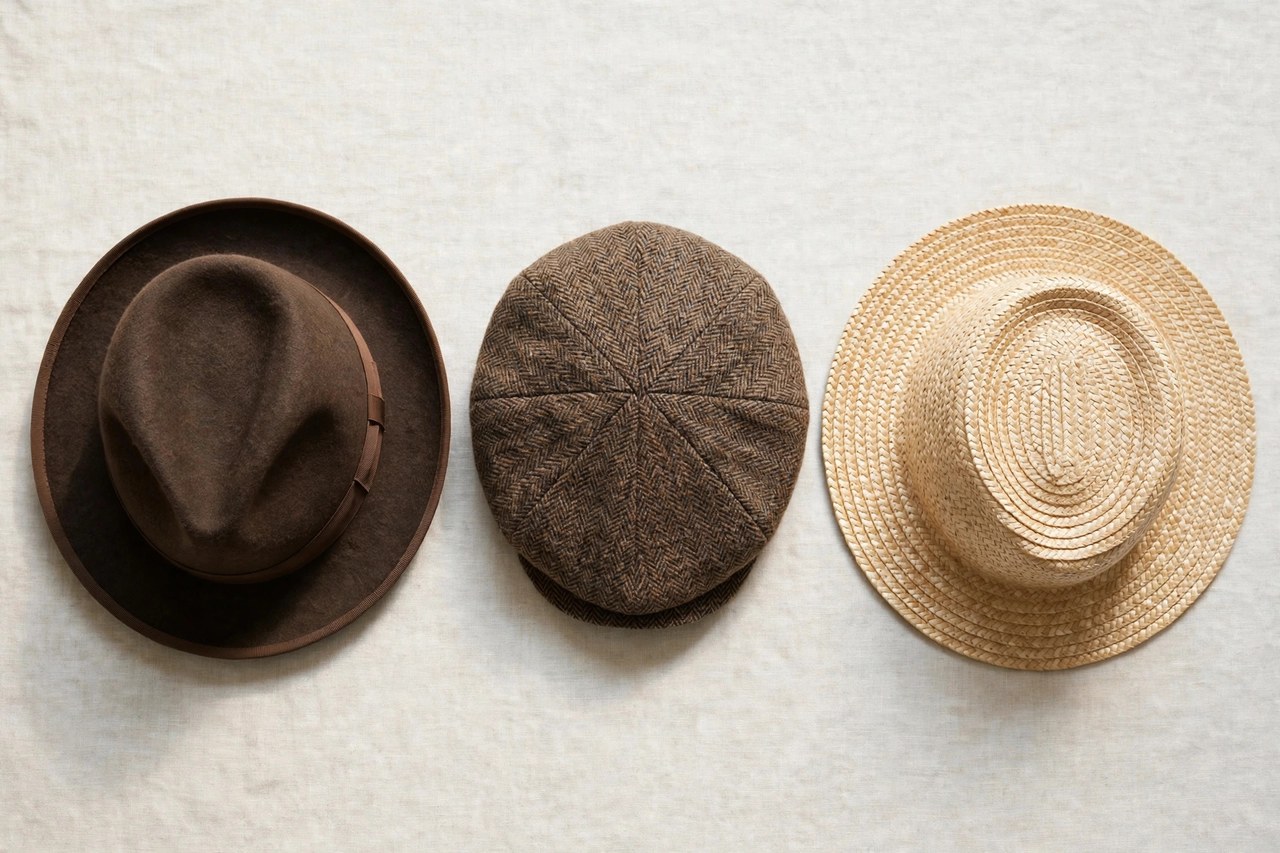
A vintage hat is an older men's felt, straw, cloth or leather hat, from brimmed dress styles and flat caps to work and casual shapes, bought for material quality and period character. Hats are intensely personal in fit and condition: a small size error or a distorted crown cannot be hidden. This guide concentrates on hat styles and materials, judging felt and straw for moth, cracks and reshaping potential, and measuring your head rather than trusting an old size stamp. This guide is built around the questions buyers actually ask: which style, which size, which fabric, and what will it look like after a year of real use - answered in order, with the trade-offs stated plainly.
Styles and Construction
Felt hats should be checked for moth grazing and holes, especially under the brim and at crown folds, plus stiffness, sweatband condition and whether the shape recovers after a gentle squeeze. Straw hats fail by cracking along the crown and brim edge, so flex nothing forcefully and look for splits and brittle patches. Cloth caps need seam, peak and lining inspection. Original ribbons, linings and sweatbands add authenticity, but a perished sweatband can be replaced by a hatter without harming wearability.
Accessories reward material honesty: solid metal over plated base metal, full-grain leather over bonded scraps, stitching over glue wherever fabric or hide is joined. Work every moving part through its full travel before paying - clasps, hinges, springs, adjusters - because small hardware fails before large materials do. And budget the care with the purchase: conditioner, the right cloth, a dry drawer; an accessory you can maintain will outlast a finer one you cannot.
Fit and Sizing
Hat sizing is head circumference, and vintage hats often run smaller than their stamps suggest, because felt shrinks with age and older size conventions differ. Measure around your head where the hat will sit, just above the ears and eyebrows, then compare with the hat's internal circumference measured along the sweatband. A hat should settle without pressure points and stay on in a nod. Slightly loose hats can take sizing tape; tight felt can sometimes be stretched modestly by a hatter.
Accessories have exact fits and exact measures: belt length to the middle hole of a belt you own, hat size as head circumference, a watch case within the wrist's width. Makers' accessory charts vary more than apparel charts, so measure and use the chart rather than ordering a habitual letter - ninety seconds with a tape prevents the most avoidable returns in menswear.
Wearing and Care
Brush felt hats with a soft brush in the direction of the nap, handle them by the brim rather than pinching the crown, and store them on a stand or in a box that supports the brim, away from heat and sunlight. Keep straw dry and never pack it under weight. Air a vintage hat thoroughly before wear, clean sweatbands gently, and use a professional hatter for reshaping, sweatband replacement and deep cleaning rather than steaming experiments at home.
Store accessories deliberately: leather away from sun and plastic, metal dry, belts rolled or hung by the buckle rather than folded at the same crease forever. Condition leather a few times a year, polish metal with the cloth meant for its finish, and repair hardware early - a loose screw today is a lost cufflink or a failed clasp next month. Rotate daily pieces in pairs and both will outlast a single workhorse.
Common Questions
How do I measure my head for a vintage hat?
Wrap a soft tape around your head at the level the hat will sit, an inch above the eyebrows and ears, keeping it snug but not tight. Measure twice and use the larger figure. Compare that circumference with the hat's internal measurement, not only its stamped size, because aged felt often measures smaller than marked.
Can a vintage felt hat be reshaped?
Often, within reason. A hatter can steam and block felt back toward its original crown and brim shape if the material is sound and not cracked or moth-thinned. Deep creases set for decades, shrunken felt and brittle straw may not recover fully. Ask for an honest assessment before paying for restoration on a doubtful hat.
What should I check on a vintage straw hat?
Look for cracks and splits at the crown pinch, brim edge and weave joins, yellowed brittle areas, and a sweatband still firmly attached. Hold the hat to light to reveal breaks. Sound straw is light and slightly springy; straw that feels dry and papery throughout will keep cracking in wear and should be priced accordingly.
More in Men's Clothes Guide V
Background
A hat is a head covering which is worn for various reasons, including protection against the elements like, rain, sun, ceremonial reasons, such as university graduation, religious reasons, safety, or as a fashion accessory. Vintage hats are ones originating from a previous era. Some people distinguish antique from vintage as follows. Hats which were produced before the 1920s is referred to as antique and ones from the 1920s to 20 years before the present day is considered vintage. Learn the difference between vintage fashion and antique clothing . Popular hats from previous eras include, ascot caps, balmoral bonnets, bicorne, bowler, derby, coonskin caps, deerstalker, fedora, fez, top hat, tricorne, etc. Learn more about men's hats .
Looking for Men's Clothing Stores?
This guide explains men's vintage hats. To browse where to buy, visit our men's clothing store directory, where you can find retailers that carry them.