Women's Beaded Tops Guide
Beads catch light the way nothing else can — how embellished tops are made, when to wear them, and how to keep every bead in place.
Shop Women's Beaded Tops Now
Shop Women's Beaded Tops on Amazon Shop Women's Beaded Tops on eBayThe Amazon and eBay links on this page are affiliate links. If you make a purchase through them, Apparel Search may earn a commission.
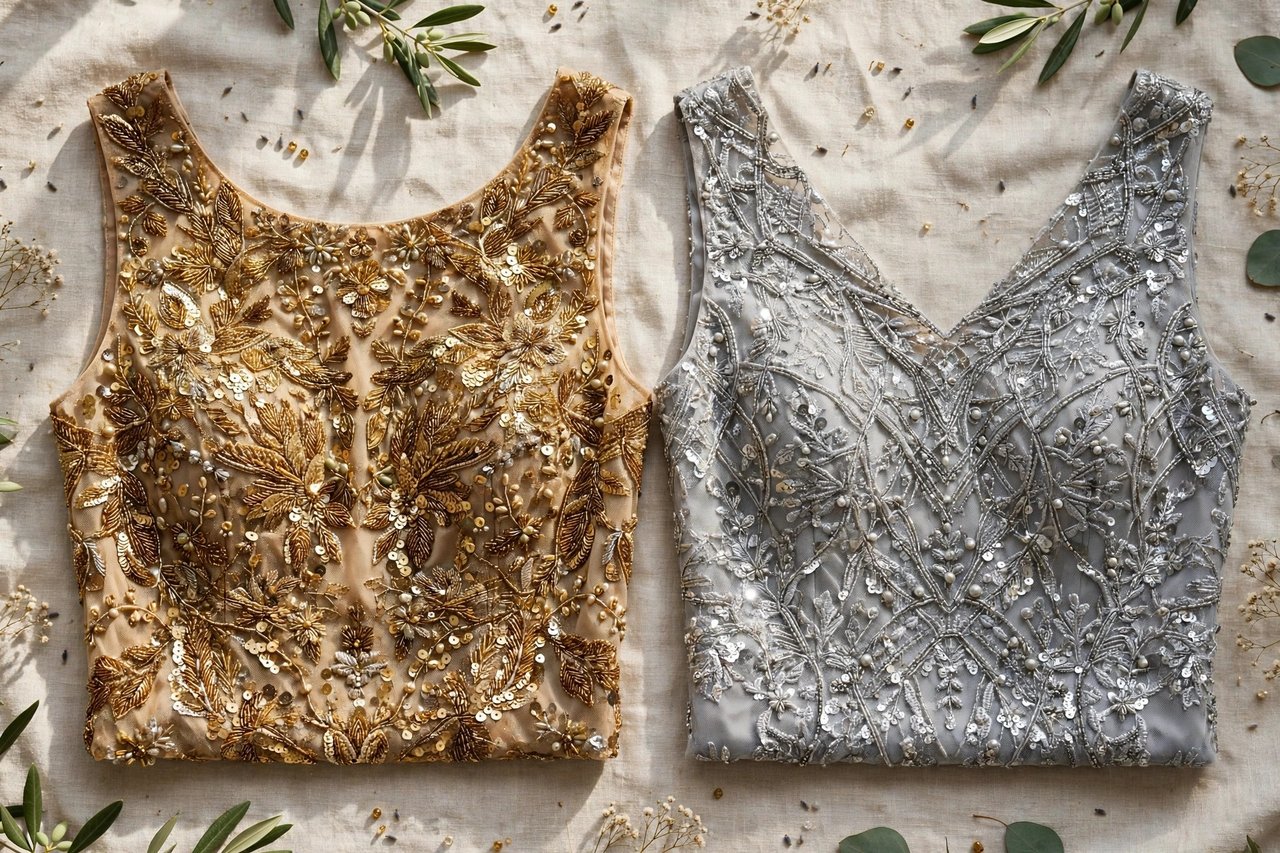
A beaded top turns light into part of the outfit. Glass beads, sequins, pearls, crystals, and bugle beads stitched across a blouse, camisole, or knit catch candlelight at dinner, flash at a party, and lift even a simple black top into evening territory. Embellishment ranges from a single beaded neckline to fully encrusted art pieces that take hand-beaders many hours to complete — and the price, weight, and care of the garment follow directly from how the decoration was applied.
This guide explains the attachment methods so you can judge quality in the shop, then covers styling, fit, and the gentle handling that keeps embellished tops sparkling for years of occasions.
How Beads and Sequins Are Attached
Hand-sewn beading is the premium method: each bead or small cluster is stitched individually or in short runs with knots between sections, so if one thread breaks, only a tiny area is lost. Vintage and couture pieces are built this way, and well-made hand-beaded tops flex with the fabric and survive for decades. Turn the garment inside out — neat, knotted thread work is the signature.
Machine embroidery and chain-stitch beading applies beads in continuous lines: faster, more affordable, and perfectly serviceable, but a broken thread can release a whole run, so inspect edges and stress points. Glued embellishment — rhinestones and gems bonded with adhesive — is the most fragile method; it suits occasional wear and low prices, and it dislikes heat, steam, and dry-cleaning solvents. Sequins are usually sewn flat in overlapping scales or hung from a single stitch to flutter; overlapped sewing is far more durable. A quality check: gently flex the fabric and stroke against the grain — beads should sit tight, silent, and smooth, not rattling or catching.
Styles and Levels of Embellishment
At the subtle end, trim-beaded tops outline a neckline, cuff, or placket with a single row or motif — enough sparkle for dinners and dressy offices during the holidays. Yoke and bib designs concentrate beading across the chest like jewelry, flattering and brilliantly paired with plain bottoms. Allover beaded tops — geometric Art Deco patterns, florals, and ombré cascades — are true occasion pieces, often built on mesh or silk chiffon with a separate camisole beneath.
Base fabrics shape the mood: beaded silk and chiffon for formal evenings, beaded knits and jersey for comfortable festive wear, beaded denim and cotton for the high-low casual look fashion loves. Vintage beaded tops from the 1980s and earlier remain a thriving resale category — check them carefully for bead loss, thread darkening, and the weight damage heavy beading does to old shoulder seams. Weight itself is a style fact: a fully beaded top can weigh over a kilogram, which affects how it hangs, fits, and feels by midnight.
Occasion Styling
The styling rule for beaded tops is subtraction: the top is the jewel, so everything else quiets down. An allover beaded camisole with tailored black trousers and simple heels is a complete evening outfit; a beaded knit with a satin midi skirt handles holiday parties; a trim-beaded blouse under a plain blazer carries festive dressing into professional settings without breaking dress codes.
Jewelry needs editing — skip necklaces entirely (they compete and snag), choose earrings that clear the neckline's beading, and keep bracelets smooth so they do not catch cuffs. Hair worn up shows a beaded yoke or neckline to full effect. Bags should be smooth clutch styles; beaded-on-beaded contact abrades both pieces. For daytime, the trick is contrast: a sequinned top under a denim jacket or with plain cotton trousers reads playful rather than overdressed, especially in matte sequins and tonal beading.
Fit and Comfort Under Embellishment
Beading changes how a garment behaves. Embellished areas lose stretch and drape, so a beaded top should fit with a little ease rather than body-con tightness — strain pops threads. Check that beading does not sit directly under the arms or along side seams where friction is constant, and that any beading at the shoulder lies flat under bag straps (or plan on a hand-carried clutch).
Comfort details to test in the fitting room: raise your arms, sit, and twist gently. The lining or inner finish should shield your skin from thread ends and bead knots; unlined beaded mesh can itch within the hour. Heavily beaded tops distribute weight from the shoulders, so wider straps or sleeves are kinder than spaghetti straps on allover designs. If a top is beautiful but punishingly heavy, reserve it for seated, shorter events — dinners rather than dance floors.
Gentle Care and Storage
Care labels on beaded tops often read dry clean only, and for glued or silk-based pieces that advice stands. Sturdy hand-sewn cotton or knit pieces may tolerate careful hand washing in cool water with mild detergent — never wring, never soak for long, and dry flat on a towel, reshaping gently. When in doubt, a specialist cleaner experienced with embellishment is worth the fee; always point out glued stones, which some solvents dissolve.
Storage decides longevity. Never hang a heavily beaded top — its own weight stretches the base fabric and strains threads. Fold it flat with acid-free tissue between the layers so beads do not press into each other, and store it in a breathable cotton bag, not plastic. Keep a small repair kit: matching beads and sequins (good makers include spares), a fine beading needle, and strong thread. Fix a loose bead the moment you spot it — one stitch now prevents a bare patch later. With this gentle regime, a quality beaded top easily outlasts the trends that inspired it.
Related Women's Guides
More to Explore
Looking for Women's Clothing Stores?
This guide helps you choose women's beaded and embellished tops by style, occasion and care. To browse where to buy, visit our women's clothing store directory, where you can find retailers that carry them.