Women's Flannel Sleepwear Guide
Plain flannel sleepwear is the brushed-cotton end of the nightwear drawer — warm without weight, soft from the first wearing. This umbrella guide maps the whole category, from pajama sets and nightgowns to nightshirts and robes, so you can build a sleep wardrobe by season.
Shop Women's Flannel Sleepwear Now
Shop Women's Flannel Sleepwear on Amazon Shop Women's Flannel Sleepwear on eBayThe Amazon and eBay links on this page are affiliate links. If you make a purchase through them, Apparel Search may earn a commission.
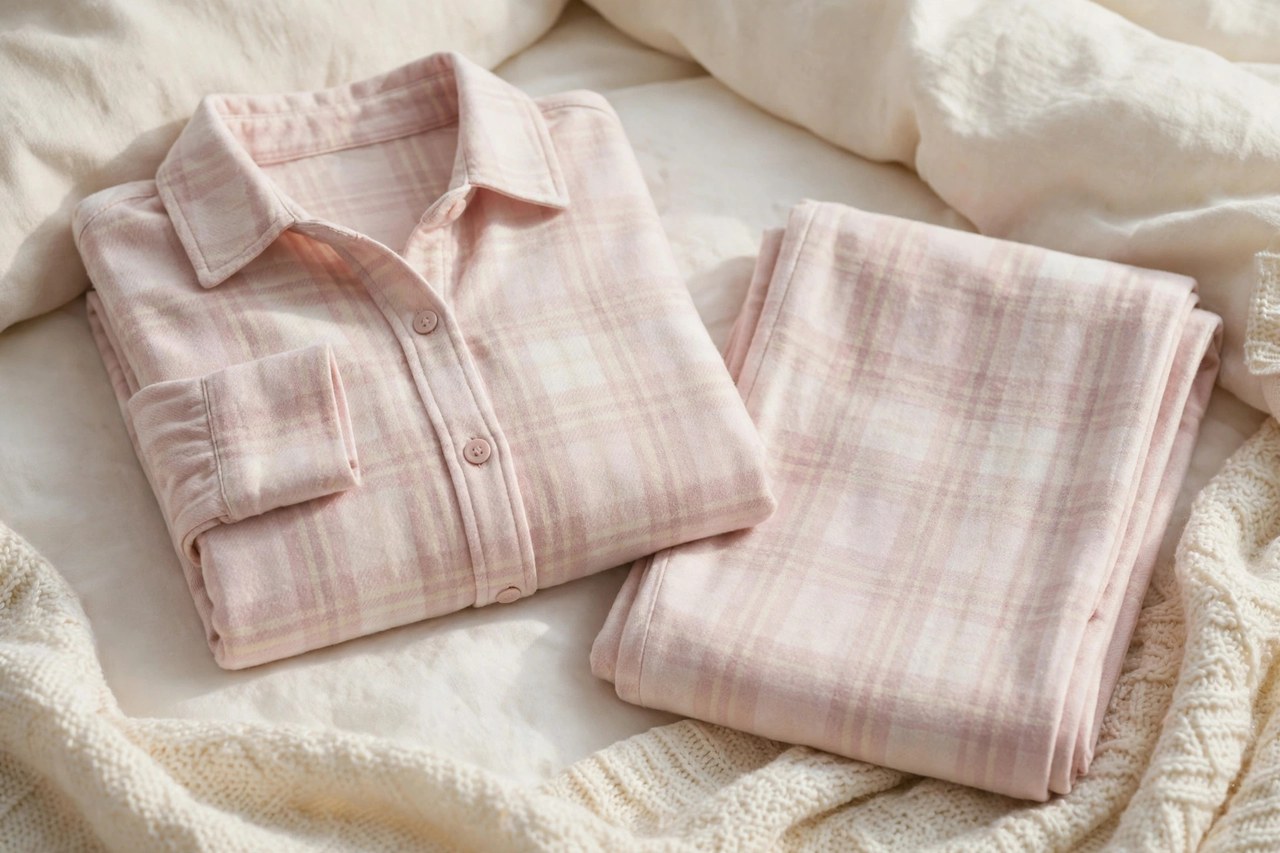
Flannel sleepwear starts with the fabric itself. Plain flannel is a woven cotton cloth that has been brushed — fine metal brushes raise loose fibres from the yarns to form a soft nap on one or both sides. That nap traps still air, and trapped air is what makes a relatively light cloth feel so warm. In solid colours and simple stripes, plain flannel is the quiet, classic version of the fabric: no check pattern doing the talking, just softness, warmth and an easy, matte finish against the skin.
Under the sleepwear umbrella sit several distinct garments, and most sleepers mix them. There are two-piece pajama sets, one-piece nightgowns and nightshirts, footed one-piece pajamas, separate sleep pants and tops bought singly, and the robe that goes over all of them. This guide explains how the pieces differ, which flannel weight suits which season, and how to put together a small rotation that covers a cold January night and a mild October one with equal comfort.
Sets, Separates and One-Piece Styles
A pajama set — matching button-front top and full-length pants — is the most versatile starting point, because the pieces also work apart: pants with a plain tee in shoulder season, top over a nightgown on the coldest nights. Separates suit anyone whose top and bottom sizes differ, and they make replacing a worn piece simple. Sleep pants, capri sleep pants and sleep shirts are all sold as separates for exactly that reason.
One-piece styles trade that flexibility for simplicity. A nightgown has no waistband at all, which many sleepers prefer; a nightshirt adds a collar and buttons to the same free-hanging idea; and footie pajamas close the whole system off at the feet. None is better than the others — the choice is about how you sleep, how warm your bedroom runs, and whether you like fabric at the waist while you turn over.
Flannel Weights and the Seasons
Flannel is sold in weights, and weight is the single best predictor of warmth. Lightweight flannel, brushed on one side only, suits spring, autumn and heated bedrooms; it has the familiar soft hand without the bulk. Midweight flannel, brushed on both sides, is the true winter workhorse for most climates. The heaviest flannels — thick, densely brushed, almost blanket-like — belong to unheated rooms, draughty houses and anyone who feels the cold keenly.
A practical sleep wardrobe usually needs two weights, not five garments in one. Pair a midweight set for deep winter with a lighter gown or short-sleeve set for the in-between months, then let a robe bridge the gaps at the start and end of the night. Cotton flannel also breathes better than synthetic fleece, so it stays comfortable across a wider temperature range before you need to change out of it.
Fit, Closures and Small Details
Sleepwear should be bought for movement, not for the mirror. Look for room through the shoulders, a waistband that stretches without digging, and lengths that do not pool at the ankle or ride up the calf. Button fronts make sets easy to put on and allow ventilation; drawstring-plus-elastic waists adjust as needed; and flat or well-finished seams matter more than any decoration, because you will feel a rough seam all night.
Details worth checking before you buy: pockets deep enough to stay useful, cuffs that keep sleeves and hems in place, and plackets that lie flat. For gowns and nightshirts, note the hem length against your height — the same garment reads mid-calf on one person and ankle-length on another. If you are between sizes in sleepwear, the larger size is almost always the more comfortable night's sleep.
Care: Keeping the Nap Soft
Wash flannel sleepwear in cool or warm water with similar colours, and expect a little lint in the first few washes as loose nap fibres shed — that is normal for new brushed cotton and settles quickly. Tumble-dry on low or line-dry; high heat is what roughens the nap and shrinks cotton over time. Skip fabric softener if the cloth starts to feel flat, since heavy softener coatings can mat the brushed surface.
Store sleepwear clean and fully dry, folded rather than crushed, and rotate two or three pieces rather than wearing one set every night — cotton recovers its loft with a rest day, just as shoes do. Treated this way, good plain flannel actually improves for the first season or so, softening with every wash before it slowly, gracefully, wears thin.
Related Women's Guides
Looking for Women's Clothing Stores?
This guide helps you choose women's flannel sleepwear by garment, weight and season. To browse where to buy, visit our women's clothing store directory, where you can find retailers that carry them.