Women's Halterneck Swimwear Guide
Halterneck is a neckline, not a swimsuit type: the single neck-fastening strap applied to one-pieces, bikinis and monokinis. How the style works in swim fabric, and what it does on each cut.
Shop Women's Halterneck Swimwear Now
Shop Women's Halterneck Swimwear on Amazon Shop Women's Halterneck Swimwear on eBayThe Amazon and eBay links on this page are affiliate links. If you make a purchase through them, Apparel Search may earn a commission.
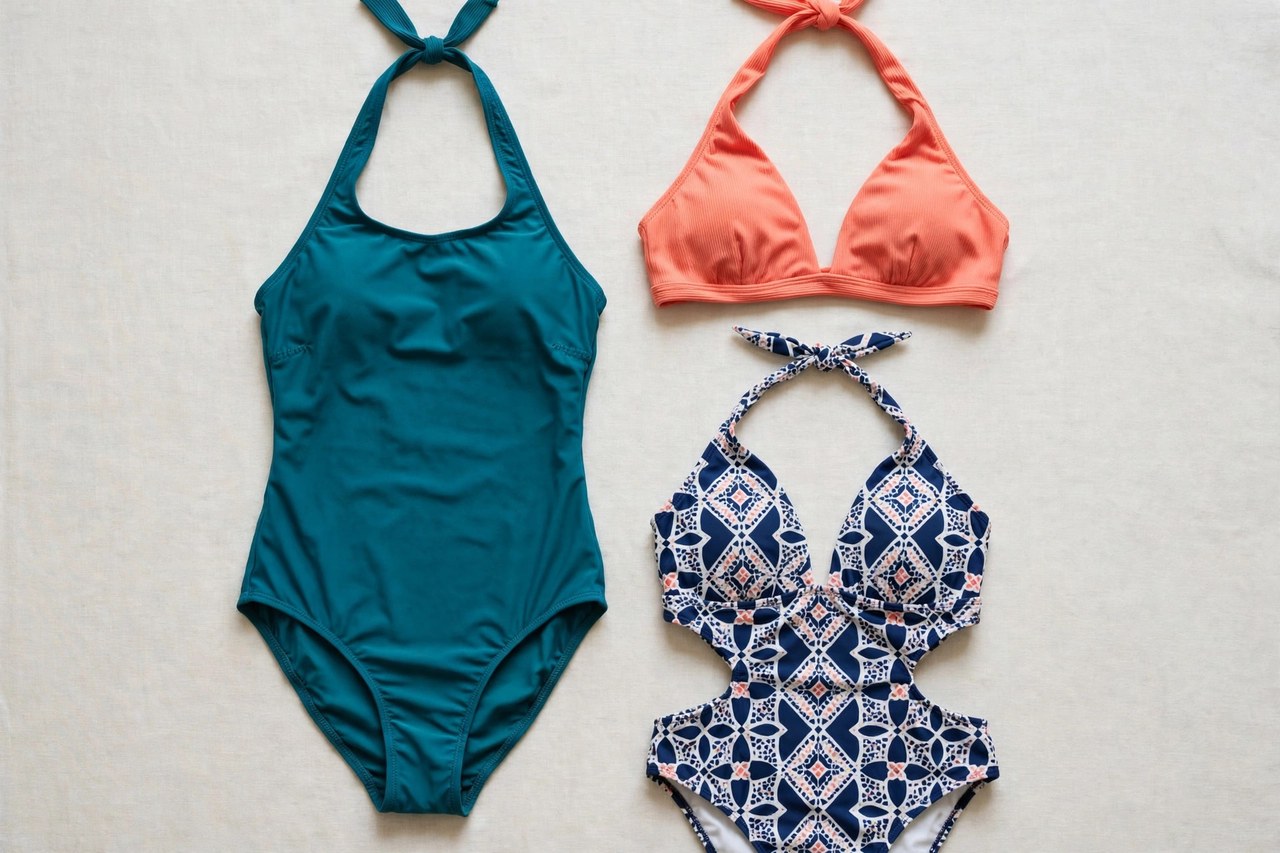
Halterneck names a way of fastening, not a kind of swimsuit. As our original guide put it, a halter garment uses a single strap around the neck rather than two straps or sleeves over the shoulders, and the style is used to create a backless top. In swimwear that one construction is applied across the whole rack: one-piece suits, bikini tops, monokinis and tankini tops all come in halterneck versions.
That is the split this guide keeps. If you want one specific set — the long-top two-piece — see our halter tankini guide, which covers that product only. Here the subject is the neckline style itself: what a neck fastening does in wet stretch fabric, and how it behaves differently on each swimsuit cut.
How the Halter Neck Works in Swim Fabric
A halterneck swimsuit hangs its top from the nape. The front panels run up from the bust and converge into straps that tie, hook or are sewn closed behind the neck. Because swim fabric is a stretch knit, the neckline is cut on the fabric's stretch and usually edged with elastic or binding, so the edge stays against the body when wet instead of sagging open in the water.
The open back is functional as well as decorative: no back band means nothing to trap water or sand, the tan line follows the neck rather than the shoulders, and the suit goes on without stepping through straps that then need arranging. The cost is concentration of load — everything the top holds is held from one point at the neck.
Halterneck One-Pieces
On a one-piece, the halter neck replaces shoulder straps on a suit that still covers the torso in one length of fabric. Necklines range from deep plunge fronts, where the two panels meet low and the neck tie provides nearly all the structure, to high, gathered fronts that give a modest cut with an open back. Because the body of the suit anchors the bottom half, a one-piece halter stays in place better in active swimming than any two-piece version.
Fit point to check: torso length. The neck tie sets where the bust sits, and a suit cut short in the body will pull at the neck once wet. Adjustable ties forgive small differences; fixed-loop one-pieces should be tried on and moved in, ideally with a stretch and a bend, before the tags come off.
Halterneck Bikini Tops and Monokinis
The halterneck bikini top is the style's most common form: triangle, bandeau-with-strap and moulded-cup tops all fasten at the neck, usually with a second tie or clasp under the bust. Ties at both points make the top the most adjustable swimsuit top sold — cup position, lift and band tightness all tune independently — which is why the style fits such a wide range of body shapes off the rack.
The monokini — a cut-away one-piece joined at the sides or front — leans on the halter neck hardest of all, since the neck strap is often the only thing connecting top and bottom across an open midriff. Expect a fashion fit rather than a swimming fit: monokinis are bought for the pool deck and the photograph, and their ties and joins should be checked for security before any actual diving.
Support, Ties and Fixed Straps
Support in a halterneck comes from three sources: the neck tie itself (lift), the under-bust band or second tie (anchoring), and the cup construction — soft, moulded or underwired. No halter matches a well-fitted underwired shoulder-strap top for all-day support of a fuller bust, and wide straps, doubled fabric and a firm under-band are the features that close the gap.
Choose ties for adjustability and a bow finish, hook or clasp fastenings for a flat, secure close that cannot work loose, and fixed loops for the cleanest line if your size is consistent between brands. Whichever fastening, re-tie or re-check it after the first swim: wet elastane relaxes, and a neckline set on dry land sits lower in the water.
Care for Swim Knits
All halterneck styles share the standard swim-fabric care. The blends are nylon or polyester with elastane; polyester resists chlorine best, nylon feels softest and degrades faster in pool water. Rinse after every wear, wash cool by hand or on a gentle cycle, and dry flat in shade — tumble heat and wringing are the two fastest ways to kill the stretch the whole neckline depends on.
Knots deserve one habit: undo neck ties before washing and storing. A tie left knotted wet for a season can set into the fabric and weaken at the fold, and the strap is the one part of a halterneck suit that cannot fail without the suit failing with it.
More Swim & H Guides
Photos From Our Original Guide

More to Explore on Apparel Search
References & Further Reading
Looking for Women's Clothing Stores?
This guide helps you choose women's halterneck swimwear. To browse where to buy, visit our women's clothing store directory, where you can find retailers that carry them.