Women's Halter Tops Guide
A sleeveless top held up by a single strap around the neck: how the halter neckline works, why it leaves the back bare, and how to get support and a clean fit from daywear's most architectural top.
Shop Women's Halter Tops Now
Shop Women's Halter Tops on Amazon Shop Women's Halter Tops on eBayThe Amazon and eBay links on this page are affiliate links. If you make a purchase through them, Apparel Search may earn a commission.
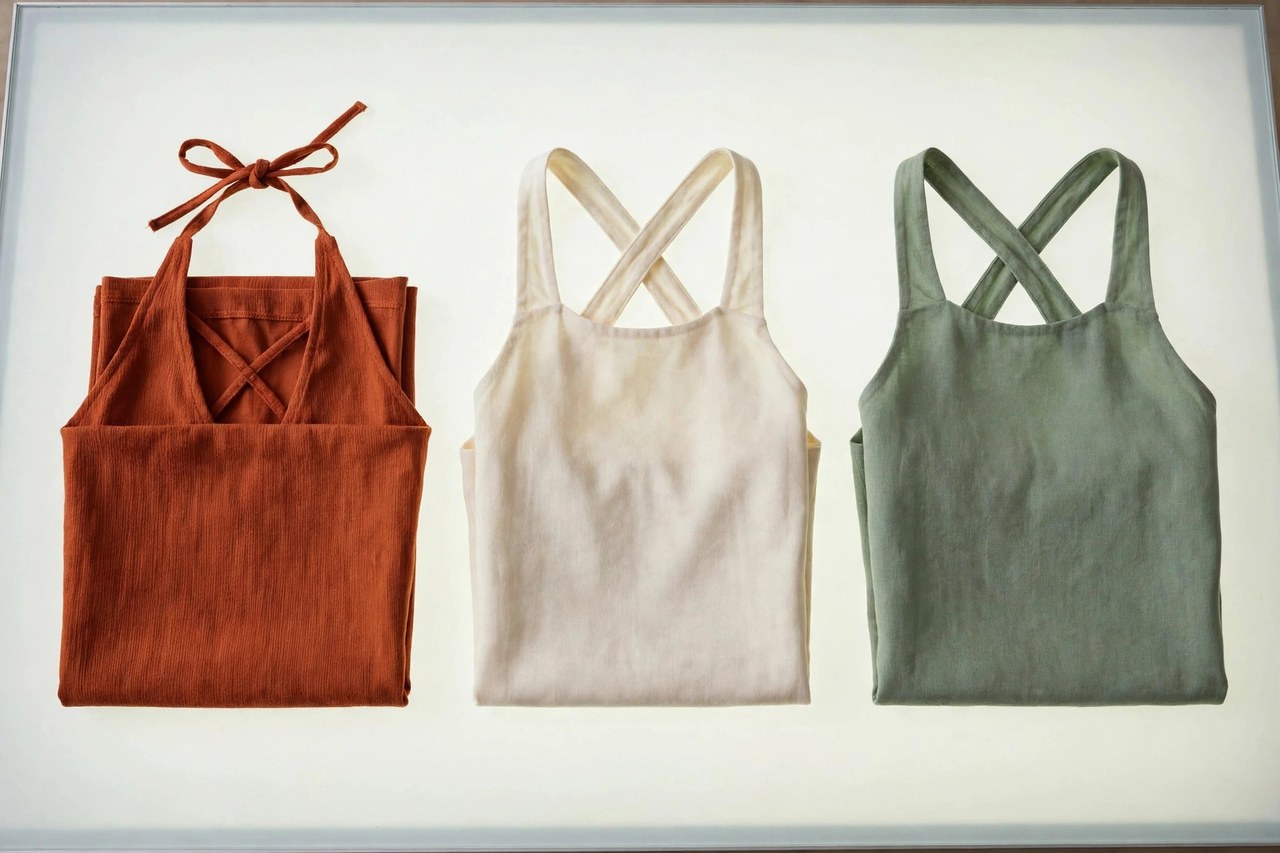
A halter top is a sleeveless top held up from the neck instead of the shoulders. Where an ordinary tank top runs two straps over the shoulders, the halter runs its fabric up from the front of the garment and fastens around the back of the neck — tied, hooked or sewn into a continuous loop. That single change of anchor point is the whole design, and everything else about the garment follows from it.
This guide covers the halter as a daywear and evening top: blouses, knits and occasion tops worn with trousers, skirts and shorts. The same neckline also appears in swimwear, where it gets its own guides — see our halter tankini and halterneck swimwear pages for the versions built to get wet.
How the Halter Neckline Works
Because the support comes from the neck, a halter needs no shoulder straps and no back panel. The classic construction is a strap tied behind the neck; a second, slimmer version carries only a narrow strap behind the neck and another narrow strap across the middle of the back, leaving the garment almost entirely backless. The front does the visual work — a V, a scoop, a cowl or a high straight band — while the shoulders and shoulder blades stay completely bare.
That bare back is the point of the style. The halter exists to create a backless top that still feels secure, because the neck loop cannot slip off the way a strapless bodice can. The trade-off is that the neck carries the garment's weight, so cut, fabric weight and fit at the bust decide whether a halter feels effortless or tiring by evening.
Styles: Ties, Bands and High Necks
Tie-neck halters fasten with fabric ties you knot yourself — the most adjustable style, and the one that lets you tune the neckline depth. Fixed-loop halters are sewn or hooked closed for a cleaner line and no bow at the nape. High-neck and mock-neck halters carry the fabric up to a band collar, a modest, polished cut that suits the office-to-evening wardrobe, while keyhole and twist-front halters build the neckline around a cut-out or a gathered knot at the throat.
Length and finish separate day from evening versions. Cropped halters pair with high-waisted bottoms; tunic and blouse halters in silk, satin or crepe dress up; ribbed-knit and jersey halters are the everyday workhorses. Prints concentrate on the front panel, since the front is nearly all the garment there is.
Fabrics for Day and Evening
Fabric decides how a halter behaves on the neck. Lightweight wovens — cotton voile, linen, silk and crepe — drape without dragging, and suit warm weather and dressier styles. Knits with a little elastane (jersey, rib knit, ponte) hug the body, need less precise fitting, and hold the neckline in place through movement, which is why most casual halters are knitted.
Avoid very heavy or stiff fabric in a tie style: weight multiplies at the knot. Lined bodices, common in evening halters, add structure so the front keeps its shape without help from the wearer, and a lined top usually needs less support underneath.
Fit, Support and What Goes Underneath
Fit a halter at three points: the neckline should lie flat without gaping when you lean forward, the armholes should sit high and close (a halter's armhole is cut in toward the neck, and a low one exposes more than intended), and the neck strap should support without digging. If the knot aches within minutes in the fitting room, size up, choose a wider strap, or pick a style with a built-in shelf or cups.
Underneath, one rule holds: a standard bra's straps and back band would cross the bare back, so halter tops are worn with a strapless bra, a halterneck bra whose own strap follows the same line, adhesive cups, or a built-in lining. Fuller busts get the most reliable support from sewn-in cups plus a back strap; a pure tie-back style offers the least, however pretty it looks.
Styling the Halter Top
The halter's bare shoulders are the statement, so the rest of the outfit can stay simple: wide-leg trousers, a midi skirt, tailored shorts or straight jeans balance the exposed top half, and high waistbands meet cropped halters cleanly. Hair worn up shows the neckline and the back; a pendant competes with the strap, so earrings do the jewellery work instead.
Layering runs in reverse with a halter: cardigans and jackets cover exactly what the top was designed to show, so save it for warm rooms and add a wrap only for the journey. In cool weather the high-neck halter under a blazer is the exception — worn that way it reads as a sleeveless shell with a far more interesting back.
More H Guides
Photos


Looking for Women's Clothing Stores?
This guide helps you choose women's halter tops. To browse where to buy, visit our women's clothing store directory, where you can find retailers that carry them.