Women's Jacket Dress Guide
A dress with its own jacket, designed and sold as one outfit: the jacket dress does the styling work for you, then lets the same dress work twice — covered for the ceremony, bare for the party.
Shop Women's Jacket Dresses Now
Shop Women's Jacket Dresses on Amazon Shop Women's Jacket Dresses on eBayThe Amazon and eBay links on this page are affiliate links. If you make a purchase through them, Apparel Search may earn a commission.
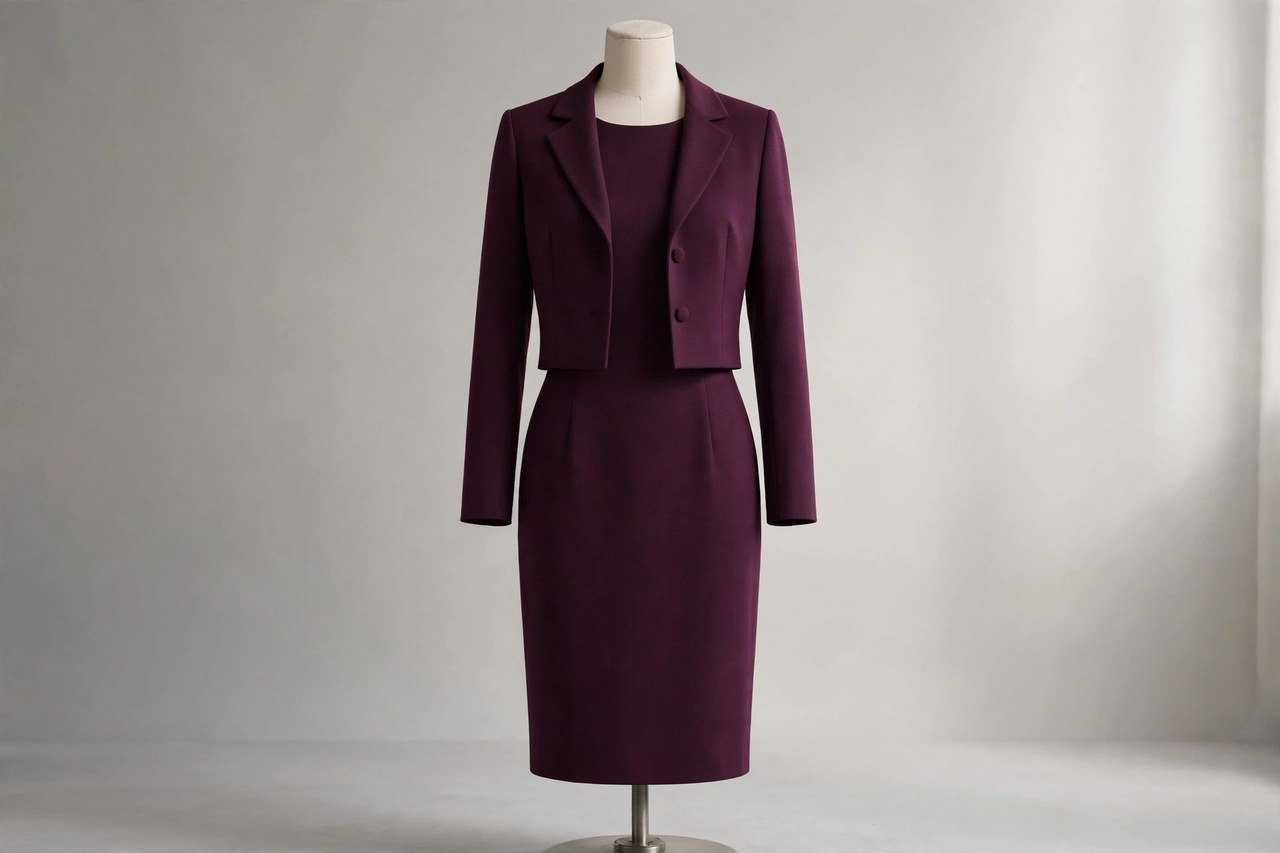
What is a jacket dress? Our original guide answered the question with a joke — a jacket dress is what happens when a jacket and a dress have a baby — and then gave the real definition: a jacket dress is a jacket produced specifically to go with a dress. The two are designed together, in matching or deliberately coordinated fabric, and sold as a single outfit.
To understand the set, take its parts. A jacket is an outer garment extending to the waist or the hips, typically with sleeves and a fastening down the front. A dress is a one-piece garment that covers the body and extends down over the legs — a skirt with an attached bodice. A jacket dress combines the two into one considered look, which is why it has been the default answer to formal dressing dilemmas for generations.
Attached or Two-Piece?
A jacket dress comes in two constructions. In the first, the jacket is physically attached as part of the garment — sewn at the shoulders or waist so the whole thing goes on as one piece and can never lose its other half. In the second, and more common, form the jacket and dress are two separate garments; when sold together as one unit the set is typically described simply as 2-piece on the label.
Separate pieces are the more flexible buy. The dress alone is a cocktail or evening dress; the jacket alone can top a different dress, a blouse and trousers, or even jeans for a dressed-up casual look. Attached versions trade that flexibility for certainty — the proportions are fixed by the designer, and there is nothing to coordinate at 7 a.m.
Where the Jacket Dress Earns Its Keep
The classic occasion is the wedding. For mothers of the bride and groom and for guests who want coverage without sacrificing style, the jacket dress solves several problems at once: arms covered for the ceremony and photographs, the jacket off for the reception, and an answer to air-conditioning and evening chill built into the outfit. Sophisticated sets in lace, sequins and tiered skirts are made precisely for this job.
The same trick works at the office and at formal daytime events. Take a spaghetti-strap dress and slide a jacket over it, and as our original guide noted, the look goes from informal to office dress in one move. A wrap-style jacket with a bold print over a plain strap dress flips it the other way — an ordinary sheath becomes the outfit's statement. Church, christenings, graduations, awards lunches and funerals all reward the same formula: one dress, two registers.
Choosing and Styling a Set
Fit the dress first — it is the layer that survives the evening alone. The jacket should then close or fall open cleanly over it without tugging across the back, and its length should meet the dress at a deliberate point: cropped jackets suit defined waists and shorter dresses, while longer, open-front jackets skim over sheaths and columns. Sleeve lengths on the jacket usually run bracelet or three-quarter, chosen to show a watch or bracelet rather than fight the dress.
Fabric harmony is the set's whole point. Matched suits of crepe, lace over satin, jacquard and shantung read formal; mixed textures — a matte dress under a sequinned or embroidered jacket — read festive. Because the styling is done for you, the rest is easy: our original page's advice still holds — reach for your favorite heels and let the set do the work.
Related Women's Guides
Photos From Our Original Guide


More to Explore on Apparel Search
Looking for Women's Clothing Stores?
This guide helps you choose women's jacket dresses. To browse where to buy, visit our women's clothing store directory, where you can find retailers that carry them.