Women's Leather Shirts Guide
A shirt is a garment for the upper body, typically with a collar, sleeves and a button front — cut in leather, it becomes the sharpest shirt in the closet.
Shop Women's Leather Shirts Now
Shop Women's Leather Shirts on Amazon Shop Women's Leather Shirts on eBayThe Amazon and eBay links on this page are affiliate links. If you make a purchase through them, Apparel Search may earn a commission.
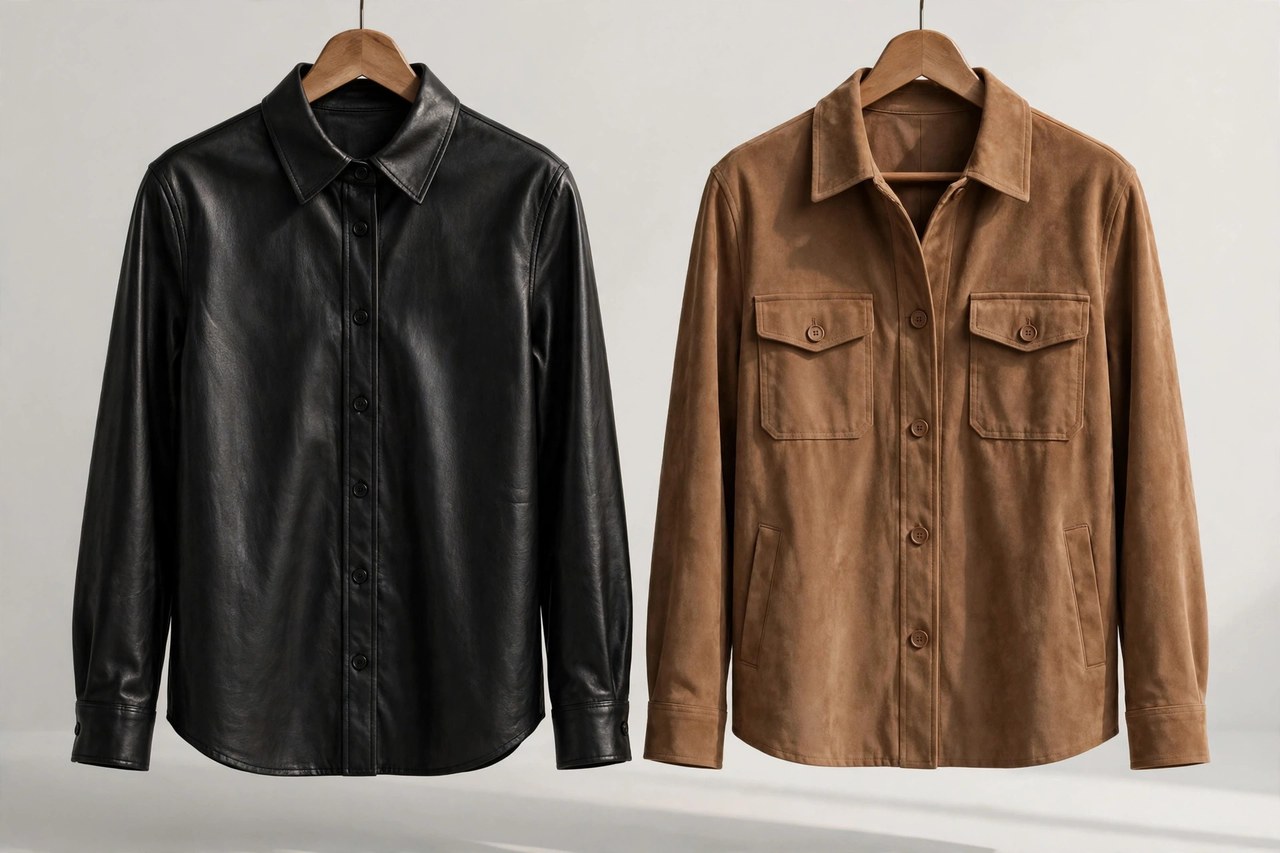
A shirt is a cloth garment for the upper body — typically with a collar, sleeves with cuffs, and a full opening at the front from the hem to the collar, fastening with buttons. Translate that architecture into leather and something particular happens: the shirt keeps all its tailored grammar — collar, placket, cuffs, yoke — but gains body, sheen and presence. The leather shirt sits exactly between the leather top and the leather jacket, and this guide covers how it is made and worn.
Of the variety of shirt styles that exist, the leather version borrows most often from two: the classic button-front dress shirt, and the western shirt, whose snapped placket, pointed yokes and pearl snaps translate to leather especially well.
Making a Shirt from Hide
You cannot sew leather like shirting. A leather shirt is cut from the thinnest garment hides — lambskin or thin garment cowhide, often 0.5–0.7 mm — and its seams are lapped and glued-then-stitched rather than folded, because folded leather seams would be too bulky to wear. Collars need a light interlining or a double layer to hold their points; cuffs close with snaps far more often than buttons, because buttonholes in leather are cut slots that stretch; and a leather shirt is almost always lined in the body or at least the yoke and sleeves with a smooth fabric so it slides over the layer beneath.
Suede is the shirt's other face: softer-looking, matte, and commonly used for the overshirt or shirt jacket — a slightly looser cut worn open over tops, the leather layer that behaves most like flannel's smarter brother.
Fit and Wearing
A leather shirt should fit like a tailored shirt with one allowance: it will not give at the button line the way cloth does, so the placket must close flat without strain when you sit. Sleeves end at the wrist; the body is usually worn tucked (in soft lambskin, which drapes rather than tents) or as the light jacket layer over a camisole, t-shirt or fine knit.
Styling is the shirt's reward: it dresses denim up, gives a plain skirt or trousers all the interest in the outfit, and in black or deep colors does evening duty that no cloth shirt matches. Treat it as the statement and keep everything it touches simple.
Care
Leather shirts crease at the elbows and soften at the collar with wear — that is their character forming, not damage. Hang on a wide hanger, air after wearing, and condition smooth leather sparingly a couple of times a year; suede shirts get a brush and protector spray instead. Specialist cleaning only, and tell the cleaner it is a shirt, not a jacket — the hides are thinner and need the gentler process.
Seasonally, the leather shirt works three of the four seasons. In spring and autumn it is the light jacket — open over a t-shirt, or buttoned as the top itself. In winter it layers under a coat as the warm, windproof mid-layer, and its collar and cuffs frame a fine sweater worn beneath it. Only high summer retires it, and even then a suede overshirt earns its evenings. Few single garments in the leather wardrobe cover that much of the year — which is why, after the jacket, the shirt is the piece leather people buy second.
More Leather Guides
Photos


More to Explore on Apparel Search
Looking for Women's Clothing Stores?
This guide helps you choose women's leather shirts and shirt jackets. To browse where to buy, visit our women's clothing store directory, where you can find retailers that carry them.