Women's Lightweight Coats Guide
Longer than a jacket, lighter than a winter coat: the trench coats, raincoats and dusters that carry a wardrobe through spring and fall.
Shop Women's Lightweight Coats Now
Shop Women's Lightweight Coats on Amazon Shop Women's Lightweight Coats on eBayThe Amazon and eBay links on this page are affiliate links. If you make a purchase through them, Apparel Search may earn a commission.
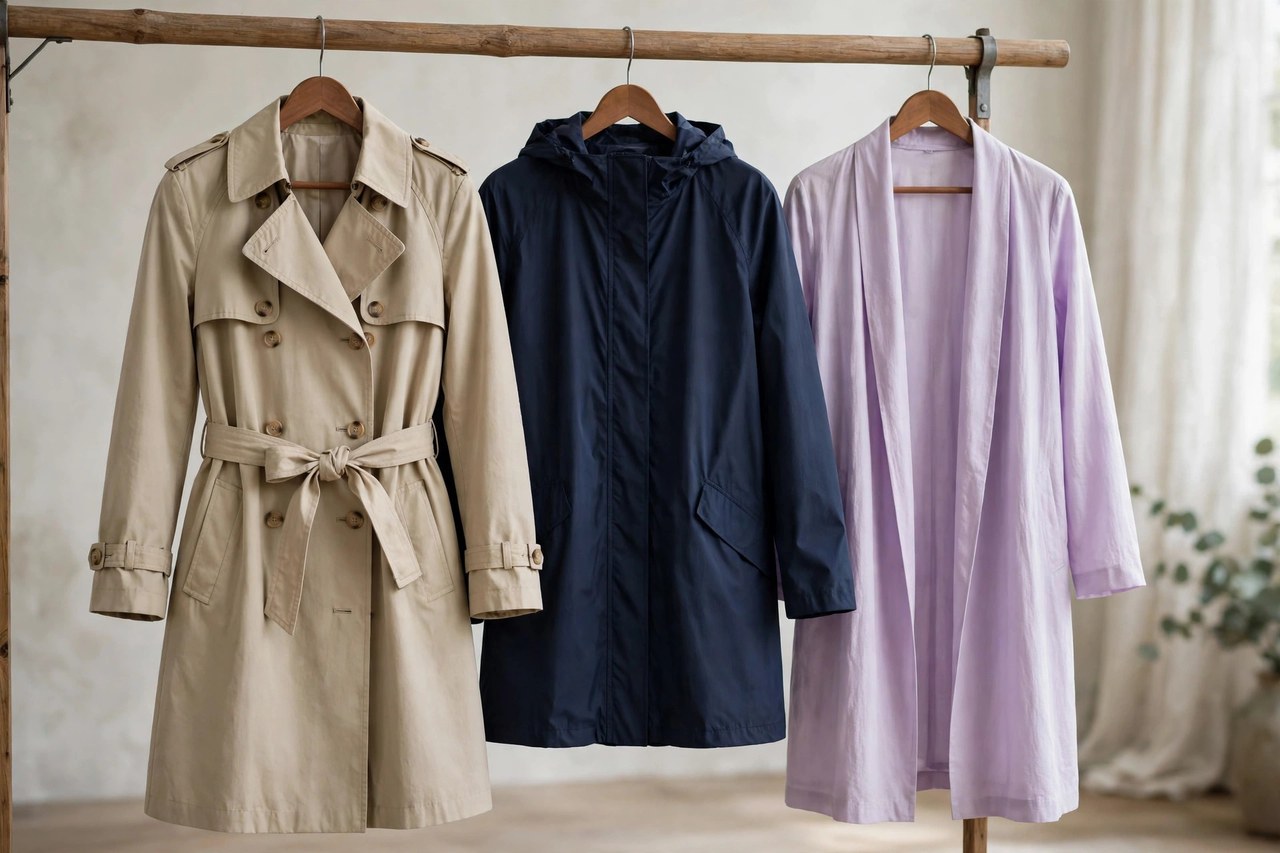
A coat is an outer garment worn outdoors, having sleeves and typically extending below the hips. A women's coat is worn for protection from the weather — it can provide warmth or keep you dry — and it can also be worn simply for fashion. The weight of the garment should be appropriate to the temperature: a heavyweight coat belongs to cold weather, and a lightweight coat to moderate temperatures. Between the two sits the most useful coat in most wardrobes.
This guide covers the lightweight family — trench coats, raincoats, dusters and unlined spring coats — and explains how a coat differs from a jacket, which fabrics to look for, and how to fit a garment that has to work over everything from a tee to a sweater.
Coat or Jacket?
The working distinction is length and intent. Coats typically have long sleeves and open down the front, closing by means of buttons, zippers, hook-and-loop fasteners, toggles, a belt, or a combination of these, and they run from below the hip to the ankle. Jackets stop at the waist or hip and are built lighter. Our dedicated Q&A on the difference between a coat and a jacket (linked below) goes deeper, but the shorthand is: if it covers the seat, it is a coat.
Why does the category matter? Because a lightweight coat does a job no jacket can: it finishes an outfit. A trench over jeans reads as a look; a jacket over jeans reads as a layer. For travel, one lightweight coat that works over day clothes and dresses alike replaces three lesser garments.
The Main Styles
The trench coat is the icon: double-breasted, belted, storm-flapped, in water-resistant gabardine, and unchanged in essentials for a century. The raincoat prioritizes waterproofing — sealed seams, a hood or a hat-friendly collar. The duster is long, loose and unlined, a swish of drama over slim trousers. The unlined wool or knit coat (the “coatigan” end of the family) behaves like a very long cardigan for dry, cool days.
Single-breasted, straight “car coats” and wrap coats with tie belts round out the choices. Choose by climate first (wet vs dry), then by the length that suits your height: below-knee lengths elongate, while a mid-thigh car coat is kinder to petite frames and drivers.
Fabrics and Closures
Cotton gabardine and cotton-nylon blends give structure and shower resistance; microfiber and coated synthetics give true rain protection at low weight; unlined wool crepe and double-face knits give warmth without bulk. A lightweight coat should still have finished interiors — bound seams, a half lining at the shoulders — so it slides over knitwear instead of grabbing it.
Closures change both function and look: a belt defines the waist and keeps a wrap front secure in wind; buttons tailor; a zip under a placket is the rain-practical choice. Check that buttons are sewn through, not glued, and that a belt's buckle is metal rather than plastic on any coat you expect to keep for years.
Fit and Care
Fit a coat over your thickest sweater, raise your arms, sit, and mime driving. The hem should clear your usual skirt lengths or commit to being longer than all of them — a coat that ends mid-skirt is the awkward middle. Sleeves should reach the wrist bone with a sliver of cuff showing.
Hang lightweight coats on wide hangers, empty the pockets at night, and brush them down after wear. Most spring coats want dry cleaning or a gentle cool wash depending on fabric — read the label, because bonded and coated fabrics have opinions. Stored clean and covered, a good trench will serve for a decade.
Related Women's Guides
Photos

More to Explore on Apparel Search
Looking for Women's Clothing Stores?
This guide helps you choose women's lightweight coats. To browse where to buy, visit our women's clothing store directory, where you can find retailers that carry them.