Women's Microfleece Unlined Jacket Guide
An unlined microfleece jacket is a single layer of fleece and nothing else — no inner lining to add bulk, trap heat or slow drying, just the fabric doing the work.
Shop Women's Microfleece Unlined Jacket Now
Shop Women's Microfleece Unlined Jacket on Amazon Shop Women's Microfleece Unlined Jacket on eBayThe Amazon and eBay links on this page are affiliate links. If you make a purchase through them, Apparel Search may earn a commission.
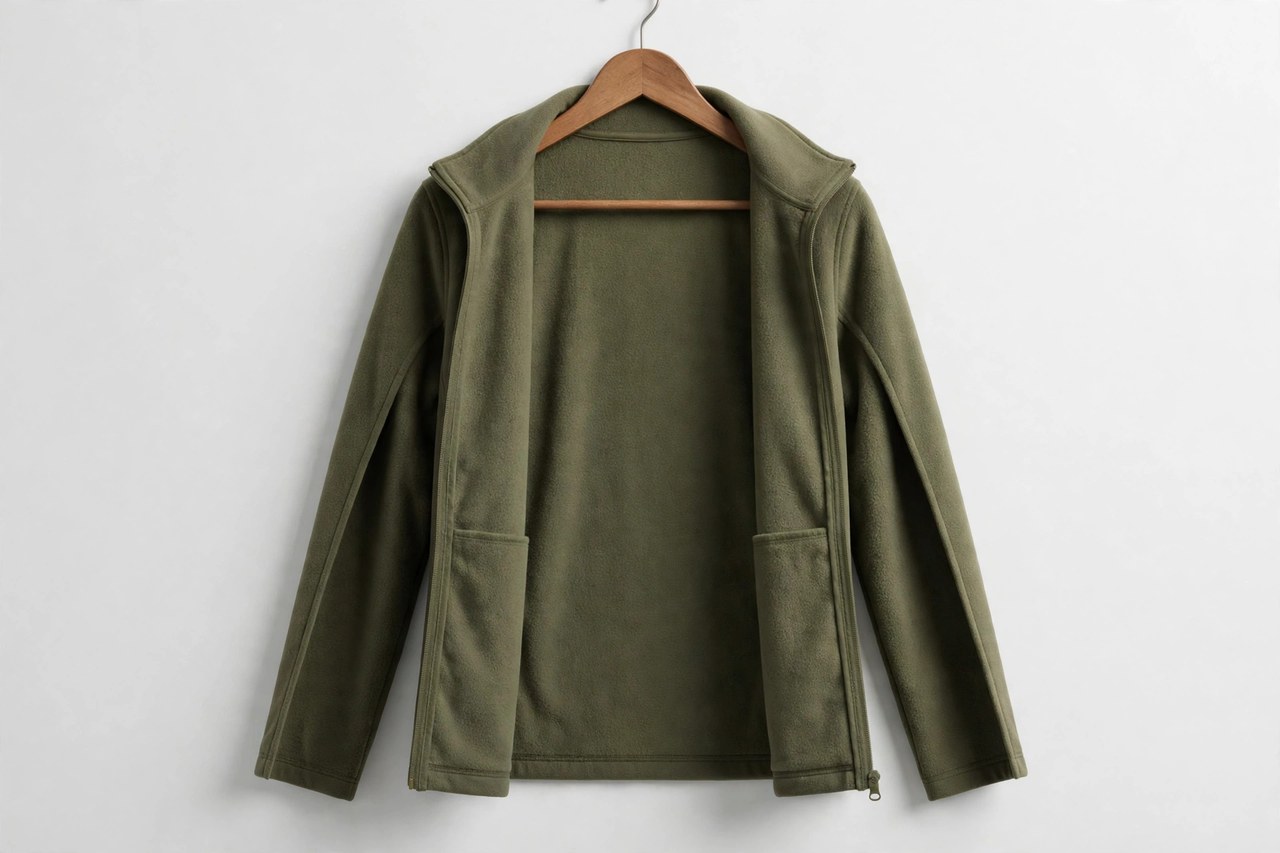
To understand an unlined jacket, start with what lining is. A lined jacket has an extra layer of material attached to the inside of the garment, added for visual effect, comfort, quality or utility; suit jackets are the familiar example, and jackets may be fully lined, half-lined or partially lined. An unlined jacket simply has none of that: there is no lining material at all, and the jacket is just the fabric of the jacket. In microfleece — the thin, soft polyester fleece first made in 1979 by Malden Mills, now Polartec LLC — that single-layer approach is not a cost-cutting shortcut but a design choice.
Fleece is unusually well suited to going unlined. A woven shell fabric usually needs a lining to hide rough seam allowances and to slide over clothing; microfleece is napped and soft on both faces, so the inside of the garment already feels finished against a top or bare arms. Its raw edges do not fray the way woven cloth does, which lets makers bind or simply finish the seams and stop there. The result is the lightest, simplest jacket in the fleece family: one layer of a hydrophobic fabric that wicks moisture, holds less than 1% of its weight in water and dries in very little time.
Single-Layer Construction
Turn an unlined microfleece jacket inside out and you can read its whole construction at a glance. Seams are typically flatlocked or overlocked so they lie smooth against the body, and edges at the collar, cuffs and hem are bound with a strip of fleece or stretch trim rather than faced and lined. Zipper plackets show their stabilizing tape openly. Because nothing is hidden, quality is easy to judge: even stitching, flat seams and tidy binding mean a well-made garment, while lumpy seams and wavy edges have nowhere to hide.
A single layer also changes how the jacket breathes and dries. With no lining to trap a pocket of still, damp air against the fleece, moisture moves straight through and the garment dries faster after a wash or a shower of rain than any lined equivalent. Air permeability is higher too, which makes unlined jackets comfortable during activity and in mild weather, when a lined jacket can feel clammy. The trade is wind: microfleece is not windproof to begin with, and removing the lining removes the one layer that might have slowed a draft, so an unlined jacket is a calm-day and layering piece first.
When Unlined Beats Lined
Choose unlined when weight, breathability and simplicity matter most: travel, where every gram counts and fast drying is gold; active use like walking and hiking, where you generate your own heat; warm or humid climates where a lining would stick; and layering over smooth base layers, where its soft inner face stays put. Unlined microfleece also washes and dries as a single thin layer, and packs without a lining bunching at the hem — small wins that add up over a season.
Be equally clear about when lined wins. A lining can add a measure of wind resistance, gives a jacket structure and a dressier drape, and slides more easily over knits and sweaters — unlined fleece can grip a chunky jumper and ride up as you pull it on, so it layers best over smooth tops. In deep cold, a lined or simply heavier jacket is the warmer tool. None of this makes the unlined jacket a lesser garment; it makes it a specialist. Within its brief — light, breathable, single-layer warmth — nothing else in the family does the job as cleanly.
Fit, Seams and Care Checks
Because the inside is the outside's only layer, fit and finish checks carry extra weight. Run a hand along the inner seams: flatlock stitching should feel almost flush, and overlocked seams should be narrow and even, never scratchy against a short-sleeved top. Check the zipper installation, since no lining conceals it — the tape should be stitched straight and the placket reinforced so the stretchy knit does not ripple the front. Collar and cuff bindings should recover after a gentle stretch, and pocket bags, where fitted, should be securely anchored so they do not twist.
Care is the simplest in the fleece family. The single layer goes through an ordinary machine wash, releases water readily in the spin, and air-dries faster than any lined jacket — one reason unlined styles are travel favorites. The usual fleece cautions still apply: wash cool, keep the garment away from high dryer heat and hot irons, which can damage polyester fibers, and expect some static and lint attraction, especially in dry winter air. Lower-quality fleece will pill with wear, so a dense, even nap at purchase is the best insurance. Treated well, an unlined microfleece jacket is a decade-long staple bought in a single layer.
Related Women's Guides
More to Explore on Apparel Search
Looking for Women's Clothing Stores?
This guide helps you choose women's microfleece unlined jacket. To browse where to buy, visit our women's clothing store directory, where you can find retailers that carry them.