Women's Microfleece Jackets Guide
The zip-front microfleece jacket is the family's hardest-working outer layer — waist- or hip-length, sleeved, and made to open flat, layer easily and shrug off a chill.
Shop Women's Microfleece Jackets Now
Shop Women's Microfleece Jackets on Amazon Shop Women's Microfleece Jackets on eBayThe Amazon and eBay links on this page are affiliate links. If you make a purchase through them, Apparel Search may earn a commission.
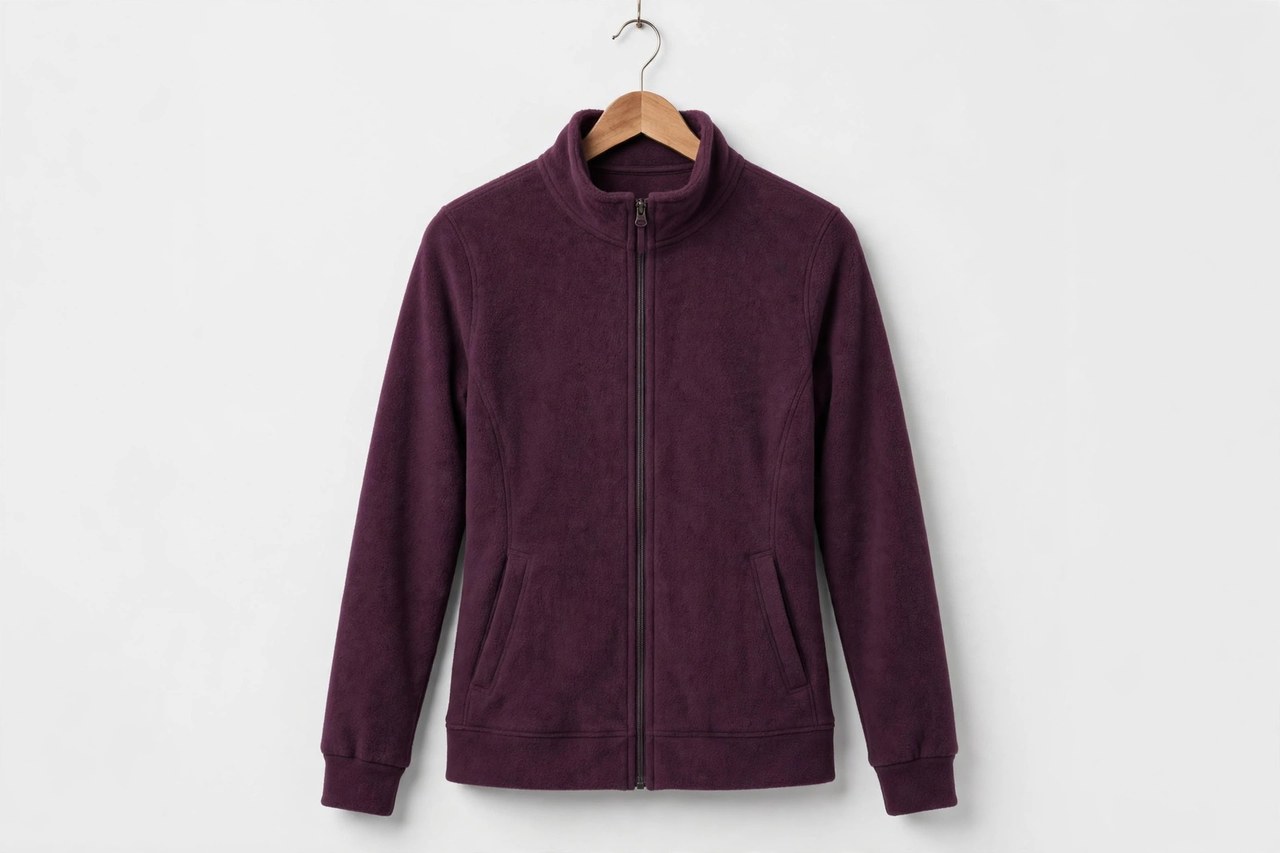
A jacket is an outer garment extending to the waist or the hips, typically with sleeves and a fastening down the front — and in microfleece, that simple formula becomes one of the most useful layers a woman can own. The microfleece jacket takes the thinnest grade of polar fleece, the soft polyester fabric first made in 1979 by Malden Mills (now Polartec LLC), and cuts it into a front-opening layer that goes over anything. This page covers microfleece jackets as a class: the styles, the weights and the features that separate a good one from a merely soft one.
Microfleece suits jackets particularly well because the fabric works hard at very low weight. It wicks moisture away from the skin, holds less than 1% of its weight in water so it stays warm even when damp, dries quickly, and washes in an ordinary machine load. Against the skin it feels brushed and gentle rather than scratchy, which makes it a friendly alternative for women who find wool irritating. A microfleece jacket is rarely the warmest layer you own, but it may be the one you reach for most often — the layer that fits every in-between day.
Jacket Styles in Microfleece
The classic style is the full-zip jacket, whose zipper runs from collar to hem so the front opens completely. Around it sit several close relatives. Lightweight jackets use the micro and 100 fleece grades for mild weather and travel. Unlined jackets skip any inner lining for a single breathable layer. Some jackets borrow from pullovers, closing partway with a half or quarter zip while keeping a jacket's pockets and hem. Silhouettes range from relaxed and boxy to shaped cuts with seaming that follows the waist, and lengths from cropped at the waist to tunic-long over the hips.
Weight is the other big choice, and the fleece scale runs micro, 100, 200 and 300, thickest and least flexible at the top. For a jacket worn as an outer layer in spring and fall, micro and 100 weights are the sweet spot: warm over a top, light enough to tie around your waist or stuff in a tote when the sun comes out. A 200-weight jacket is a genuine cool-weather layer and the better mid layer under a winter coat. Save 300 for heavy pullovers and cold-climate pieces; in a jacket it can feel stiff and overly warm indoors.
Features Worth Checking
Small details decide how a microfleece jacket behaves day to day. Zippered hand pockets keep a phone and keys secure when the jacket is worn open, and an interior pocket adds a safe place for a card or cash. A stand collar zips up to seal the neck without a scarf. A drawcord hem lets you cinch the bottom against drafts or leave it loose over layers, and elastic or bound cuffs keep sleeves in place without bulk. Check the main zipper too: it should glide without catching the fleece, since the zip does more work on this garment than any other part.
Fit deserves the same attention. Try the jacket over the thickest top you plan to layer beneath it; microfleece knits stretch more easily in one direction than the other, so a jacket can feel generous side-to-side yet short in the sleeves. Shaped styles use princess seams or side panels to avoid a boxy drape, while relaxed styles trade polish for layering room. Hip-length cuts pair best with pants and outdoor use; waist-length cuts look neater with skirts and dresses. None of this is decoration — a jacket that fits the way you actually dress gets worn, and one that doesn't, doesn't.
Jacket or Pullover?
The front opening is the jacket's defining advantage. A zip-front jacket goes on and off without pulling anything over your head, so it never disturbs hair, makeup or glasses, and it can be shrugged off in a warm room while you stay seated. Venting is instant: unzip partway to cool down on a walk, zip to the chin when the wind picks up. For women dressing with limited shoulder mobility, or anyone layering over a collared shirt that should stay crisp, the jacket's open front is simply easier to live with than a pull-on style.
Pullovers answer with an unbroken panel of insulation across the front, no zipper to fail, and usually a slightly lighter build — which is why this section gives half-zip and quarter-zip pullovers their own guides. Whichever you choose, the care rules are shared: microfleece is not windproof, so pair it with a shell on windy days; expect some static and lint attraction; wash cool and keep it from high dryer heat, which damages polyester fleece; and know that cheaper fleece pills faster. Bought in a decent weight with sound features, a microfleece jacket covers three seasons with ease.
Related Women's Guides
Looking for Women's Clothing Stores?
This guide helps you choose women's microfleece jackets. To browse where to buy, visit our women's clothing store directory, where you can find retailers that carry them.