Women's Lightweight Microfleece Full Zip Jacket Guide
One garment, examined closely: the lightweight full-zip microfleece jacket — thin fleece, a full-length zipper, and the small construction details that make it a travel staple.
Shop Women's Lightweight Microfleece Full Zip Jacket Now
Shop Women's Lightweight Microfleece Full Zip Jacket on Amazon Shop Women's Lightweight Microfleece Full Zip Jacket on eBayThe Amazon and eBay links on this page are affiliate links. If you make a purchase through them, Apparel Search may earn a commission.
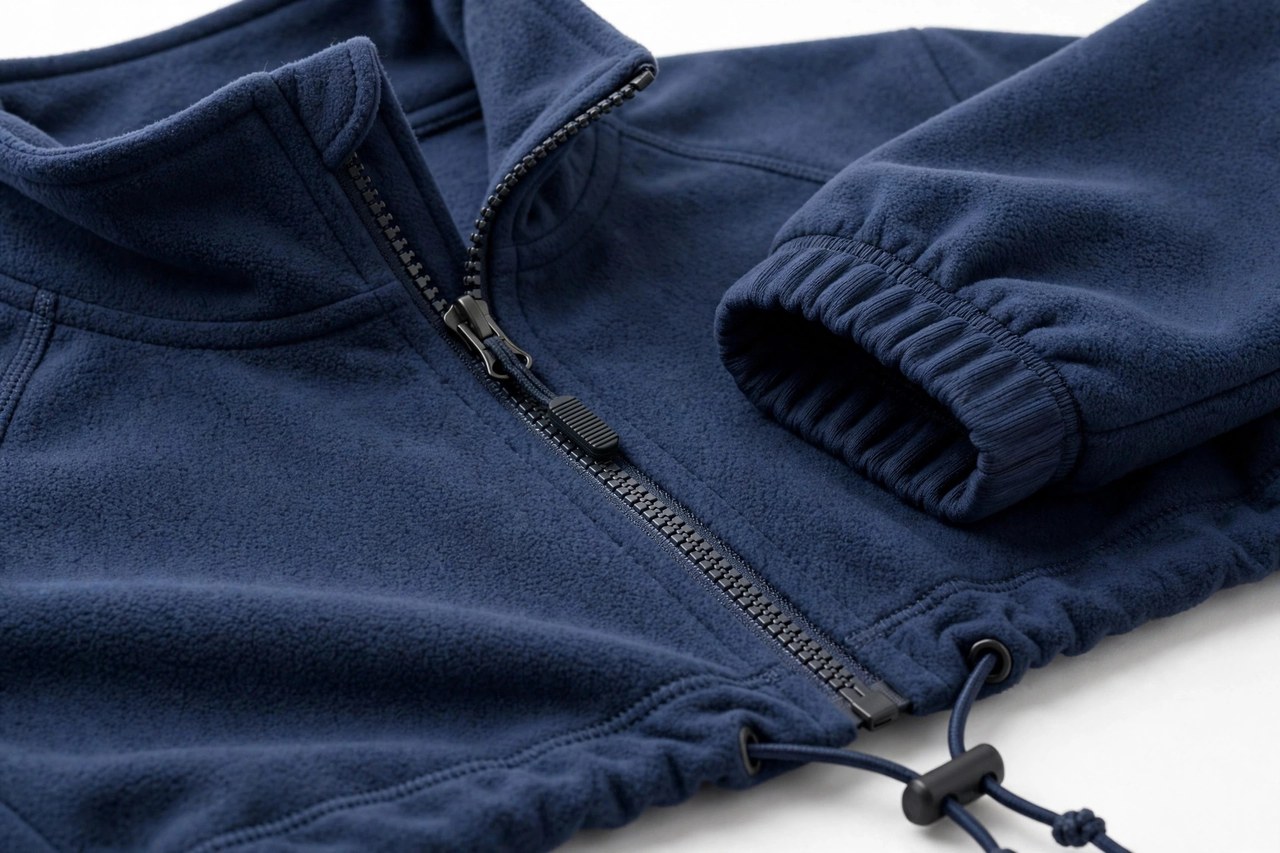
This page is about one specific garment: a jacket cut from the lightest microfleece grades — micro and 100 weight on the fleece scale — and closed with a zipper that runs the full front, from hem to collar. It is a narrower subject than lightweight jackets in general, and that is the point. The broader lightweight story covers pullovers, partial zips and use cases; here the focus is construction: how this single design is built, detail by detail, and why those details make it the fleece that ends up in more suitcases and everyday bags than any other.
The design's popularity starts with a simple pairing. Lightweight microfleece — the thin, soft, napped polyester first manufactured in 1979 by Malden Mills, now Polartec LLC — is a popular choice for spring and fall, when temperatures are moderate. On its own in pullover form it offers one fixed level of warmth. Add the full-length zip and the warmth becomes adjustable minute by minute, while the garment stays light enough to carry all day without noticing it. Few staples do so much with so little material.
Construction, Detail by Detail
Begin at the top of the zip. A well-built lightweight full-zip has a zip garage: a small folded pocket of fabric at the collar where the zipper pull tucks away, so no cold metal or hard plastic rests against your chin or catches the skin of your neck. The stand collar itself is usually two layers of fleece, high enough to seal the neck when zipped full. The zipper is typically a fine coil zip — lighter and more flexible than molded teeth at this fabric weight — and on better versions it is two-way, opening from the hem for seated comfort in cars and on planes.
At the edges, elastic does the sealing. Elastic cuffs are gently bound or lightly elasticated so sleeves stay at the wrist, slide easily under a coat, and never need rolling. The hem carries a cinch — a drawcord with a small toggle, or discreet elastic — that lets you snug the bottom edge against drafts or wear it loose over a longer top. These details matter because thin fleece has no structure of its own: the garment's shape comes from its edges. Sleeves may be set-in for a cleaner, more tailored line or raglan for easier movement and layering; both work, but raglan shoulders sit flatter under pack straps.
Pockets, Fit and Finishing
Pockets on this garment are an engineering compromise, and good makers solve it well. Zippered hand pockets are the standard: the zips keep a phone, keys and cards inside when the jacket is worn open like a cardigan, which is half the time. The pocket bags are usually mesh or light fleece, adding no bulk, and the pockets sit slightly forward so they remain usable under a hip belt. Many add one interior pocket sized for a passport or phone — genuinely useful for travel, since it keeps valuables against your body.
Fit and finishing separate the keepers from the rest. Because fleece knit stretches more easily in one direction than the other, better jackets stabilize the zipper placket with tape so the front hangs smooth instead of wavy, and use shaped side seams or princess lines so the light fabric drapes rather than bags. Seams are flat or flatlocked, especially under the arms, so nothing rubs when the jacket is worn over a sleeveless top or under straps. Binding along the collar, cuffs and hem stops the thin edges from curling and gives the garment its neat, finished look.
Why It Travels and Layers So Well
Packability is where the construction pays off. With no lining or heavy hardware, this jacket rolls to the size of a water bottle, weighs a few hundred grams, and unfolds nearly wrinkle-free. Worn on the plane it handles cabin chill; at the destination it layers under a rain shell on wet days and over a dress on cool evenings. Under a winter coat it disappears as a mid layer, its flat seams and slim cuffs engineered not to bunch. It is, in effect, three garments that together weigh less than one sweater.
Care is part of the design's appeal, and it follows the fabric's rules. The polyester is hydrophobic, holding less than 1% of its weight in water, so a travel wash in a hotel sink rinses clean and dries overnight on a hanger, ready for the morning. At home, zip the jacket closed before machine washing to protect the coil teeth, wash cool, and dry low or on the line: high heat from tumble dryers and irons can damage fleece fibers, and the thin grades show wear first. Buy a dense, anti-pill finish and this lightest of jackets will hold its looks through years of trips.
Related Women's Guides
More to Explore on Apparel Search
- women's jacket
- Fleece Weights
- women's fleece clothing
- Women's Heavyweight Micro-fleece Quarter Zip Mock
- Women's Microfleece Hats
- Women's Microfleece Long Sleeved Zip Sports Shirt
- Women's Microfleece Pajamas
- Women's Microfleece Pants
- Women's Microfleece PJ
- Women's Microfleece PJ Set
- Women's Microfleece Quarter Zip Pullover
- Women's Microfleece Robes
- Women's Microfleece Shirts
- Women's Microfleece Sweatshirts
Looking for Women's Clothing Stores?
This guide helps you choose women's lightweight microfleece full zip jacket. To browse where to buy, visit our women's clothing store directory, where you can find retailers that carry them.