Women's Lightweight Microfleece Jackets Guide
Lightweight microfleece jackets use the thinnest fleece grades to take the edge off spring and fall days — warmth you can pack, carry and forget you are wearing.
Shop Women's Lightweight Microfleece Jackets Now
Shop Women's Lightweight Microfleece Jackets on Amazon Shop Women's Lightweight Microfleece Jackets on eBayThe Amazon and eBay links on this page are affiliate links. If you make a purchase through them, Apparel Search may earn a commission.
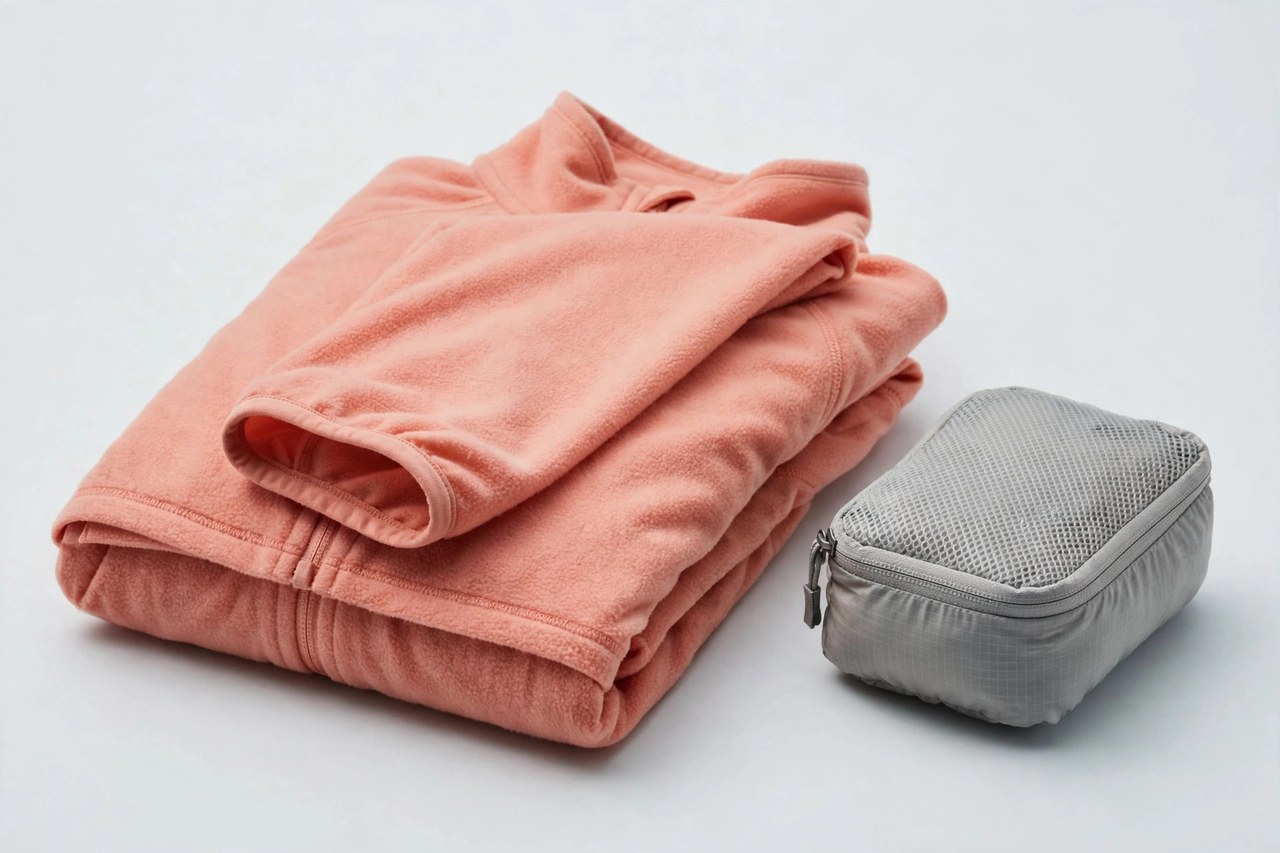
A lightweight microfleece jacket is the mild-weather member of the jacket family: a waist- or hip-length layer, with sleeves and a front fastening, cut from the thinnest fleece grades — the micro and 100 weights on the traditional fleece scale of micro, 100, 200 and 300. It is a popular choice for spring and fall, when the temperature is moderate and a heavy coat is too much but a bare top is not enough. Unlike the specialist pages in this section, this guide covers lightweight jackets broadly: full-zip fronts, partial-zip pullover constructions and everything between.
Thin fleece still behaves like fleece. The fabric is the same soft, napped polyester first made in 1979 by Malden Mills, now Polartec LLC: it wicks moisture away from the skin, holds less than 1% of its weight in water, insulates even when slightly damp and dries remarkably fast. What changes at the lightweight end is bulk and warmth, not character. A lightweight jacket packs down to almost nothing, weighs little on your shoulders, and moves with you instead of around you — which is why these jackets live in car boots, tote bags and suitcases as often as in closets.
Where Lightweight Microfleece Earns Its Keep
Travel is the classic use case. A lightweight microfleece jacket folds or rolls into a corner of a carry-on, shrugs off wrinkles, and serves as a plane layer, an evening layer in an unfamiliar climate and an emergency layer when the weather turns. Because it washes easily and dries overnight, it survives trips that would leave a wool sweater still damp on the rail. At home it covers the same in-between territory: school runs on a bright October morning, a dog walk at dusk, the chill of an air-conditioned office or train carriage in summer.
Mild-weather dressing is really about layering insurance. A lightweight jacket over a tee handles a ten-degree temperature swing without a wardrobe change, and tied around the waist or shoulders it weighs so little you forget it is there. Choose lighter colors for spring and deeper shades for fall if you keep two. The fabric's breathability matters here: at these thin weights air moves through the knit, so the jacket warms you when you are still and does not cook you the moment you start walking briskly uphill or carrying shopping.
Layering Lightweight Jackets
Under a shell, a lightweight microfleece becomes the insulating half of a rain system: the shell stops wind and water, the fleece traps warm air and wicks sweat off your base layer. Under a winter coat it adds a surprising amount of warmth for its thickness, precisely because it adds almost no bulk at the shoulders and arms. Over clothing it works the other way — a lightweight jacket over a tank or tee on a summer evening, or over a long-sleeved top in fall. Few other layers move between all three positions, base-adjacent, mid and outer, this gracefully.
For active use — hiking warm-ups, walking groups, cycling to the shops on a cool morning — the wicking earns its keep: as you heat up, moisture moves outward instead of pooling, and the jacket dries as you go. Be honest about wind, though. Lightweight fleece is not windproof, and on an exposed ridge or a blustery seafront the warmth leaks away fast. That is the moment the shell goes over the top, or the day you choose a heavier weight. Carried as one half of a two-piece system, the lightweight jacket is hard to beat; asked to be a storm layer alone, it is out of its depth.
Choosing a Lightweight Jacket
Start with the closure, because lightweight jackets come in more constructions than any other fleece category. A full zip gives cardigan-style wear and the easiest venting. A half-zip or quarter-zip pullover construction drops the front hardware, saves a little weight and keeps an unbroken panel of warmth across the stomach — good for activity, less flexible for the office. Then check pockets: at this weight, pockets are often simple and open, so if you carry a phone while walking, look for at least one zippered pocket. A drawcord or elastic hem keeps the thin fabric from flapping.
Quality shows quickly in thin fleece, so inspect it. Hold the fabric to the light: an even, dense nap with no thin patches will insulate and wear better than a sparse one. Anti-pill finishes are worth having, because pilling shows fastest on light, smooth-worn garments, and lower-quality polyester fleece pills worst of all. Seams should be flat or neatly finished so they do not chafe under pack straps. Finally, look at the label: many lightweight jackets are made partly from recycled PET bottles, and the care instructions should confirm the usual fleece rules — machine washable, quick to dry, keep away from high heat.
Related Women's Guides
More to Explore on Apparel Search
- women's jacket
- Fleece Weights
- women's fleece clothing
- What is the difference between a coat & jacket?
- Women's Heavyweight Micro-fleece Quarter Zip Mock
- Women's Microfleece Hats
- Women's Microfleece Long Sleeved Zip Sports Shirt
- Women's Microfleece Pajamas
- Women's Microfleece Pants
- Women's Microfleece PJ
- Women's Microfleece PJ Set
- Women's Microfleece Robes
- Women's Microfleece Shirts
- Women's Microfleece Sweatshirts
- Women's Microfleece Unlined Jacket
Looking for Women's Clothing Stores?
This guide helps you choose women's lightweight microfleece jackets. To browse where to buy, visit our women's clothing store directory, where you can find retailers that carry them.