Women's Microfleece Long Sleeved Zip Sports Shirt
A long-sleeved microfleece top with a zip neck, built for training — the warmth of fleece with the venting control of a sports shirt, for running, hiking and cool-weather workouts.
Shop Women's Microfleece Long Sleeved Zip Sports Shirt Now
Shop Women's Microfleece Long Sleeved Zip Sports Shirt on Amazon Shop Women's Microfleece Long Sleeved Zip Sports Shirt on eBayThe Amazon and eBay links on this page are affiliate links. If you make a purchase through them, Apparel Search may earn a commission.
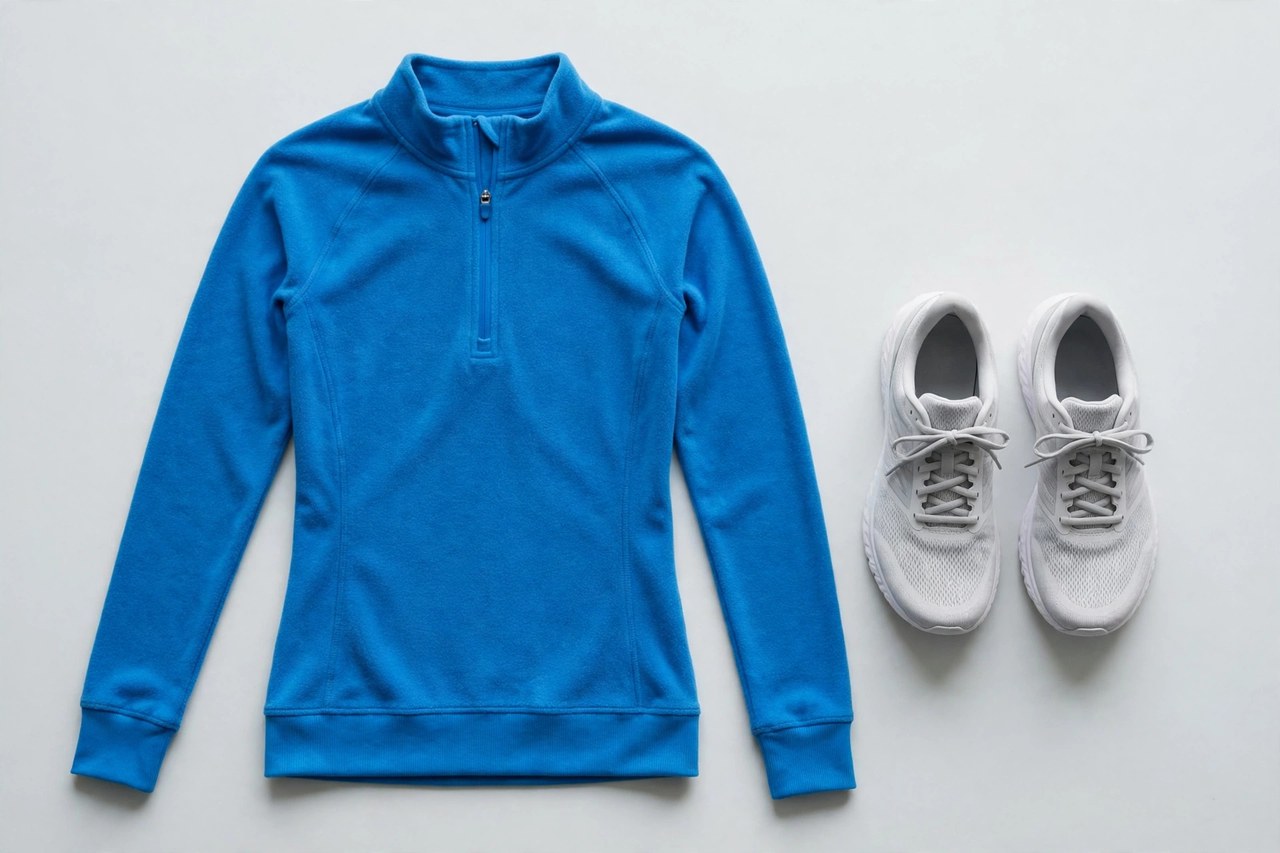
A women's microfleece long-sleeved zip sports shirt is exactly what the name promises: a long-sleeved athletic top cut from thin microfleece, with a zipper running partway or all the way down the front. The zipper is the headline feature — it might be a short quarter zip that opens at the collar, a half zip that reaches the chest, or a full zip that turns the top into a lightweight jacket. Underneath, the garment behaves like a technical sports shirt: cut close enough to move freely, warm enough for cool-weather training, and finished with the details athletes expect.
The long sleeves are what separate it from short-sleeved training tees. Full-length sleeves reach the wrist, shielding arms from wind, sun and brush on the trail while trapping a thin layer of warmed air against the skin. Cut matters as much as length: most sports shirts use a raglan or athletic sleeve that keeps seams off the top of the shoulder, so pack straps and arm drive during running don't chafe. Thumbholes, when present, keep the cuffs anchored over the backs of the hands, closing the gap where a jacket sleeve might ride up.
Why This Top Belongs in a Training Wardrobe
The zipper turns a warm top into a climate-control tool. Start a run zipped up against the cold, then drop the zip as body heat climbs; the collar opens to dump excess warmth without forcing you to remove a layer mid-stride. That adjustability is why quarter- and half-zip fleece tops have become standard issue for runners, hikers and walkers who train through autumn and spring — the seasons when a static, non-venting top is either too hot or too cold within a single outing.
It also layers better than a pullover. Worn under a shell jacket or wind vest, a zip-neck top lets you fine-tune temperature from the collar without unzipping the outer layer. Microfleece's thin profile — the lightest of the polar fleece family, well below the bulk of 200- or 300-weight fleece — means it slides under shells without bunching at the shoulders, and its hydrophobic polyester holds less than one percent of its weight in water, so sweat moves outward instead of soaking the layer.
The Details That Mark the Athletic Versions
Look for flatlock seams that lie smooth against the skin, stretch panels under the arms or along the sides that open up during a full stride, and a slightly dropped tail hem that keeps the lower back covered when you bend or reach. A chin guard or zip garage — the small fabric flap behind the top of the zipper — stops the pull from scraping the neck on long outings, and reflective print or piping on the sleeves and back adds visibility for dawn and dusk workouts.
Thumbholes deserve their own mention. The reinforced slit at each cuff threads the thumb through so the sleeve stays over the wrist, extending coverage and locking the cuff under a jacket sleeve. Not every sports shirt has them — some women prefer clean cuffs for everyday wear — but for cold-morning runners they are the single most loved detail in the category. Check that the thumbhole is finished flat; a bulky or scratchy edge defeats the purpose by mile three.
Fabric, Fit and Care for Active Use
Microfleece was first made in 1979 by Malden Mills, now Polartec, as a synthetic alternative to wool, and its signature trick is staying warm when damp: the hydrophobic fibers retain insulating power even when wet, dry quickly, and wash easily. For active use, thinner is better — micro or 100-weight fleece breathes during exertion, where heavier weights turn clammy. It is not windproof on its own, which is why runners pair it with a wind shell, and it generates static electricity, so expect some lint attraction in the drawer.
Fit should be semi-fitted rather than tight or baggy: close enough that excess fabric doesn't flap, loose enough for a full arm swing and a base layer underneath on the coldest days. Care is simple but heat-averse — machine wash cold or warm, skip the hot dryer, and never iron. High heat damages the fine polyester fibers and worsens pilling, the small fabric balls that lower-quality fleece develops. Hang or tumble low, and the top will survive seasons of training miles.
Related Women's Guides
More to Explore on Apparel Search
- Women's Heavyweight Micro-fleece Quarter Zip Mock
- Women's Lightweight Microfleece Full Zip Jacket
- Women's Microfleece Full Zip Jackets
- Women's Microfleece Hats
- Women's Microfleece Jackets
- Women's Microfleece Pajamas
- Women's Microfleece Pants
- Women's Microfleece PJ
- Women's Microfleece PJ Set
- Women's Microfleece Robes
- Women's Microfleece Unlined Jacket
- Fleece Weights
- women's fleece clothing
Looking for Women's Clothing Stores?
This guide helps you choose women's microfleece long sleeved zip sports shirts. To browse where to buy, visit our women's clothing store directory, where you can find retailers that carry them.