The Silhouette
A Straight Line, Worn Low
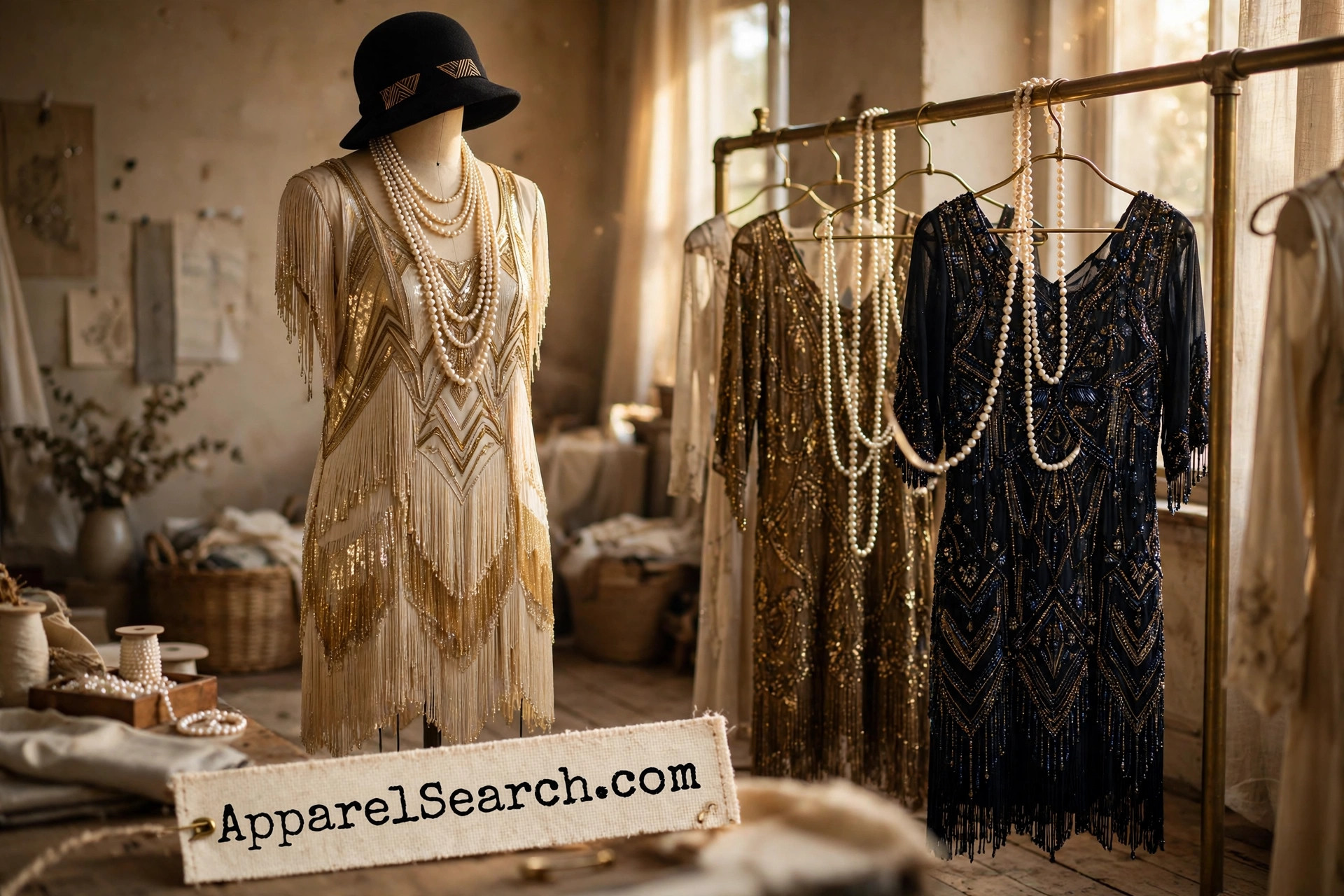
The 1920s silhouette is a tube. After centuries of waist-first construction, fashionable dresses hung straight from the shoulders, with the waistline dropped to the hips or ignored altogether and the bust deliberately flattened. The fashionable body was boyish — the French called it the garçonne look — and the clothes matched: chemise dresses, straight coats and skirts that ended, scandalously, at the knee by the middle of the decade. For the first time in Western fashion history, women's legs were a normal part of the public picture, and everything about the decade's design follows from that freedom of movement.
The change was social before it was aesthetic. Women had worked through the First World War, won the vote in much of the West, and were dancing to jazz in public; clothing that required a maid, a corset and a chaperone could not survive the decade. Sport entered the wardrobe too — knitted jersey, until then underwear fabric, became day dresses and tennis whites — and the decade's other great silhouette, the fluid evening dress covered in beading and fringe, was engineered for dancing: it moved when the wearer moved, and flashed under the new electric lights.
The Key Pieces
Flappers, Cloches and T-Straps
- The flapper dress — straight, sleeveless or short-sleeved, often fringed or beaded, worn with silk stockings rolled at the knee. The flapper dress guide covers its construction and modern versions in depth.
- The cloche hat — a deep, bell-shaped hat pulled low over bobbed hair, worn with nearly everything and the decade's most recognizable accessory.
- The chemise and the straight day dress — simple, waistless shifts in crepe, jersey and printed silk, the working uniform of the modern woman.
- T-strap and Mary Jane shoes — low-heeled, strapped for dancing, and newly visible under short hems, so shoes became fashion objects in their own right.
- Long beads and ropes of pearls — worn against the flat chest the silhouette demanded; jewelry lengthened as necklines simplified.
- The robe de style — the decade's romantic alternative: a fuller, panniered skirt on the same dropped waist, proof the tube had a softer sister.
Evening wear carried the decade's glamour. Dresses were canvases for hand beading — geometric Art Deco patterns in bugle beads, sequins and metallic thread — and the workmanship on surviving examples explains their prices in the vintage market today, a market the women's vintage fashion guide walks through.
Fabrics & Color
Silk, Beading and Deco Geometry
Silk ruled the decade — crepe de chine, georgette, chiffon and satin — because the straight silhouette needed cloth that fell rather than cloth that stood. Velvet served evenings, fine wool and jersey served the day, and rayon, the new artificial silk, put a version of the look within reach of working women for the first time. Color ran to the jewel-and-pastel double register of Art Deco: jade, gold, black with silver, flesh pink and powder blue, printed with geometric patterns, stylized flowers and Egyptian motifs after the Tutankhamun craze of 1922.
Beauty and hair completed the outfit more completely than in any decade before: the bob, the waved Marcel cut, dark lipstick and kohl-rimmed eyes were not optional extras but part of the silhouette, which is why a modern 1920s reference so often starts with the hair.
Sport quietly rewrote the decade's other wardrobe. Tennis, swimming and motoring demanded clothes a woman could move in, and they got them: pleated white skirts and sleeveless tops for the court, knitted cardigans and pullovers borrowed from men's sportswear, and one-piece bathing costumes that shortened year by year. Designers such as Jean Patou built whole collections around the sporting life, and Coco Chanel made humble jersey — previously used for men's underwear — into fashionable day dresses. The modern idea that comfort and elegance can coexist enters fashion here, in the 1920s, and it has never left.
Wearing It Today
The 1920s Now: Beading, Not Costume
The 1920s returns in cycles — every few years evening fashion rediscovers beading, fringe and the dropped waist — and its details are among the easiest vintage signals to wear singly. A beaded clutch or a fringed evening top carries the whole decade into a modern outfit; a T-strap shoe does the same work more quietly. The full flapper dress works for parties precisely because the decade was itself a party, but it reads as costume unless the hair, at least, stays modern.
Continue the row with the 1930s and 1940s guide, where the dropped waist gives way to the bias cut and the shoulder — or step back to the fashion by decade index to compare all seven decades side by side. For the style's afterlife as a category, see the retro fashion term page.
More to Explore
Good to Know
Common Questions
Why did 1920s dresses have no waist?
The dropped, undefined waist was a deliberate rejection of the corseted silhouette that had defined women's dress for generations. It suited the decade's realities — working, driving, dancing, sport — and its ideal of youthful, boyish modernity. Construction followed: dresses were cut as straight chemises that hung from the shoulders, so the waist seam could sit at the hips or disappear entirely.
What shoes did women wear in the 1920s?
Strapped shoes were the decade's standard: T-straps and Mary Janes with a modest Louis heel, chosen because short skirts made shoes visible and dancing made secure straps essential. Evening versions came in satin and metallic leather, often dyed to match the dress — an early example of the shoe as a planned part of an outfit rather than an afterthought.
Are flapper dresses accurate for a 1920s outfit?
Mostly, yes — the fringed, beaded flapper dress is a real mid-decade evening style, though it was younger and racier than the decade's everyday dress, which was the plain straight chemise. For accuracy, keep the hem near the knee rather than the thigh, the waist at the hips, and add the cloche and long beads; fancy-dress versions usually shorten and tighten the dress into something the 1920s would not have recognized.
What is the easiest 1920s detail to wear today?
Beading and the T-strap shoe. A beaded evening bag, top or jacket instantly references the decade against modern trousers or a plain dress, and T-strap heels have never fully left the shops. Both carry the reference without the costume effect of a full fringed dress, and both pair with the simple, straight lines modern minimalism already wears.
Search Apparel Search