Women's Over the Knee Suede Boots Guide
Suede remakes the tall boot in a softer register: a napped leather surface that drapes instead of standing, drinks in color, and asks for a gentler life in exchange for its matte elegance.
Shop Women's Over the Knee Suede Boots Now
Shop Women's Over the Knee Suede Boots on Amazon Shop Women's Over the Knee Suede Boots on eBayThe Amazon and eBay links on this page are affiliate links. If you make a purchase through them, Apparel Search may earn a commission.
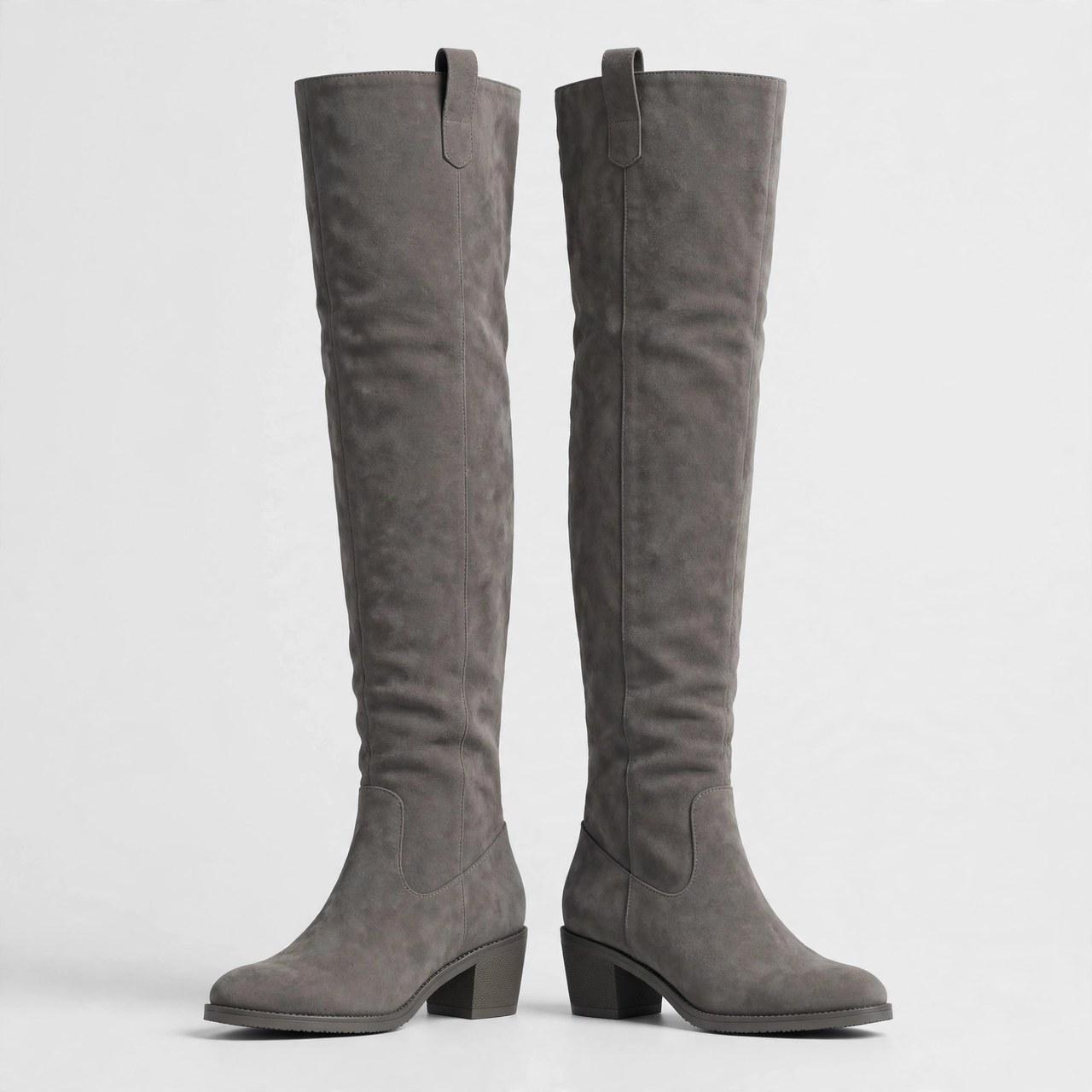
Suede is leather finished on its flesh side, buffed into a fine nap — a surface of tiny fibers that catches light softly and takes dye deeply. On a tall boot, that material character changes the whole garment: where a smooth-leather shaft stands with architectural firmness, a suede shaft relaxes, following the leg with a softer column and a matte, textile-like presence that reads closer to clothing than to armor. It is no accident that suede became the signature material of the modern over-the-knee revival; the boot-as-garment idea is written into the material itself.
This guide covers suede as a tall-boot material: true suede versus the stretch fabrics that imitate it, the drape and slouch behavior to expect (and to fit for), the colors suede does best, and the care regime — brushing, spraying, stain response — on which a suede boot's beauty entirely depends. The smooth-leather comparison lives in our leather guide, linked below.
True Suede, Stretch Suede and Microsuede
Three materials share the suede name in tall boots, and telling them apart is the first buying skill. True suede is animal hide: it has the irregular, velvety nap, the natural smell, and the price to match; it molds moderately to the leg and ages with character. Stretch suede in the trade usually means a suede or suede-backed material bonded to elastic, engineered for the close pull-on shaft; it grips the thigh the way the umbrella guide describes and recovers its shape after wear. Microsuede (faux suede) is a microfiber textile with a brushed face: uniform, inexpensive, vegan, and often surprisingly hard-wearing, though it lacks hide's depth of color and its nap flattens sooner.
Fit consequences follow. True suede has limited give, so its shafts are often cut slightly fuller and expected to slouch a touch at the ankle — a designed softness, not a defect; buy your measured circumference honestly. Stretch versions fit like the stretch leather in our leather guide: order your true measurements and let the elastic work. Microsuede sits between, with fabric give but no molding. In all three, the top edge behavior matters: a suede shaft that is cut too tall will fold at the back of the knee rather than dig, which is more forgiving than leather but still the wrong height.
Color, Drape and Weather Honesty
Suede's glory is its color range. The nap scatters light, so colors read deeper and softer than the same dye on smooth leather: taupe and stone become genuinely neutral foundations; grey suede is the category's modern classic; burgundy, olive, navy and chocolate all gain a richness that makes a tall boot wearable as the outfit's color story rather than its punctuation. Black suede is the softest possible black — it absorbs light entirely, which is why black suede tall boots pair with black dresses without the shine clash that patent or polished leather can cause.
The honesty paragraph: suede is the fair-weather tall boot. Rain spots it, road salt stains it, and a soaked suede shaft dries stiff if dried wrong. Modern protector sprays genuinely help — they buy time against splashes and light rain — but they do not make suede into a storm boot. Plan suede over-the-knee boots as dry-day and evening wear, keep a leather pair for the weather end of the wardrobe (see the leather guide), and you will never have the soaked-suede regret that gives the material an undeserved reputation. Suede's limits are known and manageable; pretending they do not exist is the only real mistake.
Suede Care: Brush, Spray, Rescue
Suede care is a small kit and a habit: a suede brush (crepe or brass-and-nylon) to raise the nap and lift surface dirt after wear, a suede eraser for scuffs and shiny spots, and a protector spray applied before the first wear and refreshed every few months, held at a distance and allowed to dry fully. Brush in one direction to finish for an even tone. This five-minute regime after each few wears is what keeps a suede boot looking bought rather than found.
Rescue rules: if the boots get wet, stuff them with paper, keep them standing with shapers, and dry them slowly away from heat — never on a radiator, which sets stiffness and tide lines. Salt lines yield to a barely damp cloth and patient brushing once dry. Oil or grease spots take a dusting of cornstarch or talc overnight to draw the fat out, then brushing. Store suede boots standing, shapers in, away from direct light (suede fades faster than smooth leather) and not touching each other or other shoes, since nap-to-nap contact polishes shiny patches. Cared for so, a suede tall boot keeps its matte depth for years of dry days.
Related Women's Guides
Photos

More to Explore on Apparel Search

Looking for Women's Clothing Stores?
This guide helps you choose women's over the knee suede boots. To browse where to buy, visit our women's clothing store directory, where you can find retailers that carry them.