Women's Petite Gloves Guide
Petite gloves are sized for shorter fingers and narrower hands, so the fingertips end where yours do and the cuff lands at the wrist — not halfway up the forearm.
Shop Women's Petite Gloves Now
Shop Women's Petite Gloves on Amazon Shop Women's Petite Gloves on eBayThe Amazon and eBay links on this page are affiliate links. If you make a purchase through them, Apparel Search may earn a commission.
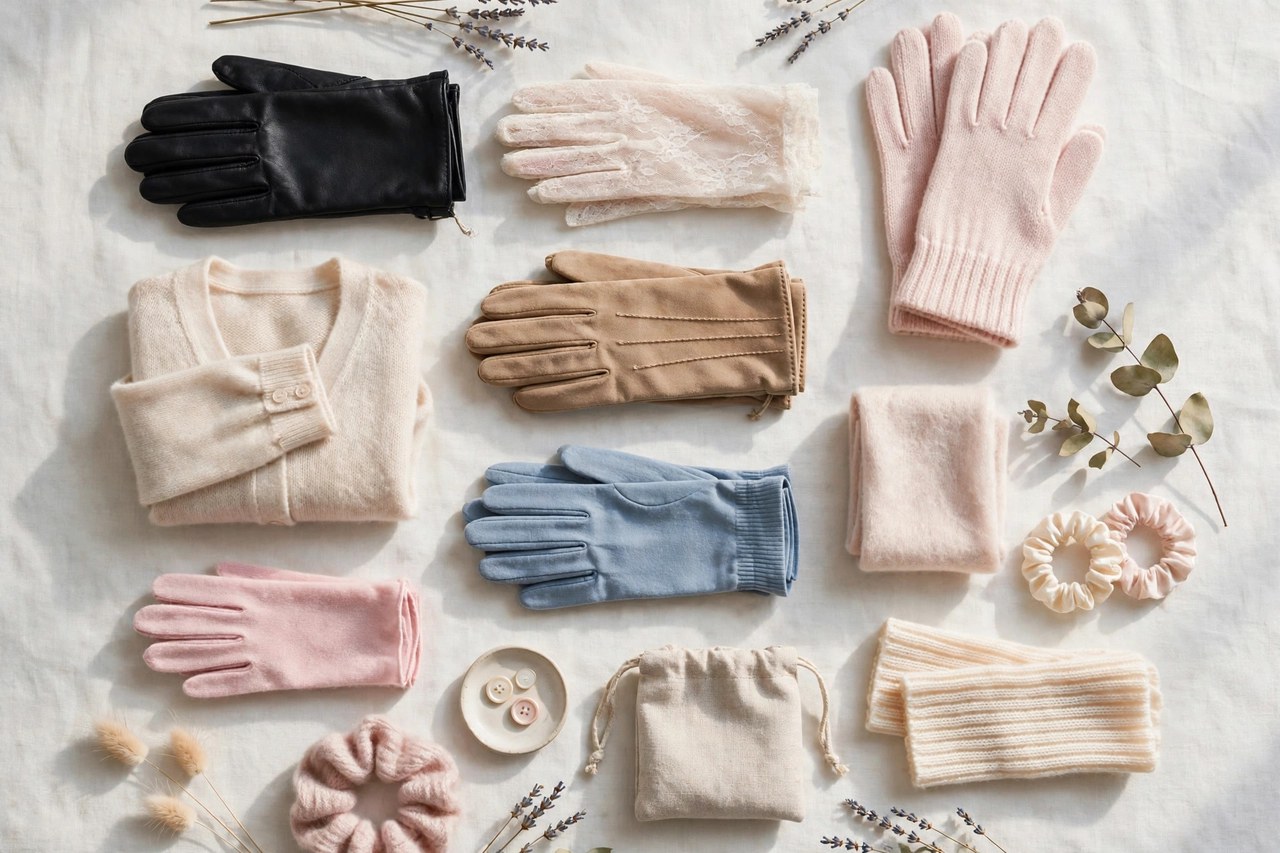
Gloves are one of the few garments where a standard size quietly fails petite hands. Most women's gloves are graded around an average hand length, so a woman with shorter fingers ends up with empty material flapping past every fingertip, a palm that bunches when she grips a steering wheel, and seams that sit in the wrong places. Petite gloves solve that by shortening the fingers, narrowing the palm and scaling the cuff, rather than simply offering the same glove in a smaller dress size.
This guide is written for women 5'4" and under, and for anyone whose hands measure small regardless of height. It covers how glove sizing actually works, the main styles from dress leather to winter knits, the materials that matter, and the simple fit checks that tell you in ten seconds whether a pair was truly cut for a smaller hand or merely labeled that way.
How Petite Glove Sizing Works
Gloves are sized by the circumference of your hand around the knuckles, measured in inches with a soft tape, thumb excluded. Most brands run from about 6 to 8.5 inches; petite hands most often fall at 6 to 6.5, and the smallest standard size is frequently still cut with standard finger lengths. True petite sizing keeps the smaller circumference but also shortens each finger by roughly a quarter to a half inch and narrows the fourchettes — the small gussets between the fingers — so the glove does not web between your fingers.
Length matters as much as circumference. Measure from the tip of your middle finger to the crease at the base of your palm: that number predicts fingertip fit better than any letter size. When shopping, treat S and XS labels as a starting point only, check whether the maker lists finger length or a petite-specific last, and remember that left and right hands often differ slightly — size for the larger hand and let the other glove settle with wear.
Styles: Dress, Driving, Knit and Winter Gloves
Dress gloves in leather or fine fabric are cut closest, with short wrist lengths for daytime and longer lengths for evening. In petite cuts the bracelet and wrist lengths are scaled down, so a formal long glove reaches the intended point on a shorter arm instead of bunching at the elbow. Driving gloves, with open backs and knuckle cutouts, need especially accurate finger length, since excess leather at the tips catches on the wheel. Knit and fleece gloves forgive more, because stretch hides small grading errors, but even here petite versions reduce the sloppy palm bulk.
Winter and insulated gloves add lining and padding, which eat interior room; a petite winter glove should be tried with its lining in place, and the cuff should be short enough to tuck cleanly under a petite coat sleeve rather than fighting it. Touchscreen fingertips, now common in knit and leather styles, only work when the conductive pad actually sits on your fingertip — one more reason finger length, not just hand width, decides whether a petite glove performs.
Materials: Leather, Wool, Cashmere and Technical Knits
Leather gloves — lambskin for dress wear, deerskin and goatskin for durability — mold to the hand over the first wears, which makes a snug initial fit correct rather than alarming. Unlined leather shows fit most honestly; silk and cashmere linings add warmth without bulk, a real advantage on a small hand where thick linings quickly feel clumsy. Wool and cashmere knits trade precision for warmth and stretch, and are the easiest petite buy because the knit conforms, though better petite knits still start from a smaller pattern so the thumb gusset lands correctly.
Technical and synthetic gloves in fleece, softshell and stretch woven fabrics dominate active winter wear. Look for pre-curved finger construction, which better suits shorter fingers than straight-cut fingers, and for grip panels scaled small enough to sit on your palm rather than wrapping past it. Across all materials, check the cuff: petite cuffs are narrower and shorter, with elastic or a strap placed at the true wrist bone, not an inch beyond it.
Fit Checks, Care and Buying Tips
Fit a glove with three quick tests. Make a fist: the leather or knit should smooth across the knuckles without the fingertips pulling short or the palm seam straining. Spread your fingers: the fourchettes should sit at the webs, not halfway down the fingers. Press each fingertip: there should be no more than a small pinch of empty length — a quarter inch at most. If a standard small fails any of these, the glove is graded, not petite, whatever the tag claims.
Care follows material: leather gloves want occasional conditioning, storage flat and unstuffed in a cool drawer, and rest between wears; knit gloves wash cool and dry flat so the fingers do not lengthen; lined gloves should be turned and aired after wet weather. Buy your most-worn style first in a true petite cut — for most women that is one leather dress pair and one warm knit pair — and keep measurements, not just sizes, in your notes, because hand circumference plus middle-finger length will match you to the right glove in any brand's chart.
Related Women's Guides
More to Explore on Apparel Search
Looking for Women's Clothing Stores?
This guide helps you choose women's petite gloves. To browse where to buy, visit our women's clothing store directory, where you can find retailers that carry them.