Japan Clothing Customs
Importing apparel and textiles into Japan - the authority, the process and the preparation
Clothing shipped into Japan is cleared by Japan Customs, under the Ministry of Finance. For an apparel brand, importer or retailer, that authority sets the requirements the goods must meet, assesses the duties and taxes on them, and decides which consignments to examine before release. This guide explains who the authority is, what its record shows about how it works, and how a clothing shipment moves through its system.
The sensible first step is the one Japan's own customs resources recommend: contact the customs office and learn the country's current requirements for your specific goods before you ship. Duty rates and entry rules change over time; what follows describes the authority, its history and the clearance process in the terms that matter to the clothing trade.
Start Here
The Customs Authority for Japan
Japan Customs performs a wide range of roles classified into five categories: taxation, customs clearance, surveillance and control, supervision of Hozei (bonded) areas, and compilation of trade statistics. On taxation: goods imported into Japan are generally subject to customs duties and other taxes such as consumption tax, and Customs collects those duties and taxes. On clearance: under the Customs Law, any person who is to export or import goods must submit a declaration to the Director-General of Customs; Customs checks the legitimacy of the declarations and examines the goods if required.
What the Record Shows
The Hozei element is distinctive: bonded areas under Customs supervision let traders hold, process or display goods - garments included - before duty is paid, which underpins Japan's trade shows, bonded warehousing and re-export flows. And because Customs also compiles Japan's trade statistics, the classification and values on an apparel declaration feed directly into the national record of the clothing trade.
How a Clothing Shipment Is Cleared in Japan
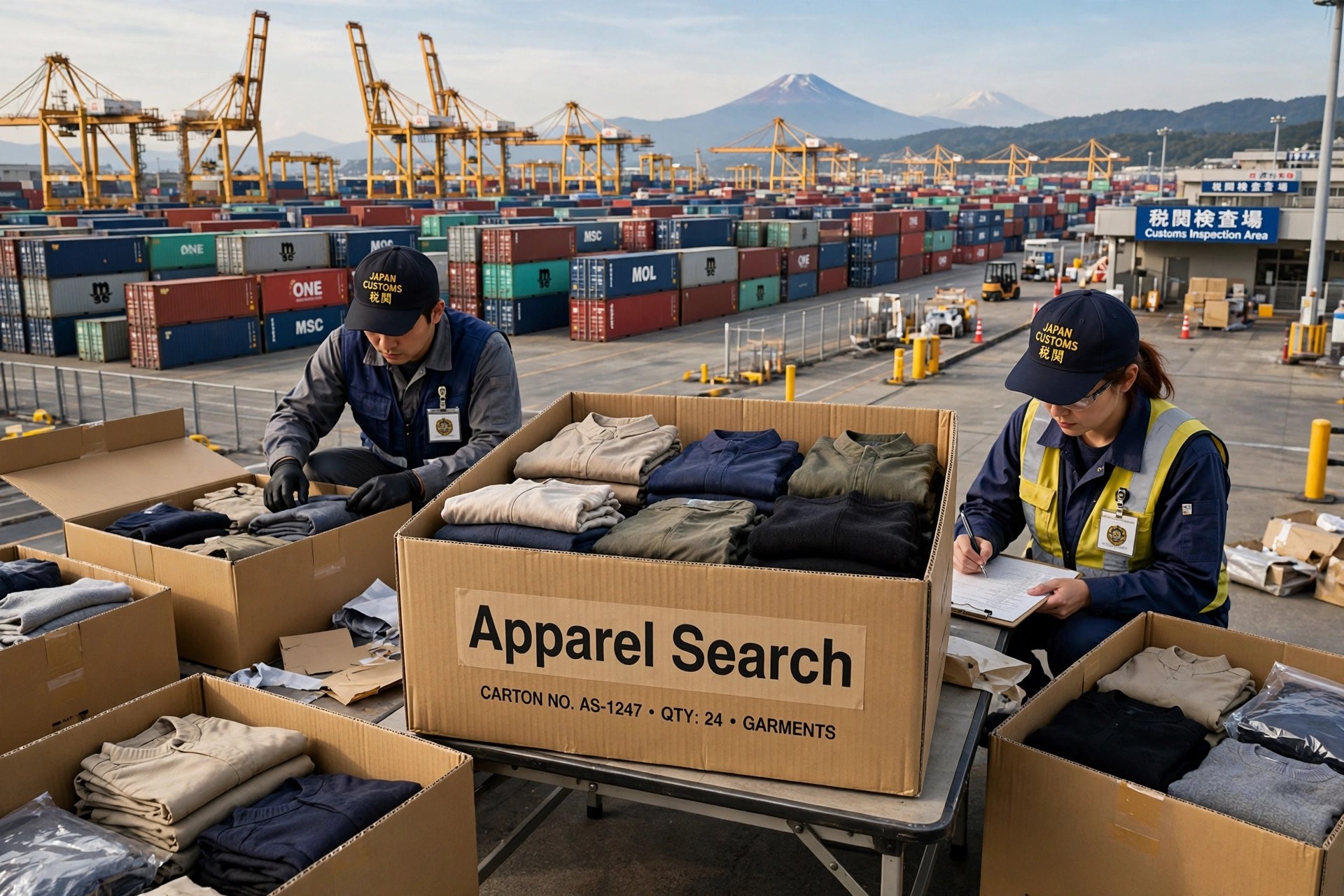
Most apparel consignments are released on their documents, and the minority selected for examination are chosen by risk profiling rather than at random. That is why a trader's history matters in Japan: consistent, accurate filings build the profile that keeps goods moving, while corrections and inconsistencies invite the attention that slows them down.
Examination is selective rather than universal. Customs administrations target their checks on risk - inconsistent paperwork, unusual routing, new traders, sensitive goods - and release the great majority of compliant apparel consignments on their documents. Keeping a clean filing history is therefore a commercial asset: each accurate entry makes the next one easier, in Japan as everywhere.
Preparing a Clothing Shipment
The cheapest customs work is done at origin: samples checked against the specification, labels verified against the market's rules, quantities counted twice. Arrive in Japan with a file that answers questions before they are asked, and confirm the current requirements for your specific goods with the customs authority or an experienced local agent, since rates and entry rules change over time.
More Customs Guides
Common Questions
What are the five roles of Japan Customs?
Taxation, customs clearance, surveillance and control, supervision of Hozei (bonded) areas, and compilation of trade statistics. Imported goods are generally subject to customs duties and taxes such as consumption tax, which Customs collects.
What must an importer of clothing into Japan file?
Under the Customs Law, any person importing goods must submit a declaration to the Director-General of Customs. Customs checks the legitimacy of the declaration and examines the goods if required before release.
What should a clothing importer prepare before shipping to Japan?
Documents that agree with each other: a precise commercial invoice, a packing list matching the cartons, and fibre content, quantities and values stated the same way on every document and label. Confirm the current requirements for your specific goods with Japan Customs, under the Ministry of Finance or a licensed broker before the goods leave.
References & Further Reading
More to Explore
Return to the Customs & Import Guide main page for customs information on other countries and the full import guide:
Customs & Import Guide