Ukraine Clothing Customs
Importing apparel and textiles into Ukraine - the authority, the process and the preparation
Clothing shipped into Ukraine is cleared by Ukraine's customs service. For an apparel brand, importer or retailer, that authority sets the requirements the goods must meet, assesses the duties and taxes on them, and decides which consignments to examine before release. This guide explains who the authority is, what its record shows about how it works, and how a clothing shipment moves through its system.
The sensible first step is the one Ukraine's own customs resources recommend: contact the customs office and learn the country's current requirements for your specific goods before you ship. Duty rates and entry rules change over time; what follows describes the authority, its history and the clearance process in the terms that matter to the clothing trade.
Start Here
The Customs Authority for Ukraine
Ukraine, with an area of 600,000 square kilometres, is the second largest country in Eastern Europe. It is bordered by Russia to the east and northeast, Belarus to the northwest, Poland, Slovakia and Hungary to the west, Romania and Moldova to the southwest, and the Black Sea and Sea of Azov to the south and southeast.
What the Record Shows
That geography gives Ukraine both EU-facing land borders and Black Sea ports, and its clothing industry trades in both directions - Ukrainian garment production for European markets, and apparel imports for Ukrainian retail. A trader's route choice (west by road, south by sea) determines which customs posts handle the goods, so confirming requirements for the specific route with Ukraine's customs service (customs.gov.ua channels) is the practical first step.
How a Clothing Shipment Is Cleared in Ukraine
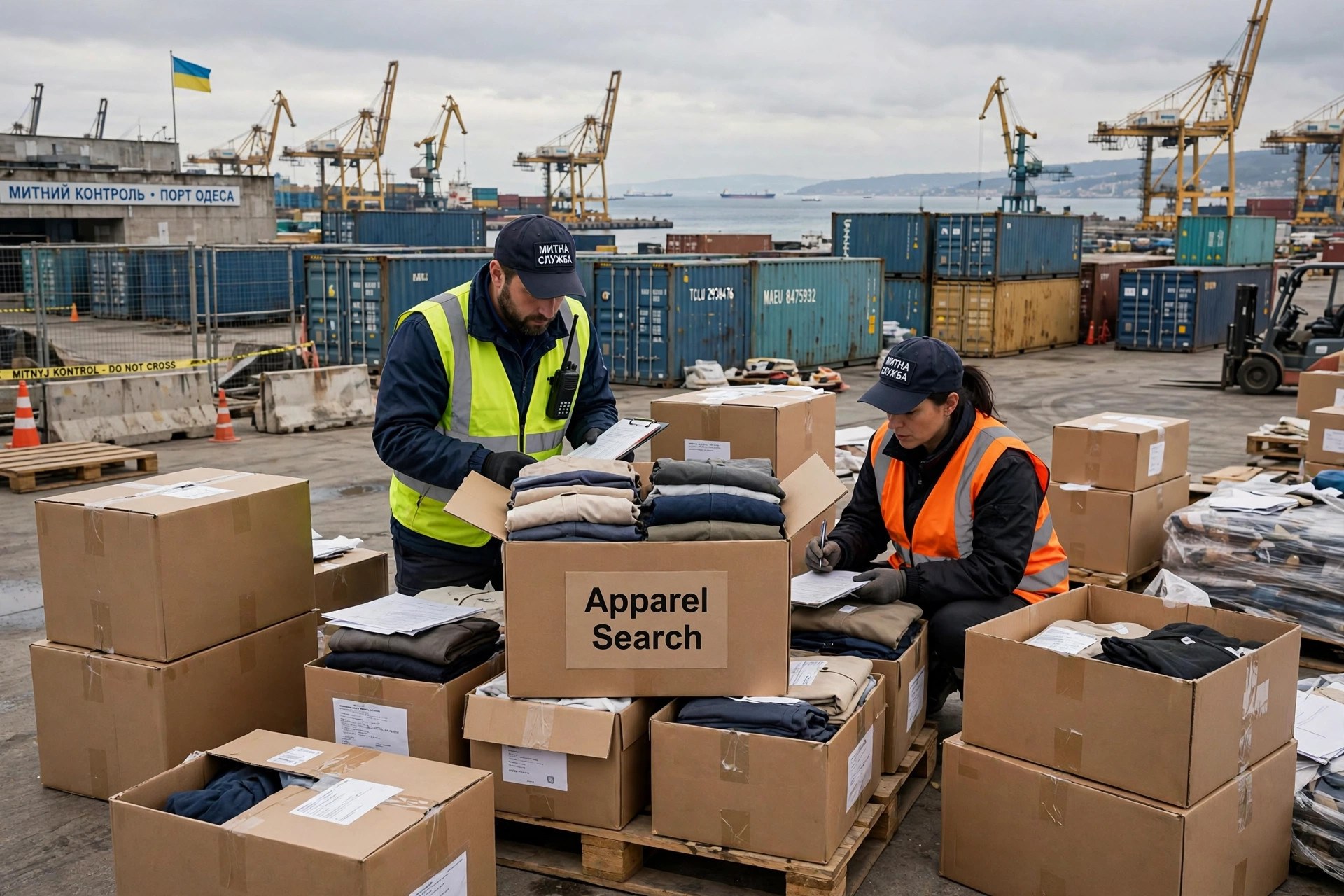
Examination is selective rather than universal. Customs administrations target their checks on risk - inconsistent paperwork, unusual routing, new traders, sensitive goods - and release the great majority of compliant apparel consignments on their documents. Keeping a clean filing history is therefore a commercial asset: each accurate entry makes the next one easier, in Ukraine as everywhere.
Most apparel consignments are released on their documents, and the minority selected for examination are chosen by risk profiling rather than at random. That is why a trader's history matters in Ukraine: consistent, accurate filings build the profile that keeps goods moving, while corrections and inconsistencies invite the attention that slows them down.
Preparing a Clothing Shipment
Think about the border before the booking: check how your garments will be classified, what they will be valued at, and what labelling they must carry in Ukraine, while the answers can still change the shipment. Then file exactly what the cartons contain. Confirm current rates and rules with the customs authority or a licensed broker - this guide describes the authority and the process, not a live tariff schedule.
More Customs Guides
Common Questions
How is Ukraine positioned for clothing trade?
Ukraine is Eastern Europe's second largest country at 600,000 square kilometres, with EU-facing borders to Poland, Slovakia, Hungary, Romania and Moldova in the west and Black Sea and Sea of Azov ports to the south.
Why does route choice matter for a Ukraine apparel shipment?
Western road entries and southern sea entries are handled at different customs posts; confirming the requirements for the specific route and goods with Ukraine's customs service comes before shipping.
What should a clothing importer prepare before shipping to Ukraine?
Documents that agree with each other: a precise commercial invoice, a packing list matching the cartons, and fibre content, quantities and values stated the same way on every document and label. Confirm the current requirements for your specific goods with Ukraine's customs service or a licensed broker before the goods leave.
References & Further Reading
More to Explore
Return to the Customs & Import Guide main page for customs information on other countries and the full import guide:
Customs & Import Guide