Pattern 2 - Diamond Square
Pattern 2 is a diamond square geometric: diamonds and squares locked into a regular lattice, the crisp structured counterpoint to the paisley that opens this pattern collection.
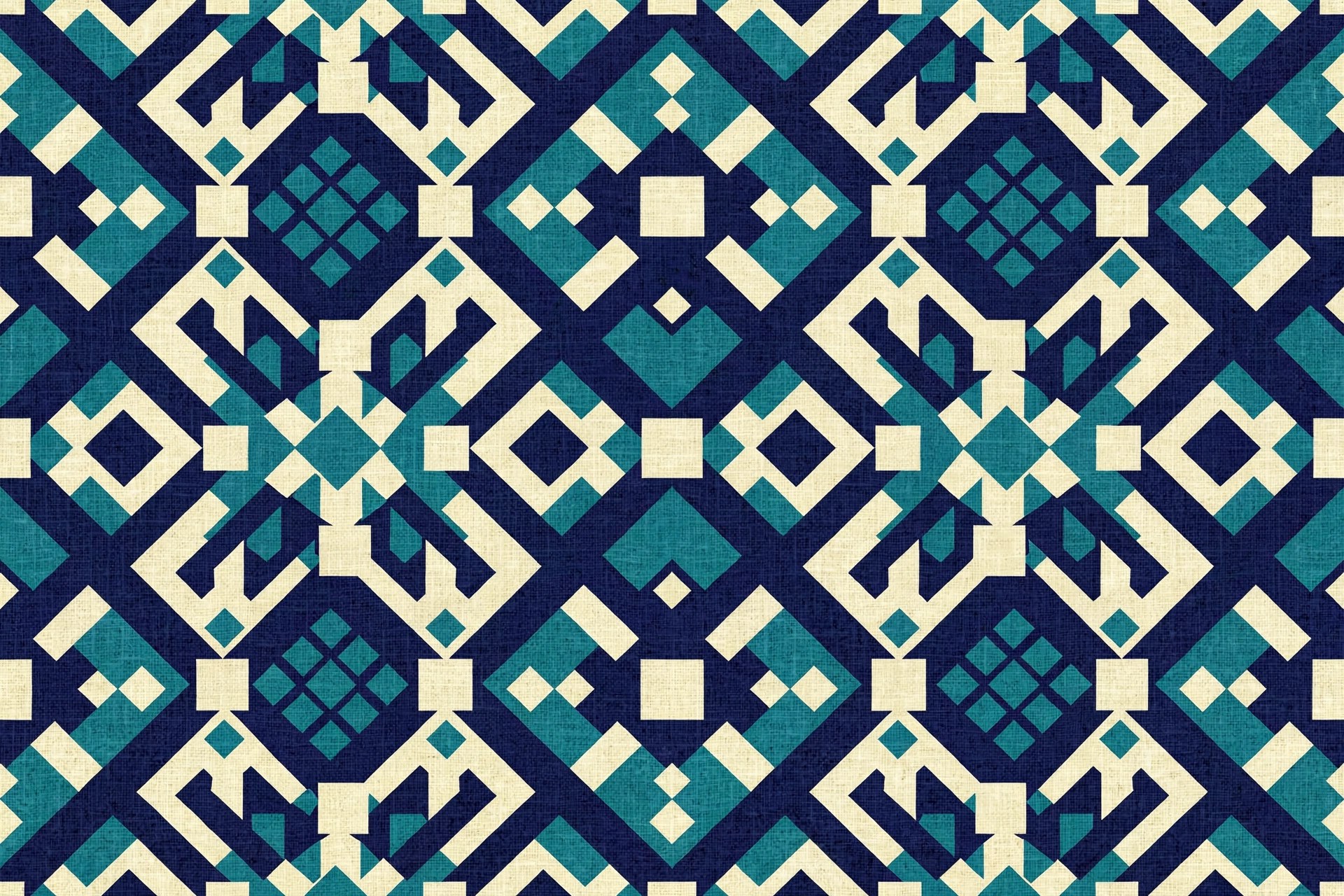
A Lattice of Diamonds and Squares
Geometric patterns are the engineering end of print design, and the diamond square is one of the oldest constructions in the family: rotate a square forty-five degrees and it becomes a diamond, set the two shapes in alternation and they lock into a lattice that tiles the plane with no gaps and no leftovers. Woven versions of the same geometry appear in traditional cloth from every textile culture, which is why the motif feels familiar even in a modern colorway. In print, the construction gives a designer complete control: every edge is straight, every repeat is exact, and the pattern’s rhythm is set by mathematics rather than by hand.
That regularity is the design’s selling point. A diamond square reads tailored and deliberate, closer to a woven check or a knitted argyle in spirit than to a floral. It carries associations of shirting, neckwear and sportswear, and it photographs and merchandises cleanly because the eye organizes it instantly. Where the paisley in this collection is organic and interlocking, Pattern 2 is architectural: it is the example a buyer is shown when a range needs structure on the surface as well as in the cut.
Repeat, Scale and Colorways
A lattice pattern lives or dies on registration. Because every motif touches its neighbors on straight lines, a repeat error that a floral would hide shows immediately as a broken edge, so the artwork must be built on a precise grid and checked at full size before it goes anywhere near a printer. Scale is the second decision, and it is dramatic: at a few millimeters the lattice becomes a textured micro-pattern suitable for shirting and ties, while at several centimeters it turns bold and graphic, suited to dresses, skirts and resort wear. The same file can serve both ends if the grid is drawn cleanly.
Colorways follow the geometry’s two-shape structure. Diamonds in one color against squares in another gives the high-contrast classic version; a tonal version, where the two shapes differ only in shade, produces the quiet tailored cloth used in menswear; and a three-color version, with the lattice lines picked out as a third element, moves the design toward sportswear and retro styling. The studio’s Fashion Design Studio Services page places pattern development among the studio’s services, and recoloring a grid design into a season’s palette is among the fastest pattern jobs a studio is asked to do.
Where a Diamond Square Works
The design’s natural products follow its tailored character: men’s and women’s shirting at micro scale, neckties and scarves at mid scale, and dresses, skirts and blouses where a larger repeat can show the lattice properly. In knitwear the same geometry translates directly into jacquard and intarsia, so a print-led range can carry a matching knitted version without changing the motif. It also suits accessories and trims, where a small cut of a strict geometric reads as a deliberate detail against plain garments.
Within this collection, Pattern 2 is the first of two hard geometrics; the octagon design later in the set builds its lattice from eight-sided tiles instead of four-sided ones, and comparing the two is a quick education in how a single change of polygon changes a pattern’s whole temperament. The Men’s Fashion Design page linked below covers the category where diamond geometrics are most at home.
One last practical note on this design: a strict lattice also ages well. Unlike a novelty print tied to one season’s joke, a diamond square can stay in a line for years, moving between shirting, ties and dresses as colors change, which is why buyers treat geometrics as library designs rather than one-season purchases.
The Pattern Artwork

The diamond square artwork, kept at its established file path. Straight edges and a strict lattice give the design its tailored character.
Common Questions
What is a diamond square pattern?
It is a geometric print built from squares and the same squares rotated forty-five degrees into diamonds, alternated in a strict lattice that tiles without gaps. The construction is ancient, appears in woven cloth worldwide, and gives the design its tailored, architectural character.
Why does registration matter so much for geometric prints?
Because every motif meets its neighbors on straight lines, any repeat error shows at once as a broken edge, where a floral would hide it. Geometric artwork has to be built on a precise grid and proofed at full size before printing.
What products suit Pattern 2?
Shirting and ties at a small scale, dresses and skirts at a larger scale, scarves, and knitwear, where the same diamond geometry translates directly into jacquard and intarsia knitting.
Design Studio Services
The Apparel Search Design Studio is a full-service fashion industry design resource. Its Fashion Design Studio Services page lists the studio’s services, the Design Studio Pricing page gives the estimated pricing scale, and the studio hub links its people, pattern examples and project pages.