Design Studio Patterns
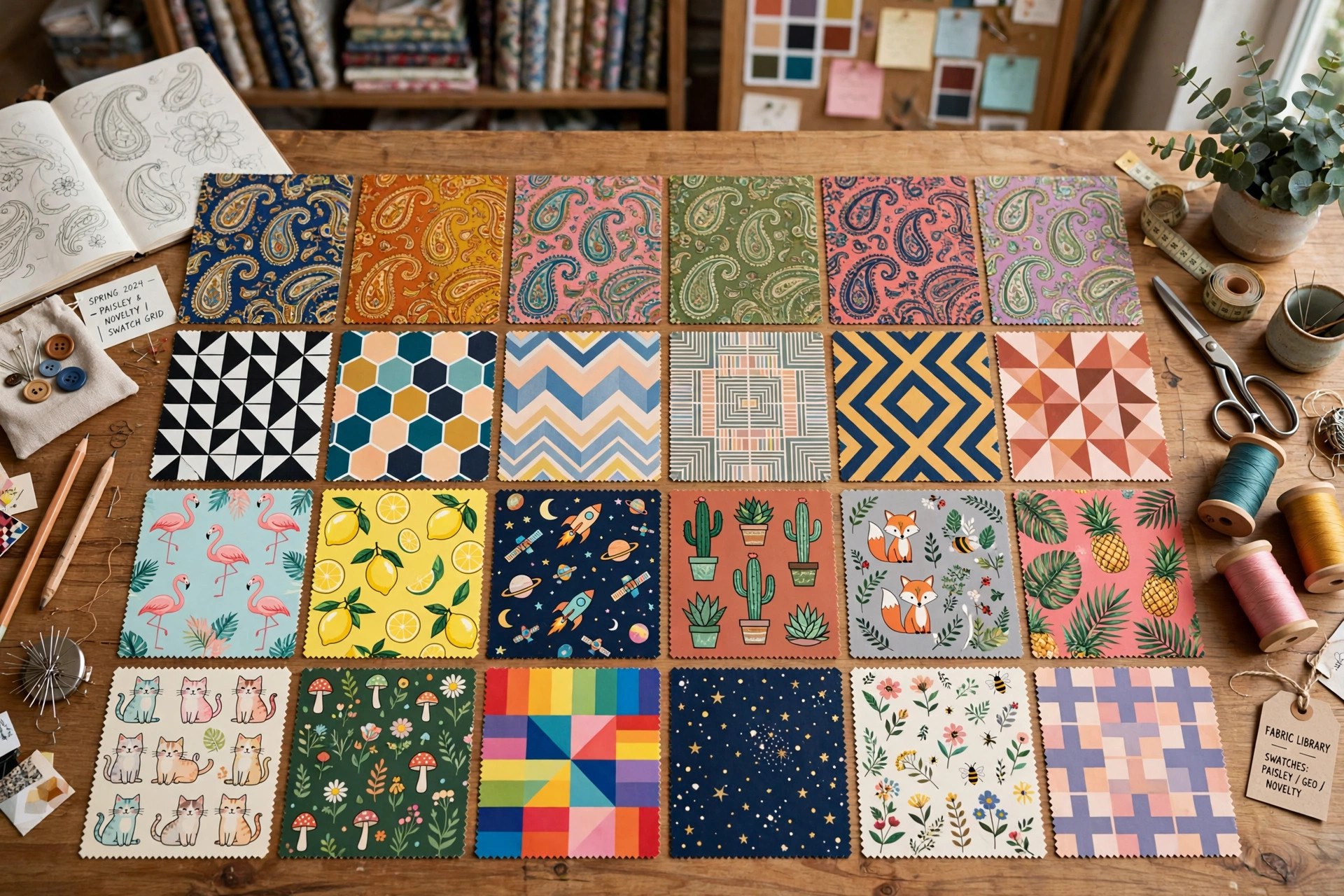
A few examples of print pattern designs from the Apparel Search Design Studio: seven pattern artworks, from a black paisley and a diamond-square geometric to a mini bugs novelty print, an octagon tile, oval dots, an oval grid and a pointy-round abstract.
Pattern Examples in This Collection
Each example has its own page with the full artwork and notes on the motif, its repeat and its best uses. Start with any pattern:
What These Examples Show
Pattern design is the part of a fashion collection that repeats. A silhouette is drawn once; a print has to tile seamlessly across yards of fabric, sit correctly on garments of different sizes, and hold its character in every colorway a range needs. The seven examples collected here were published by the studio as a small portfolio of that work, and they are deliberately varied: a traditional paisley, two hard geometrics built on squares and octagons, two soft geometrics built on ovals, a novelty print of miniature insects, and an abstract that mixes pointed and rounded shapes. Together they cover the main families a design studio is asked for when a brand needs surface pattern rather than a plain cloth.
Each example page keeps the artwork itself at the center, at its established file path, with notes on what the motif is, how a repeat of that kind behaves in production, and where it tends to be used. Read as a set, the pages also show the studio’s working range: nothing here is a one-off illustration. Every motif is the kind of design that can be engineered into a half-drop or brick repeat, recolored, rescaled and handed to a printer or a mill, which is the difference between pattern artwork and pattern design for apparel.
From Artwork to a Production Print
A studio pattern goes through the same practical steps whatever its style. The motif is cleaned and put into repeat, so the edges join without a visible seam. The repeat size is set against the product: a scarf, a dress and a bolt of furnishing fabric each want a different scale, and a motif that sings at one size can disappear or overwhelm at another. Colorways are then built for the season’s palette, usually with a disciplined number of screens or digital color separations so the print stays economical to produce. Finally the design is shown the way a buyer will judge it, in context and at arm’s length, not only as a flat tile on a screen.
The studio’s Fashion Design Studio Services page covers where pattern work sits among the wider services, and the Design Studio Pricing page lists plaids and patterns as their own priced service, estimated per design with the final figure confirmed for the complexity involved. Spot prints and allover prints are priced separately on the same scale, which reflects a real production distinction: a spot print is placed artwork on a garment panel, while an allover print is a repeating pattern like the seven examples here, engineered across the whole cloth.
Patterns on Presentation Boards
The Apparel Search Design Studio can create presentation boards for your next sales meeting, trade show or special event, and pattern work is one of the things boards do best. A board lets a buyer see a print family the way a customer will meet it: the hero pattern at selling scale, its colorways beside it, and the coordinates and plains that keep a range from becoming a wall of competing prints. For a pattern-led story, a good board also shows scale honestly: a small swatch of a large motif lies about the garment, so boards pair the tile with a silhouette sketch or a garment mock at true repeat size.
If you are building a range around prints, start from the examples above and note which family your product belongs to: traditional, geometric, novelty or abstract. That one decision narrows color, scale and repeat choices faster than any other, and it is the brief a studio needs to quote pattern work accurately. The pattern pages that follow give each of the seven examples its own treatment, so the differences between families are visible rather than described in the abstract.
Design Studio Services
The Apparel Search Design Studio is a full-service fashion industry design resource. Its Fashion Design Studio Services page lists the studio’s services, the Design Studio Pricing page gives the estimated pricing scale, and the studio hub links its people, pattern examples and project pages.