Pattern 5 - Oval Dots
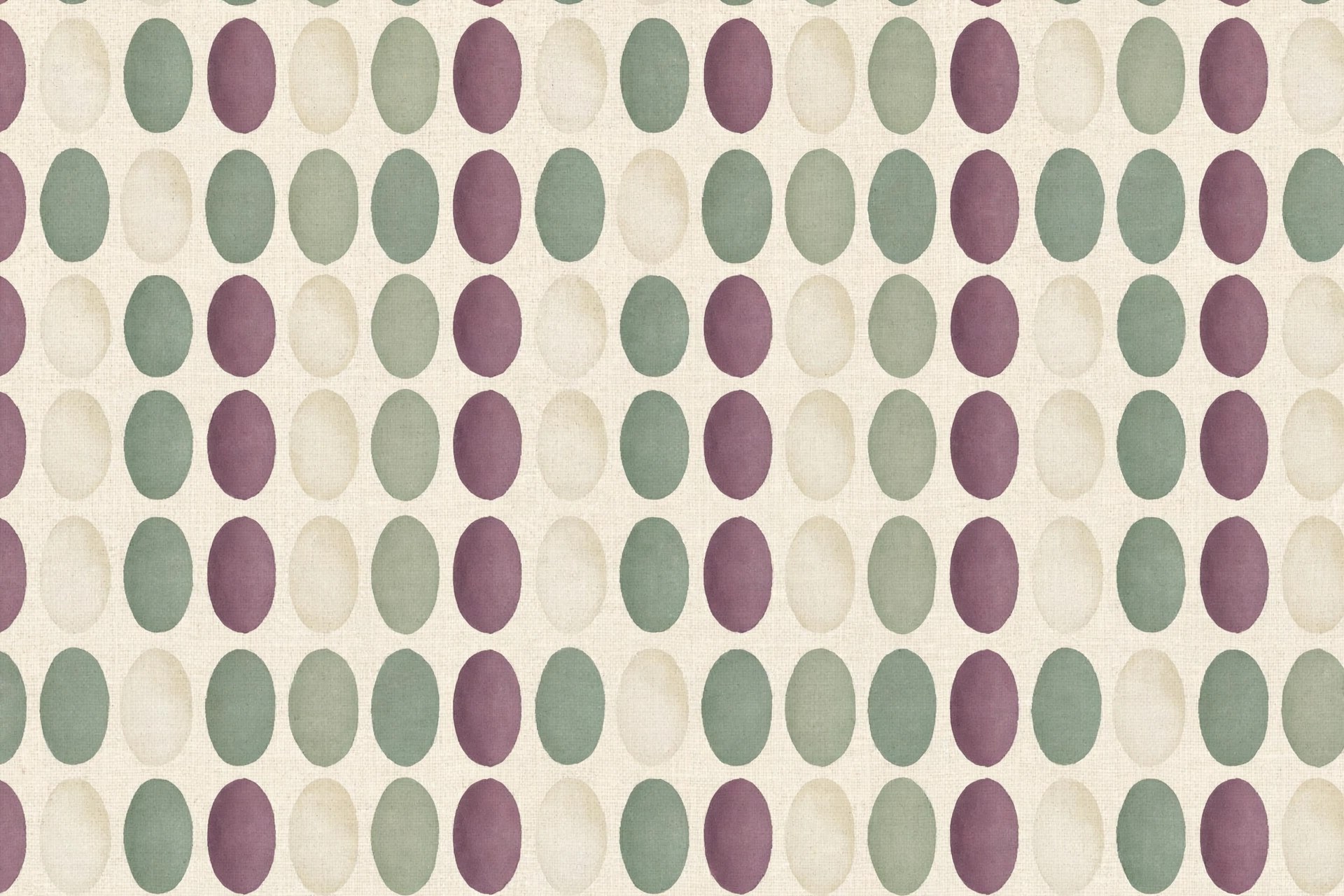
Pattern 5 is an oval dots print: rows of soft ovals where a polka dot would put circles, the gentlest geometric in this pattern collection and a study in how one small change remakes a classic.
The Dot, Stretched
The polka dot is fashion’s most democratic motif: a plain ground, a regular field of circles, and two centuries of use on everything from flamenco dresses to racing silks. Pattern 5 asks what happens when the circle is stretched into an oval, and the answer is more than a novelty variation. An oval has a direction, so the whole cloth gains a grain the circle never gives it; rows of ovals lean, flow and suggest movement, and the print picks up a mid-century, atomic-age flavor that round spots cannot reach. The design is a lesson in how much of a pattern’s character lives in a single proportion.
That direction is a tool and a responsibility. Run the ovals vertically and a dress print elongates; run them horizontally and the same artwork widens and calms. A studio developing this design for a client sets the orientation against the product at the brief stage, because rotating a directional print ninety degrees after the artwork is approved is a new design decision, not a production detail. It is also why the artwork is shown here as a flat field: the repeat, the spacing and the lean of the ovals are the design, before any garment gives them a body.
Spacing, Scale and Color
Spot patterns are governed by the ratio between motif and ground. Crowd the ovals and the print becomes a lively texture, almost a small geometric; space them widely and each dot becomes an event, the cloth turning elegant and sparse. Scale runs the same way, from pin-dot ovals on shirting and blouses through the classic mid-scale dress spot to large, bold ovals that belong to scarves, resort wear and retro styling. This example sits in the versatile middle, the scale at which a spot print reads clearly at arm’s length without shouting.
The classic spot colorways are contrasts: white on navy, black on cream, red on white. The oval version also takes the softer palettes well, plum, sage and cream among them, because the elongated shape already supplies the interest that a bolder color would otherwise have to provide. Two-tone versions are the economical standard for printing, and the design’s simplicity makes it a natural candidate for the spot print category on the Design Studio Pricing page, where spot prints and allover prints are priced as their own services.
Where Oval Dots Work
Dresses are the first answer, as they have been for spots since the nineteenth century: a mid-scale oval dot on a fit-and-flare or shirtwaist silhouette is a complete outfit with no further pattern competition. Blouses and shirts take the smaller scales, childrenswear takes the design happily in its brighter colorways, and accessories, scarves, headbands, bags and shoe linings, take it at any scale at all. The motif is also a reliable coordinate: a range built on a bolder print often needs exactly this kind of quiet, friendly spot to rest the eye between statements.
Among the seven examples in this collection, Pattern 5 is the bridge between the hard geometrics and the soft ones that follow it: the oval grid on the next page takes this same shape and gives it structure. Read together, the two pages show a single motif working as both a scattered spot and an engineered lattice, which is the kind of range a studio builds from one good idea.
One last practical note on this design: spots are the easiest prints to coordinate across a range, because a customer will happily wear an oval dot dress with a plain cardigan or carry a spotted bag against a striped top. That mix-and-match tolerance is commercial gold, and it is a large part of why the spot family never leaves the pattern library.
The Pattern Artwork

The oval dots artwork, kept at its established file path. Stretching the dot into an oval gives the classic spot print a direction and a retro flavor.
Common Questions
How is an oval dot different from a polka dot?
A circle has no direction, but an oval does, so a field of ovals gives the cloth a grain and a sense of movement that round spots lack, along with a mid-century retro flavor. Vertical ovals elongate a garment, horizontal ones widen and calm it.
What controls the character of a spot pattern?
The ratio between motif and ground, and the scale. Crowded small ovals read as lively texture, widely spaced ones as elegant events, and the classic two-tone contrast colorways keep the design economical to print.
What products suit Pattern 5?
Dresses first, then blouses and shirts at smaller scales, childrenswear in bright colorways, and accessories of every kind - plus service as a quiet coordinate print inside a range built on bolder designs.
Design Studio Services
The Apparel Search Design Studio is a full-service fashion industry design resource. Its Fashion Design Studio Services page lists the studio’s services, the Design Studio Pricing page gives the estimated pricing scale, and the studio hub links its people, pattern examples and project pages.