Pattern 7 - Pointy Round
Pattern 7 is a pointy round abstract: pointed, petal-like shapes mixed with plain circles, the loosest and most contemporary design in this pattern collection and its closing example.
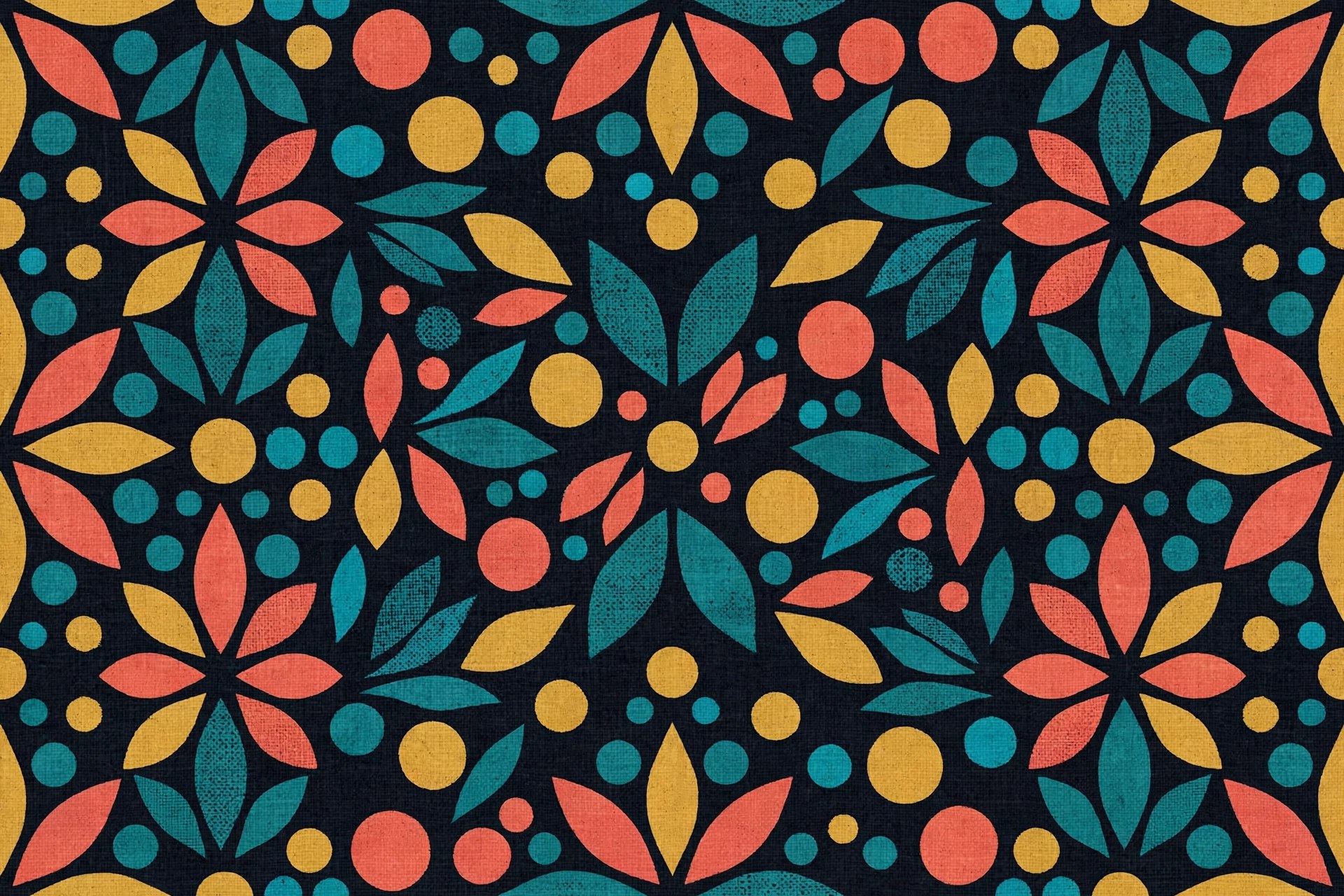
Points and Circles Together
Abstract pattern design often comes down to a conversation between two shapes, and this example chooses the most expressive pair available: the point and the circle. A pointed shape, petal, leaf or spike depending on how it is drawn, carries energy and direction; it pushes the eye along its axis and gives a print its movement. A circle does the opposite: it is complete, calm and still, a resting place. Put the two together in one field and the pattern gains a rhythm of advance and rest that neither shape achieves alone, which is why the combination recurs from botanical stylizations to mid-century atomic prints to contemporary abstract fashion graphics.
The name is the description: pointy and round, alternated and intermingled without a lattice to obey. After the strict grids earlier in this collection, Pattern 7 is deliberately free, a tossed, organic arrangement closer in spirit to the mini bugs novelty print than to the diamond or octagon lattices, but abstract where that design is literal. It is the example a studio shows when a client asks for something modern and artistic rather than traditional, tailored or cute, the three registers the rest of the collection covers.
Composing an Abstract Repeat
Freedom in an abstract print is engineered, not improvised. The designer balances the proportion of point to circle, because a field that is mostly points turns aggressive and restless while one that is mostly circles goes quiet and spotty. Orientation does similar work: points aimed in many directions create the tossed, all-over energy used here, while points aligned in one direction turn the same shapes into a directional print with a clear top and bottom, a different product with different cutting rules. The repeat still has to tile seamlessly underneath the apparent freedom, which is the invisible discipline of every page in this collection.
Color is where an abstract like this takes its season. In coral, mustard and teal it is warm and retro-modern; in black, white and one acid accent it turns graphic and urban; in soft neutrals it becomes a quiet contemporary texture for dresses and scarves. Because the shapes are flat and separate, the separations stay simple and the recoloring fast, one reason abstract designs are often developed in several colorways from the start. The Design Studio Pricing page describes how pattern work of this kind is estimated and confirmed for a specific brief.
Where Pointy Round Works
Contemporary dresses and blouses are the first home, where an abstract with real movement can carry a minimal silhouette and signal a current season without a logo or a slogan. Scarves take the design beautifully, since a scarf is worn as pure pattern with no cut to interrupt it, and accessories, bags, headwear and shoe uppers, use its energy at small scale. In its softer colorways it also suits childrenswear and casual ranges, where the petal reading of the pointed shapes comes forward and the print turns botanical and friendly.
As the closing page of the collection, Pattern 7 completes the set’s argument: seven designs, seven different answers to the same question of what should repeat across a cloth. The index page linked below gathers them together, traditional, geometric, novelty, lattice and abstract, with the studio’s services for turning any of these directions into artwork built for a specific product.
One last practical note on this design: abstract prints are the most forgiving family at the cutting table. With no motif that must sit at a particular point on the body, pattern pieces can be placed for economy rather than for matching, and the small saving on every garment is one reason production managers quietly favor abstracts for volume lines.
The Pattern Artwork

The pointy round artwork, kept at its established file path. Points supply the energy, circles supply the rest, and the balance between them is the design.
Common Questions
Why mix pointed and round shapes in one pattern?
Pointed shapes carry energy and direction and push the eye along, while circles are calm and complete. Alternating the two gives a print a rhythm of advance and rest that neither shape achieves alone - a combination that recurs from botanical stylizations to mid-century atomic prints.
Is an abstract pattern like this directional?
It can be either, by design. Points aimed in many directions make a tossed, directionless print that cuts any way up, as in this example; aligning the points creates a directional print with a clear top and bottom and stricter cutting rules.
What products suit Pattern 7?
Contemporary dresses and blouses, scarves worn as pure pattern, bags, headwear and shoe uppers at small scale, and - in softer colorways - childrenswear and casual ranges where the pointed shapes read as petals.
Design Studio Services
The Apparel Search Design Studio is a full-service fashion industry design resource. Its Fashion Design Studio Services page lists the studio’s services, the Design Studio Pricing page gives the estimated pricing scale, and the studio hub links its people, pattern examples and project pages.