Pattern 6 - Oval Grid
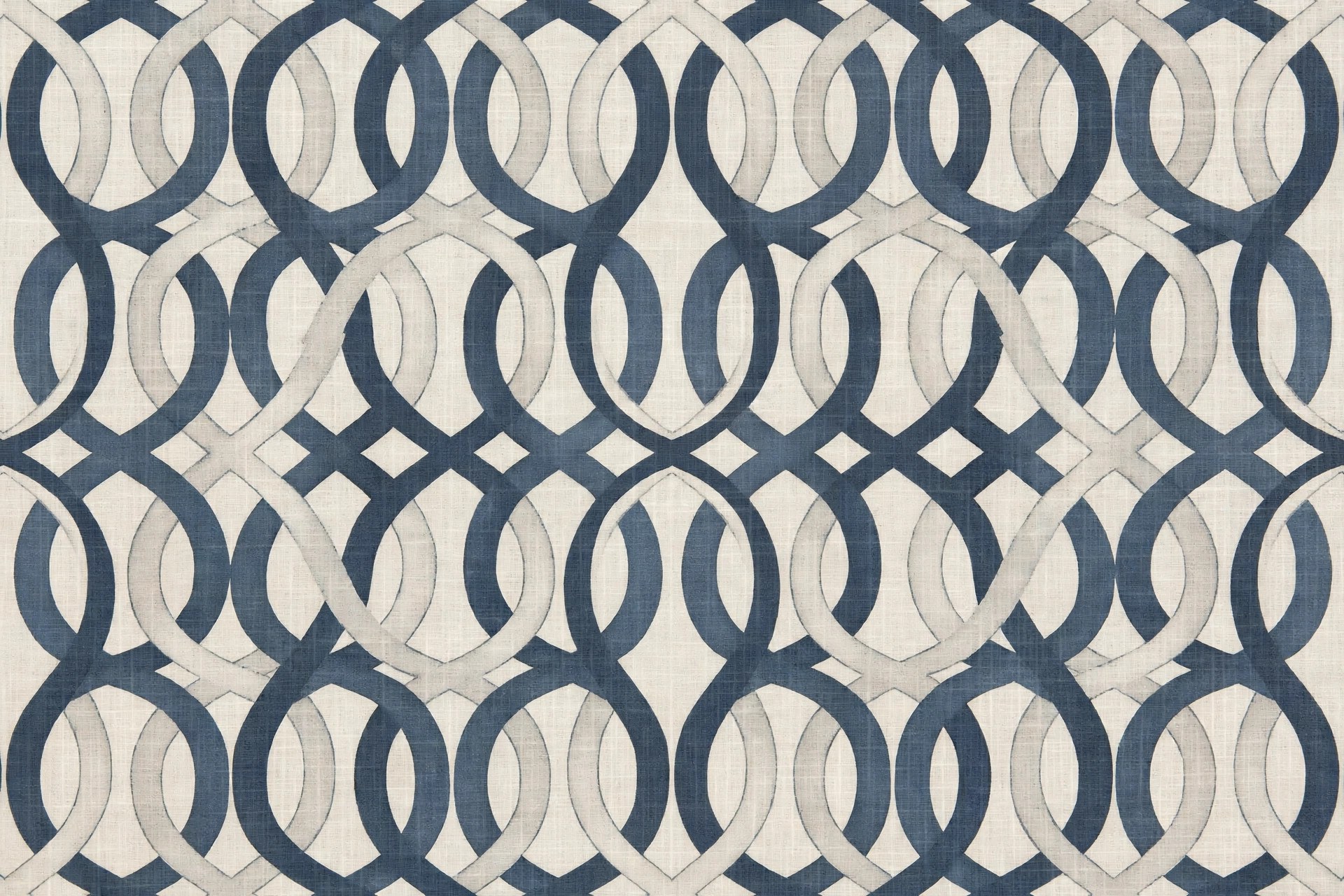
Pattern 6 is an oval grid: the soft oval of the previous page locked into an interlocking lattice, a pattern that is half geometric structure and half organic curve.
A Lattice Built from Curves
Most grids are made of straight lines, and they look it: checks, windowpanes and diamond lattices all carry the crispness of the ruler. The oval grid takes the same idea, a regular, repeating structure that covers the cloth edge to edge, and builds it entirely from curves. Ovals are overlapped or interlocked so each one touches its neighbors, and the result is a lattice with no straight line in it, structured like a geometric and soft like a floral. Designs of this family surface in every era of twentieth-century pattern, from Art Deco screens and grilles to the op-art and retro prints of the 1960s, because the combination of order and roundness suits so many products.
In this collection the page is the direct sequel to the oval dots before it. Same motif, opposite treatment: scatter the oval and it is a spot print, friendly and light; lock it into a grid and it becomes architecture, deliberate and continuous. A studio presenting both is showing a client the two poles of pattern design, and a buyer choosing between them is really choosing how much presence the print should have on the body, background charm or full-surface statement.
Engineering a Curved Grid
A continuous lattice is the most demanding repeat to build, because the pattern has no ground to hide in: every join is part of the design, and the artwork must flow across the repeat boundary without a single hesitation in the curves. Line weight is the critical variable. Too fine and the lattice turns fragile and breaks up at printing; too heavy and the ovals merge into a net that swallows the shapes it was built from. The successful version, as here, keeps the ovals clearly readable as ovals while the grid they form stays unbroken from selvedge to selvedge.
Color does structural work in a lattice. A single-color version reads as texture and suits tailored pieces and knitwear, where the same interlock can be knitted as a jacquard instead of printed. A two-color version that separates alternating ovals sharpens the geometry and moves the design toward retro and graphic styling. Because the structure is continuous, the design also scales unusually well: reduced, it becomes a fine textured ground; enlarged, a bold modern statement for dresses and interiors. That flexibility is what the plaids and patterns service on the Fashion Design Studio Services page exists to develop for a specific product and price point.
Where an Oval Grid Works
Dresses and blouses are the design’s center ground, particularly in the two-color versions where the lattice can carry a simple cut on its own. Knitwear is the second home, since an interlocking oval is a natural jacquard structure, and a printed woven and a knitted version of the same grid can anchor a coordinated range. Tailored jackets and skirts take the fine, tonal version, and in interiors the lattice returns to its Deco roots on cushions, curtains and upholstery, where its screen-and-grille ancestry is an asset rather than a reference.
Pattern 6 is the last of this collection’s structured designs; the final example loosens the grid entirely into an abstract of pointed and rounded shapes. The index page collects the full set, and the studio services linked below cover the route from an example like this to artwork engineered for a client’s own fabric, scale and palette.
One last practical note on this design: a continuous lattice asks more of the printer than a scattered print, because there is no empty ground where a small flaw can hide. That is a reason to proof this design on the actual production cloth before committing yardage, a step the studio builds into pattern development for exactly this family of repeats.
The Pattern Artwork

The oval grid artwork, kept at its established file path. Interlocking ovals trade the spot print's scatter for a continuous, engineered lattice.
Common Questions
What is an oval grid pattern?
It is a continuous lattice built entirely from interlocking ovals, with no straight lines: structured like a geometric but soft like a floral. The family runs from Art Deco screens to 1960s retro prints, and the same motif scattered instead becomes the oval dot spot print.
Why is a lattice repeat hard to build?
A continuous lattice has no plain ground to hide in, so every join is visible design. The artwork must flow across the repeat boundary without a break in the curves, and the line weight has to stay balanced - too fine and it breaks up in printing, too heavy and the ovals merge into a net.
What products suit Pattern 6?
Dresses and blouses in its two-color versions, knitwear where the interlock knits naturally as a jacquard, tailored pieces in the fine tonal version, and cushions, curtains and upholstery in interiors.
Design Studio Services
The Apparel Search Design Studio is a full-service fashion industry design resource. Its Fashion Design Studio Services page lists the studio’s services, the Design Studio Pricing page gives the estimated pricing scale, and the studio hub links its people, pattern examples and project pages.