Pattern 4 - Octagon
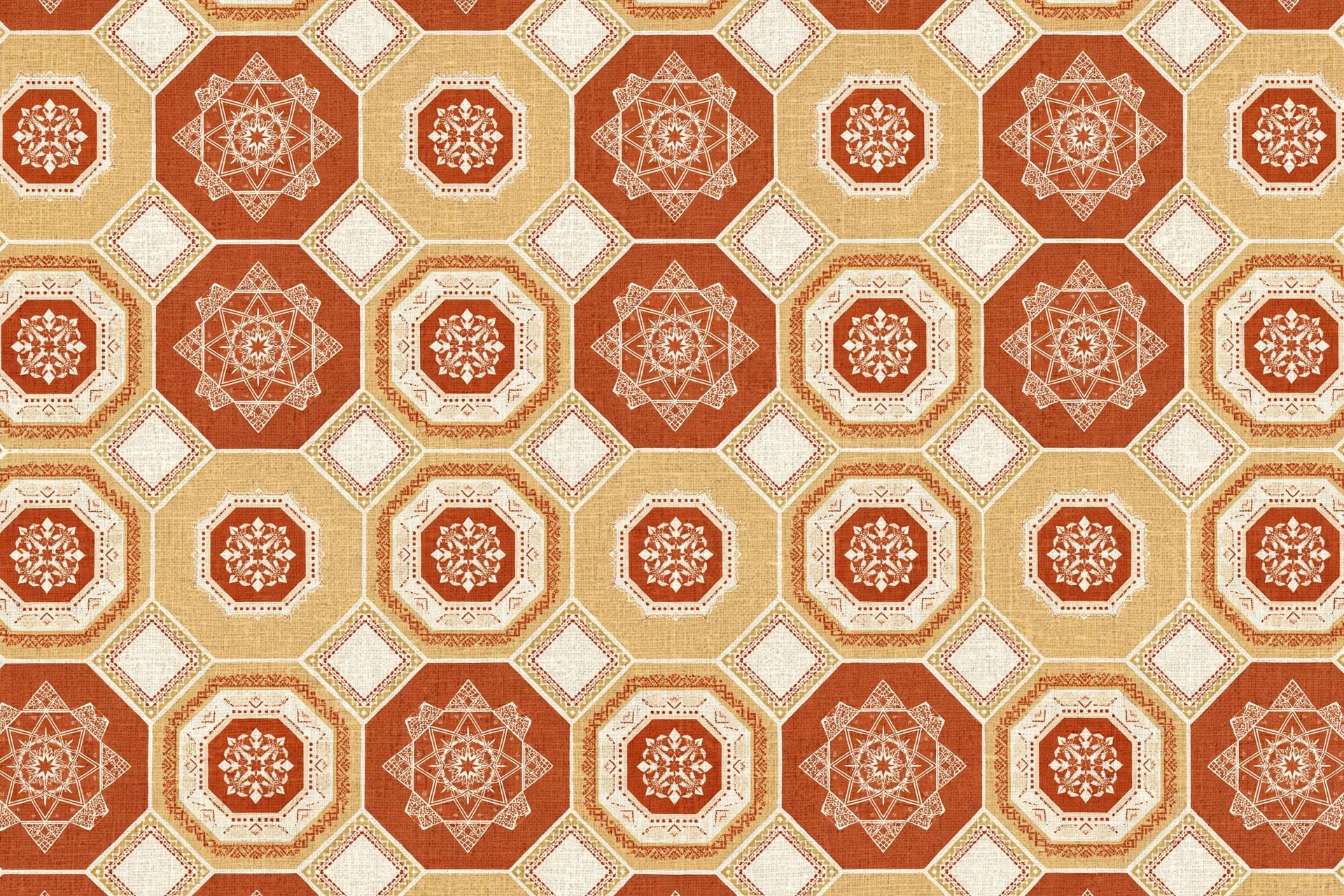
Pattern 4 is an octagon geometric: a lattice of eight-sided tiles, the second hard geometric in this pattern collection and the one with the strongest architectural, tiled-floor character.
Eight Sides and a Square
The octagon is the diplomat of polygons: with eight sides it is nearly a circle, yet it still tiles like a shape with edges. An octagon lattice cannot fill a plane alone, so the classic construction pairs each octagon with a small square in the gaps, producing the two-shape rhythm familiar from Mediterranean and Middle Eastern tilework, mosque floors and Mediterranean courtyards. That ancestry gives the pattern its character in cloth: where the diamond square earlier in this collection reads tailored and crisp, the octagon reads architectural and warm, a pattern that brings the feeling of a tiled floor or a carved screen into a garment or a room.
In a fashion portfolio the design earns its place by covering ground the other geometrics cannot. Circles soften a pattern but waste space between motifs; squares and diamonds are all angles. The octagon sits between those poles, round enough to feel generous, structured enough to feel designed, and its built-in companion square gives the designer a natural second color position, so even a two-color version has rhythm and counterpoint built in rather than added.
Building the Lattice in Cloth
The production questions for an octagon print are proportion and emphasis. The ratio between the octagon and its spacer square decides whether the design reads as tiles on a ground or as a net of squares linking roundels, and small changes shift the whole mood. Registration, as with every straight-edged geometric, must be exact, because the eye follows the lattice lines across the cloth and finds any drift. The design also takes texture well: a slightly distressed or hand-drawn edge warms it toward the artisanal, while a hard vector edge keeps it modern and graphic.
Colorways lean on the tile heritage. Terracotta, sand and cream give the Mediterranean version; indigo and white give the crisp ceramic version that suits shirting and summer dresses; black and metallic tones move it toward evening and accessories. Because the lattice is bold, scale is usually kept medium to large, where the tiles can be appreciated as shapes, though a miniaturized version becomes an elegant texture for ties and pocket squares. Developing a geometric like this into print-ready artwork and colorways is the plaids and patterns service described on the Fashion Design Studio Services page.
Where an Octagon Print Works
Dresses and skirts are the first home in apparel, where a medium-scale octagon lattice has enough presence to carry a simple silhouette, followed by blouses, resort shirts and scarves. The design’s tiled ancestry also makes it the natural crossover in this collection into home textiles: cushions, table linens and drapery, where the pattern is quite literally returning to the surfaces it came from. In accessories, a cut of the lattice makes a strong bag or shoe upper precisely because the geometry stays legible at small sizes.
Set beside Pattern 2, this page makes the collection’s quiet argument about geometrics: change the polygon and you change the garment. Four sides give tailoring, eight sides give architecture. Buyers building a print story often take one of each, and the index page for the collection sets all seven designs side by side so the families can be compared before a brief is written.
One last practical note on this design: the octagon lattice is one of the few geometrics that improves with a little texture in the cloth itself. Printed on a slubbed linen or a seersucker ground, the tiles gain a handcrafted warmth that flat cotton cannot give them, a trick borrowed directly from the woven tile cloths of the Mediterranean.
The Pattern Artwork

The octagon artwork, kept at its established file path under its established name. Eight-sided tiles with square spacers give the lattice its rhythm.
Common Questions
Why does an octagon pattern include small squares?
Octagons cannot tile a plane on their own, so the classic construction fills the gaps between them with small squares. That two-shape rhythm, familiar from Mediterranean and Middle Eastern tilework, gives the pattern its architectural character and a natural second color position.
How does Pattern 4 differ from the diamond square pattern?
Both are straight-edged geometrics, but the diamond lattice reads tailored and crisp while the octagon lattice reads architectural and warm, closer to a tiled floor or carved screen. Changing the polygon changes the temperament of the cloth.
What products suit Pattern 4?
Dresses, skirts, blouses, resort shirts and scarves in apparel, and cushions, table linens and drapery in home textiles, where the design's tile heritage is literally at home.
Design Studio Services
The Apparel Search Design Studio is a full-service fashion industry design resource. Its Fashion Design Studio Services page lists the studio’s services, the Design Studio Pricing page gives the estimated pricing scale, and the studio hub links its people, pattern examples and project pages.