The fashion industry & clothing guide

DIY Fashion · Nails & Beauty

DIY Bath & Body Projects

Bath bombs and sugar lip scrub are the gateway projects of homemade beauty: a handful of kitchen-grade ingredients, an afternoon of making, and gifts (or a stocked bathroom shelf) at the end. This guide treats them as what they are — enjoyable cosmetic craft projects — with the ratios that make bath bombs actually work and the simple cautions that keep homemade products pleasant to use.

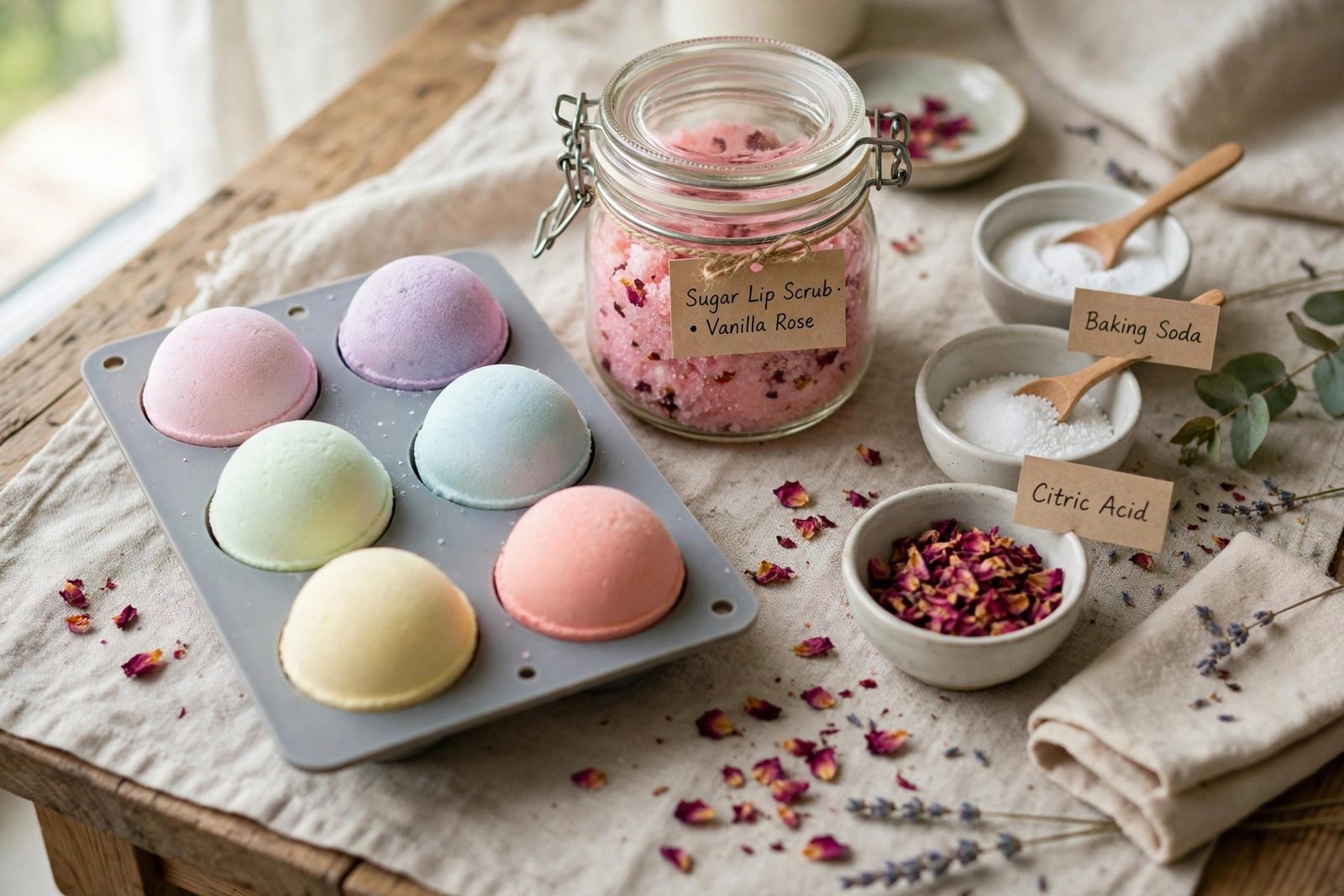
Homemade pastel bath bombs in a mold, a jar of sugar lip scrub and bowls of ingredients on a spa table
Baking soda, citric acid and a mold: bath bombs are a ratio, not a mystery.
On this pageBath Bombs That WorkBath Bomb TroubleshootingSugar Lip ScrubMaking & Storing SafelyCommon Questions

01 — The Classic Project

Bath Bombs: A Ratio, Not a Recipe

Every bath bomb is the same reaction — baking soda plus citric acid, fizzing when bathwater unites them — so the recipe is a ratio: 2 parts baking soda to 1 part citric acid, with about 1 part cornstarch to slow the fizz and float the bomb, and 1 part Epsom salt for texture if you like. Whisk the dry ingredients thoroughly (lumps of citric acid are weak spots), then add a small amount of melted coconut oil or another light oil, a few drops of fragrance or essential oil and optional color, and spritz with witch hazel while mixing until a squeezed handful holds together like damp sand. Pack the mixture into both halves of a spherical mold, overfilling slightly, press together firmly, wait a few minutes, and tap the bomb out gently. That is the entire craft; everything else is decoration — dried petals pressed into one half before closing, a stripe of a second color, a dusting of cosmetic glitter on top.

02 — When It Goes Wrong

Reading the Failures

Bath bombs fail in legible ways. Fizzing or swelling in the mold = too much liquid, added too fast; spritz less, mix as you go. Crumbling on unmolding = too dry, or unmolded before the shape set. Cracks while drying = usually a too-wet mix shrinking unevenly, or a very humid room — dry bombs somewhere airy and dry for 24–48 hours. No fizz in the tub = old citric acid, or bombs stored somewhere damp that spent their reaction quietly in the jar. And a ring of color or oil in the tub afterward means too much of either — cut both down, and add a teaspoon of polysorbate 80 to the oils if you use them, which helps oils and color disperse into the water instead of clinging to the enamel. None of these failures is wasted: crumbled bombs are bath powder, and cracked ones fizz exactly as well as perfect spheres.

03 — The Five-Minute Project

Sugar Lip Scrub

The scrub is a mixture, not a manufacture: stir 1 tablespoon of fine sugar (fine, not coarse — lips are thin skin and this is a gentle polish, not a sanding) with 1 teaspoon of a food-grade oil such as coconut or olive, plus a drop of honey if you like the texture it gives. That is a working lip scrub; a tiny drop of vanilla or a pinch of cinnamon is optional flavoring for the making experience, not a functional ingredient. Spoon it into a small clean jar. To use: massage a pea-sized amount over damp lips with a fingertip for a few seconds, rinse or wipe away, and follow with your usual lip balm. Once or twice a week is plenty — exfoliation is a sometimes thing, and scrubbing harder or oftener just irritates. Frame it honestly: a sugar scrub smooths the feel of lips the way any gentle polish does; it is a pleasant cosmetic, not a remedy, and chapped, cracked or sore lips should be left alone until they settle rather than scrubbed.

04 — The Sensible Rules

Making and Storing Homemade Products Safely

Homemade cosmetics put you in the formulator's chair, and the chair comes with a short rulebook. Work with clean bowls, spoons and jars — wash and dry everything first, because these recipes carry no preservatives. Measure fragrance conservatively: essential and fragrance oils are potent, a few drops per batch is a sane ceiling, and keep them away from eyes and off broken skin. Label every jar with what it is and the date you made it, store products cool, dry and sealed, and respect the keeping times — small batches, made often, beat big batches kept long. Patch test anything new on a small patch of skin and wait a day before full use, and stop using anything that causes stinging or redness. For gifts — the natural destiny of bath bombs — include the ingredient list on the tag; your friends' allergies are not knowable, and a labeled gift is a thoughtful one. With those habits in place, the projects stay what they should be: the enjoyable, good-smelling end of the DIY spectrum.
Common Questions

Common Questions

Why do my bath bombs crumble or crack?

The mixture was too dry (add witch hazel or water a spritz at a time until it clumps like damp sand when squeezed) or they were unmolded too soon or dried too fast in humid air. The opposite failure — bombs that swell, wart or start fizzing in the mold — means the mix was too wet and the reaction started early. Work on a dry day if you can, pack molds firmly, and let bombs dry a full 24–48 hours before handling or wrapping.

How long do homemade bath bombs and lip scrub keep?

Bath bombs keep about six months stored airtight and dry; their fizz fades gradually as citric acid slowly reacts with ambient moisture, and fragrance softens over time. Sugar lip scrub keeps roughly a month in a clean, sealed jar (longer refrigerated) — it contains no preservative, so make small batches, use a clean dry spoon or fingertip to take product out, and discard it if the smell or texture changes.

Are homemade bath products safe for sensitive skin?

They can be, but homemade means you are the formulator, so be conservative: keep fragrance and color light, avoid anything you know irritates your skin, patch test a new recipe on a small area of skin first, and stop using anything that stings, itches or reddens. Fragrance and essential oils are the common irritants — more is not better — and these projects are cosmetics for enjoyment, not treatments for any skin condition.

Keep Going

More to Explore

Homemade projects pair with the site's general beauty coverage — start there for the wider world of store-bought and professional beauty topics.

Search Apparel Search