Training Models
A lighthearted guide to the two kinds of models the fashion industry is busy training
Every corner of the fashion industry is talking about training models — and half the time they mean runway models, and the other half they mean artificial intelligence. This page is the Apparel Search training folder having a little fun with the double meaning. Underneath the jokes, though, is a real comparison: both kinds of model are trained, tested, fine-tuned and sent out to perform, and the similarities are more genuine than you might expect.
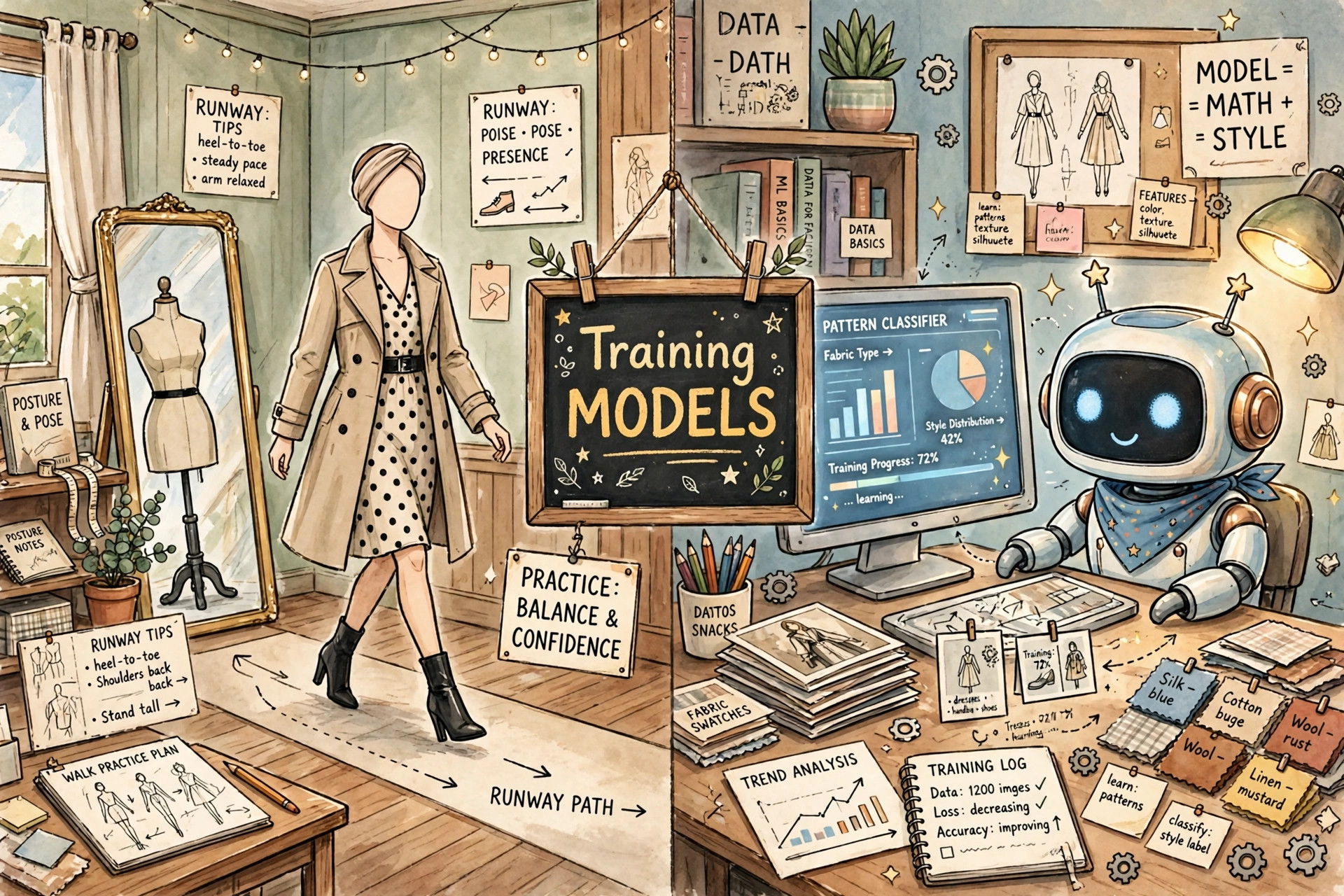
Two Kinds of Models, One Verb
A fashion model is trained to present clothing: to walk, pose, take direction and make a garment look like the best version of itself. An AI model is trained to process information: to recognize, predict, generate and assist, increasingly on fashion's own material — product photos, trend data, fit information and style writing. Different students, same report card: both are only as good as their training, both are judged on work they have never rehearsed before, and both do better with experienced handlers nearby.
| Fashion Models | AI Models | |
|---|---|---|
| Training data | Portfolios, digitals and hundreds of practice walks | Millions of images, articles and examples, ingested in bulk |
| The trainer | Agency bookers, runway coaches and finishing schools | Data scientists, engineers and rooms full of computers |
| Overfitting | Wearing the same signature look to every casting, whatever the brief | Memorizing the training examples instead of learning the underlying pattern |
| Validation | Castings and go-sees — does the look work for this client? | Validation data — does it still work on examples it has never seen? |
| Fine-tuning | A new coach and a fresh portfolio before fashion week | Extra training on a smaller, specialist set of examples |
| Parameters | Height, measurements and shoe size, printed on the comp card | Billions of internal numbers. None of them is a shoe size |
| Hallucinations | “I was discovered at the mall” — unverifiable, but charming | Invented facts, delivered with complete confidence |
| Deployment day | Fashion week | Launch day |
| Seasonal retraining | Every season: new trends, new casting tapes, new portfolio shots | Every release: new data, new checks, new version number |
How Fashion Models Actually Train
Professional modeling looks effortless precisely because it is trained. New models learn the runway walk — posture, pace, the turn at the end of the catwalk — and how to pose so a photographer gets the shot quickly. They build a portfolio of photographs and a comp card with their measurements, practice expressions and movement on camera, and learn the working machinery of the business: castings and go-sees, fittings, call times, and set etiquette with designers, stylists and photographers. Agencies coach their models through much of this, modeling schools teach it as a curriculum, and working models keep training throughout their careers as trends, clients and formats change. The Fashion Models section of Apparel Search covers the modeling world in earnest, and the education section covers the schools and courses behind it.
How AI Models Actually Train
An AI model learns from examples rather than lessons. Trainers assemble very large collections of material — for fashion, that can mean garment photographs, product descriptions, sizing data and style imagery — and the model processes them again and again, adjusting its internal parameters until it can reliably recognize patterns and produce useful results on new material. After the main training run comes evaluation on data the model has never seen, then often a round of fine-tuning on a specialist set: an AI trained generally on images might be fine-tuned on clothing, for example, before it is put to work sorting products, drafting descriptions, forecasting trends or powering a virtual fitting room. The serious side of this lives in the Apparel Search guide to AI tools for the fashion industry and the Fashion Technology section.
The Shared Curriculum
Strip away the puns and the shared lessons are sound advice for anyone training anything. Start with good material — a model of either kind trained on poor examples will perform poorly. Test on the unfamiliar, not the rehearsed. Retrain every season, because fashion will not hold still for either kind of model. Expect the occasional confident mistake, and keep a knowledgeable human in charge of the final call. And remember that training is not a one-time event for a working model: it is the job, repeated, season after season, version after version.
Common Questions
What does training a model mean in fashion?
In fashion, training a model means preparing a person for professional modeling work: runway walk coaching, posing and expression practice, building a portfolio and comp card, learning set etiquette and casting skills at go-sees, and the ongoing work of staying ready for bookings. Agencies and modeling schools run much of this training, and experienced models keep refining their craft throughout their careers.
What does training a model mean in AI?
In artificial intelligence, training a model means teaching a computer program to recognize patterns by showing it very large numbers of examples — images, text or other data — and adjusting its internal settings until its answers become reliable. The trained model can then do useful work on new material it has never seen, from recognizing garments in a photo to drafting product descriptions, forecasting trends and powering virtual try-on tools.
Is one kind of model easier to train than the other?
Honestly, it depends on the day. Fashion models occasionally miss castings, and AI models occasionally invent facts with total confidence. Both do their best work with good trainers, good material to learn from, and regular retraining every season — which is why this page treats them as classmates.